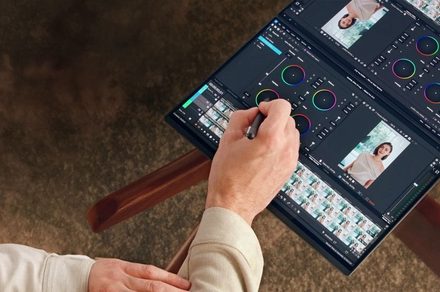

Asus is refining the Zenbook Duo’s signature two-display setup with a smaller seam between panels in CES 2026. The headline change is the Zenbook Duo hinge gap, now listed at 8.28 mm, which should make it less distracting when you’re dragging windows, timelines, and toolbars from one screen to the other.
That matters because dual-screen laptops can feel great until your eyes keep tripping over the break. Close the gap, and the Duo’s layout starts to behave more like a single, oversized canvas, especially for split-screen work like notes on one panel and a document or browser on the other.
The hinge closes the gap
Asus also describes the new design as a 70% reduction in the gap compared to the previous approach. Even if you never measure it, you’ll feel it in the little moments, like scanning across both screens while you’re editing, comparing, or checking reference material.

The hinge isn’t only about looks. The Duo can be laid flat on a table for easier sharing, and the system can surface a quick sharing interface once you pass 175 degrees, useful for walking someone through a layout in a meeting.
Asus also points to hinge durability testing, including 40,000 open and close cycles and support for a 15 kg load-bearing weight.
More than a hinge tweak
A tighter seam only helps if the rest of the machine makes two screens practical. The Duo keeps its built-in kickstand and a Bluetooth keyboard so you can switch between laptop-style typing and a more desktop-like stance without fuss.
The display hardware stays premium too, with dual 3K OLED touch panels rated for up to 1000 nits peak brightness and a 48 to 144 Hz variable refresh range depending on what’s on-screen.
Is it worth upgrading?
If you already like the Zenbook Duo concept but the split between screens bugged you, this update is aimed straight at that annoyance. The smaller hinge gap is the kind of change you notice every hour, not once during setup. If you’re curious what this configuration looks like on a gaming device, Asus also has you covered with the ROG Zephyrus Duo.
Specs and configurations will vary by region, so the smart move is to watch local listings for the model that matches how you actually use the two screens, especially if portability and durability matter as much as the display experience.