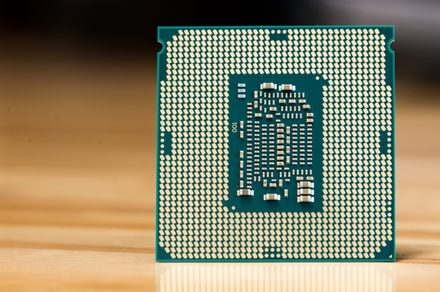
Processors today pack billions of transistors onto a single chip, and while that enables incredible performance, it also creates one persistent problem, which is heat. Rising temperatures can slow down a processor or force performance throttling. Now, researchers may have found a solution with something incredibly tiny, a new microscopic temperature sensor that’s nearly impossible to see with the naked eye.
A thermometer smaller than a human hair
Researchers at Penn State have developed an ultra-miniature thermometer that can be built directly onto computer chips. The sensor is super small, measuring just one square micrometer, which is several thousand times smaller than the width of a human hair. That tiny size lets engineers place thousands of these sensors across a processor, allowing for precise temperature monitoring across different parts of the chipset.
Chips often heat unevenly during heavy workloads, and traditional temperature sensors placed outside the processor can struggle to capture those rapid changes accurately. So these microscopic sensors could be a big deal for modern processors.
Built with ultra-thin 2D materials
What’s impressive is that the researchers built the sensor using two-dimensional materials that are only a few atoms thick. These materials allow the sensor to quickly react to any temperature changes. Additionally, the device can detect subtle fluctuations in about 100 nanoseconds, which is millions of times faster than blinking your eye. Owing to its unique structure, the tech also uses less power than traditional silicon-based thermal monitoring systems.

Why this matters for modern processors
Thermal management is one of the biggest challenges in chip design today. Transistors overheating during heavy workload cause processors to reduce clock speeds to protect themselves. This, in turn, leads to drops in performance. But with these embedded sensors like this, engineers could monitor temperature changes across the chip in real time and respond more effectively. Meaning, we might see smarter thermal management, better efficiency, and peak performance that is maintained for longer. With chips nearing the 1-nanometer gate, tech like this could be crucial.