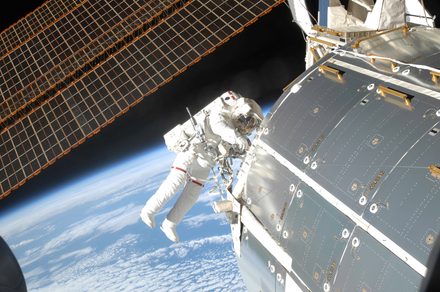
Astronauts floating in space using what looks like “old tech” might sound bizarre at first. But as it turns out, there’s a very practical reason behind it. And no, it’s not because NASA is stuck in the past. A recent explanation from NASA spaceflight expert Jason Hutt sheds light on why missions like Artemis still rely on aging hardware, including older Windows tablets.
Why NASA still uses “old” tech in space
According to Hutt, it all comes down to testing, cost, and reliability. Space hardware isn’t something you can just swap out every year like a smartphone. Every single component has to go through extensive certification and testing, which takes years and costs a fortune. So once a device is approved, NASA sticks with it.
In fact, for missions like Artemis, NASA intentionally chose devices that were already used on the International Space Station. This avoided the need to re-certify new hardware, saving both time and money. The software was also already built for that specific platform, making it the safest and most practical choice.
There’s also the timeline problem. Missions are planned years in advance, meaning the “latest” tech at the time of launch is often already outdated by the time astronauts actually fly. But that’s a trade-off NASA is willing to make, because reliability matters far more than cutting-edge performance.
It’s a deliberate decision
Zoom out a bit, and this approach is actually standard across space missions. NASA often prefers older, well-tested components because they’re proven to work in extreme environments like radiation-heavy space. Newer tech might be faster, but it’s also riskier and less predictable.
There are also practical limitations. Deep-space missions don’t have reliable internet as we do on Earth, so software can’t depend on constant connectivity. Add bandwidth constraints and data limits into the mix, and suddenly, modern, cloud-heavy systems stop making sense altogether. In other words, space isn’t the place to experiment with the latest gadgets. It’s where you take the stuff that’s been tested, proven, and trusted.