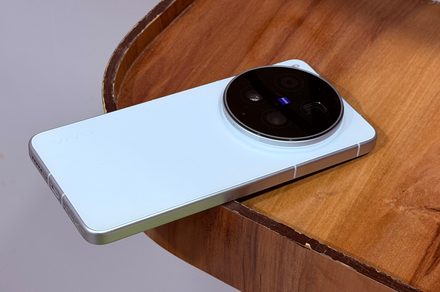

“Vivo has built a really good camera, and oh, a phone comes with it!”
- Brilliant cameras
- Daily performance
- 2K AMOLED display
- Pricing
- Bulky with all attachments
Quick Review
The Vivo X300 Ultra is one of those rare flagship smartphones that feels purpose-built rather than designed to tick specification boxes. After spending weeks with the device, my biggest takeaway is that Vivo has refined nearly every aspect of an already excellent formula.
The camera system remains the headline feature. The new 200MP main camera delivers stunning detail, excellent dynamic range, and one of the most natural-looking 35mm perspectives available on a smartphone. Combined with an outstanding ultrawide camera and an incredibly versatile telephoto lens, the X300 Ultra consistently produces some of the best photos I’ve captured on a phone this year.
Outside photography, the experience remains equally impressive. The 6.82-inch AMOLED display is bright, sharp, and gorgeous to look at, while the 144Hz refresh rate keeps everything feeling fluid. Battery life is exceptional thanks to the 6,600mAh battery, and the bundled 100W charger means downtime is minimal.
Performance is exactly what you would expect from a Snapdragon 8 Elite Gen 5 flagship. Everything feels fast, responsive, and effortless, whether you’re multitasking, editing photos, or playing demanding games. OriginOS 6 has also matured into a polished and highly customizable software experience.
It isn’t perfect. The removal of the dedicated camera button feels like a step backwards, and video quality, while excellent, still trails the very best from Apple.
Even so, the Vivo X300 Ultra stands as one of the most complete flagship smartphones of 2026 and arguably the best camera-focused phone currently available.
Vivo X300 Ultra Specifications
| Specifications | Vivo X300 Ultra | |||
|---|---|---|---|---|
| Dimensions | 163.2 x 76.8 x 8.7mm | |||
| Weight | 232g | |||
| Display | Main: 6.82-inch LTPO AMOLED, 1-144Hz refresh rate | 3168 x 1440 pixels, ~510 PPI | 3,300 nits peak brightness | Dolby Vision, HDR10+, Armor Glass protection |
| Processor | Qualcomm Snapdragon 8 Elite Gen 5 | |||
| Memory / Storage | 12GB/256GB | 12GB/512GB | 16GB/512GB | 16GB/1TB |
| Rear Cameras | Main: 200MP Sony LYTIA 901, f/1.9, OIS, 35mm equivalent Ultrawide: 50MP, f/2.0, 14mm equivalent Telephoto: 200MP Samsung HP0, f/2.7, OIS, 85mm equivalent, 3.7x optical zoom |
Zeiss T* Coating | ||
| Front Camera | 50MP, f/2.5, Autofocus | |||
| Battery | 6,600mAh Silicon-Carbon Battery | |||
| Charging | 100W wired FlashCharge | 40W wireless charging | Reverse wired and wireless charging | |
| Connectivity | Bluetooth 6.0, USB Type-C (USB 3.2 Gen 1), Wi-Fi 7, NFC, Dual-SIM, eSIM (Global models) | |||
| Durability | IP68 + IP69 Dust and Water Resistance | |||
| Biometrics | Ultrasonic In-Display Fingerprint Scanner | |||
| OS | OriginOS 6 is based on Android 16 | |||
| Software Support | 5 Major Android OS Updates + 7 Years Security Updates | |||
| Special Features | Vivo Photography Kit Support, 200mm & 400mm Teleconverter Lenses, Origin Island, AI Writing Tools, AI Captions, Connection Center, Zeiss Imaging System |
What does the Ultra mean for real
Quick take: A thoughtful flagship that is basically an upgrade but comes with zero compromises.
The term “Ultra” has become increasingly common in the smartphone industry, but only a handful of devices genuinely deliver an experience that justifies the label. Vivo’s flagship Ultra series has consistently been among that select group, and the X300 Ultra arrives to refine an already accomplished formula rather than reinvent it.
For this review, we had access to the Chinese variant and the global/Indian versions of the device. In the short time with the Indian variant, global buyers are no longer at a disadvantage when it comes to battery capacity, as Vivo now offers the same 6,600mAh battery across all major markets.
The most significant changes can be found in the camera system. Vivo has replaced last year’s 50MP primary camera with a new 200MP sensor that is physically larger and designed to capture more detail across a wider range of shooting conditions. However, the upgrade comes with a trade-off, as the lens aperture has narrowed to f/1.9, down from the brighter f/1.7-equivalent setup on its predecessor.
The telephoto camera has also received a substantial upgrade. While the hardware appears unchanged externally, Vivo has transitioned to Samsung’s latest 200MP HP0 sensor. The sensor size remains similar, but the new component promises noticeably faster autofocus acquisition and improved optical stabilization performance. Once again, however, Vivo has opted for a slower f/2.7 lens, replacing the brighter f/2.3 optic found on the previous generation.
Photography enthusiasts will also appreciate the updated Photography Kit. Our review package included the redesigned protective case, detachable camera grip with physical controls, filter adapters, lens caps, a premium quick-release strap, and two dedicated teleconverter lenses offering 200mm and 400mm focal lengths. Availability will vary by region, with some accessories remaining exclusive to Asian markets.
Outside the camera system, Vivo has introduced several meaningful refinements. The X300 Ultra adopts a noticeably flatter design language, eliminating the subtle front and rear curves seen on previous models. The frame is broader and feels more substantial in hand, despite official dimensions suggesting otherwise.
The display has also been upgraded with a faster 144Hz refresh rate, while performance is now driven by Qualcomm’s latest Snapdragon 8 Elite Gen 5 platform. Combined with the larger battery and charging optimizations, the X300 Ultra represents a comprehensive evolution of Vivo’s flagship formula rather than a simple annual refresh.
Design
Quick take: Premium, durable, and purposeful, though undeniably large and camera-heavy in hand.

At first glance, the Vivo X300 Ultra does not attempt to reinvent its design language. Instead, Vivo has chosen a more restrained and mature aesthetic that prioritizes functionality over visual extravagance. Although I agree that the black and green finishes are understated and professional, I felt the white variant adds a touch more personality without becoming overly flashy.
Dominating the rear panel is Vivo’s signature circular camera island, which remains one of the most recognizable elements of the X-series. Branded with Zeiss T* coating certification, the large camera module houses the triple-camera system and protrudes significantly from the back. As a result, the X300 Ultra never sits completely flat on a table, even when protected by a case.
One of the most noticeable changes in this generation is the move to a completely flat design. Both the front glass and rear panel abandon the subtle curves of previous models, giving the device a more modern and purposeful appearance. Combined with the wider aluminum frame, the phone feels substantial and secure in hand, though some users may find it slightly less ergonomic during extended use.
Vivo has color-matched the aluminum frame to the rear finish as closely as possible, creating a seamless visual transition between materials. The front and rear are protected by Vivo’s proprietary Armor Glass. While the material contributes to the phone’s premium construction, previous experience with Vivo’s implementation suggests it may not be as resistant to scratches as some competing flagship solutions.
Build quality is exemplary throughout. There is no detectable flex in the chassis, no creaking under pressure, and the overall construction inspires confidence. The device is also certified for both IP68 and IP69 dust and water resistance, protecting against dust ingress, water immersion, and high-pressure water exposure. For a flagship designed to accompany users everywhere, this level of durability is reassuring.
It’s a really strong brick.

The bezels surrounding the display are impressively thin and symmetrical, contributing to an immersive viewing experience. Vivo has also done an excellent job concealing sensors beneath the display, maintaining a clean and uninterrupted appearance across the front of the device.
Security is handled by an ultrasonic in-display fingerprint sensor. As expected from a premium implementation, it is both fast and highly reliable, consistently unlocking the device with minimal delay.
Score: 9/10
Hardware and everyday usability
Quick take: Powerful internals, excellent battery, but loses some useful hardware shortcuts.
Powering the X300 Ultra is Qualcomm’s Snapdragon 8 Elite Gen 5 chipset, distinguishing it from the MediaTek-powered X300 Pro. Configurations begin with 16GB of RAM and 512GB of storage, while higher-end variants extend all the way to 1TB.
Battery life should be a major strength thanks to the substantial 6,600mAh silicon-carbon battery. Vivo continues to include a charger in the box, a welcome decision that is becoming increasingly rare among flagship manufacturers. Charging support extends to 100W wired and 40W wireless speeds, allowing the large battery to be charged quickly.

In terms of controls, the X300 Ultra adopts a more conventional layout than its predecessor. The dedicated camera shutter key found on the previous generation has been removed, a decision that photography enthusiasts may find disappointing. The volume rocker and power button remain comfortably positioned on the right side and offer excellent tactile feedback.
The left side of the frame is completely clean, and the customizable shortcut key found on some previous Vivo flagships is also absent. Along the bottom edge, users will find the USB Type-C port, speaker grille, microphone array, and dual nano-SIM tray, with global models additionally supporting eSIM functionality.
Score: 8/10
Display experience
Quick take: One of the finest smartphone displays available with exceptional brightness and color.
After spending time with the Vivo X300 Ultra, I can confidently say that its display ranks among the best currently available on any smartphone. Vivo has equipped the device with a 6.82-inch AMOLED panel carrying a sharp 3168 x 1440 resolution, but what impressed me most was not the specification sheet. It was the consistency of the viewing experience across different use cases.
Whether I was editing photos, browsing social media, reading long articles, watching HDR content, or simply playing games, the display never felt like a limiting factor. Text appears incredibly crisp, images are packed with detail, and contrast is exactly what I expect from a flagship OLED panel.

Vivo also gives users a surprising amount of control over color reproduction. I spent most of my testing period using the Natural profile, which delivers a balanced and realistic image without looking muted. Those who prefer stricter color accuracy can switch to Professional mode, while Bright mode increases saturation and visual punch. Regardless of the profile selected, color accuracy remains excellent and closely aligned with sRGB standards, placing it right alongside the best displays in the premium smartphone segment.
Brightness is another area where the X300 Ultra excels. During outdoor testing under harsh afternoon sunlight, I never struggled to read the screen. Vivo claims peak brightness figures of up to 3,300 nits in certain scenarios, and based on my experience, the panel has more than enough headroom for comfortable outdoor visibility. At the opposite end of the spectrum, the display can drop below 1 nit, making it exceptionally comfortable to use in a dark room before bed. That combination of extremely high peak brightness and excellent low-light performance is something not every flagship manages to achieve.

HDR content looks particularly impressive. Support for both Dolby Vision and HDR10+ allows streaming platforms to fully utilize the panel’s capabilities, producing bright highlights, deep blacks, and excellent shadow detail. Watching movies and high-quality video content on the X300 Ultra quickly became one of my favorite ways to consume media on the device.
The jump to a 144Hz refresh rate sounds impressive on paper, though in practice, its benefits are mostly limited to a handful of supported games. Day-to-day navigation already feels incredibly fluid, but gamers who can take advantage of the higher refresh ceiling will appreciate the added responsiveness.
Vivo has also put considerable effort into eye comfort. OriginOS 6 includes one of the most comprehensive eye-care suites I’ve encountered on a smartphone. Users can choose between PWM and DC dimming depending on their sensitivity to display flicker. PWM remains the default option because it maintains better image quality and contrast at lower brightness levels, while DC dimming offers a more comfortable experience for those who are particularly sensitive to flickering displays. Importantly, Vivo has calibrated both modes well enough that color reproduction remains consistent regardless of which option is selected.
Completing the package is an ultrasonic in-display fingerprint scanner. Throughout my testing, it proved exceptionally fast and reliable. Registration takes only a few seconds, and unlock performance has been consistently accurate. It is the kind of feature that quietly disappears into the background, which is exactly what you want from a biometric system on a flagship smartphone.
Score: 9/10
Software
Quick take: OriginOS 6 feels polished, customizable, and finally competitive on a global scale.
Software has traditionally been one of the biggest differentiators between Vivo’s Chinese and global devices, but that changes with the X300 Ultra. For the first time, Vivo is bringing OriginOS 6 to international markets, meaning buyers outside China no longer have to settle for a different software experience. Both the Chinese and global versions of the phone now share the same foundation, though there are still a few regional differences that I’ll touch on later.

During my time with the X300 Ultra, OriginOS 6 proved to be one of the most polished Android skins I’ve used this year. Vivo talks about faster app launches, improved background management, and smoother animations, but what matters is how those improvements translate into daily use. The phone feels consistently responsive, whether I’m quickly jumping between apps, multitasking, or navigating through menus. Everything happens with an immediacy that makes the software feel tightly optimized.
A lot of that comes down to the animation system. Vivo has refined the visual flow of the interface to the point where interactions feel natural rather than mechanical. Apps glide into view smoothly, gestures are tracked accurately, and the subtle blur effects throughout the interface add a layer of polish that I rarely associate with Android skins. Compared to FuntouchOS, OriginOS feels noticeably more mature and cohesive.
The visual overhaul extends beyond animations. The redesigned Settings menu is easier to navigate, the Control Center looks cleaner, and Vivo’s updated icon set helps create a more consistent look across the operating system. The new blur effects are particularly well executed and give the interface a premium feel without becoming distracting.

Customization remains one of OriginOS’ biggest strengths. I found myself spending a surprising amount of time experimenting with different lock screen layouts, widgets, and themes. The level of personalization available here goes far beyond what most Android manufacturers currently offer. Features like Flip Themes add some personality to the lock screen, while depth effects and widget layouts provide a level of customization that many users will appreciate.
Origin Island also makes a return. Vivo’s interpretation of Dynamic Island sits around the front camera cutout and surfaces useful information such as timers, music playback controls, charging status, and background activities.

Artificial intelligence is deeply integrated throughout the operating system. The writing assistant can summarize, rewrite, and proofread text, while AI Captions provide live transcription and translation capabilities. Vivo has also reorganized its AI-powered photo editing tools, placing them directly within the Gallery app, where they are easier to discover and use.
Cross-device functionality has improved as well. The new Connection Center acts as a hub for linking the X300 Ultra with other devices, enabling screen mirroring, file transfers, and workflow continuity. I found the PC integration straightforward to set up, and transferring files between Vivo devices was seamless.
Since I had access to both Chinese and global units, I spent some time comparing the two experiences. The global version is naturally the simpler option, arriving with Google’s services fully integrated from the start. The Chinese model requires a little extra setup, but not nearly as much as some buyers might fear. Installing Google Play Store, Google services, Gemini, and other core applications takes only a few minutes, and most services function normally once configured.

There are still a few compromises. Circle to Search is absent on the Chinese ROM, replaced by Vivo’s BlueLM Copilot assistant, which currently remains focused on the Chinese market. Some regional applications also come pre-installed, though most can be removed quickly. More importantly, Google Maps Location History and Quick Share still don’t function properly on the Chinese version.
For most international buyers, the global model remains the safer choice. That said, after spending time with both devices, I found the gap between the Chinese and global software experiences to be much smaller than it has been in previous generations.
Just as importantly, Vivo is backing the X300 Ultra with five major Android updates and seven years of security support. For a company that has historically lagged behind some of its rivals in software commitments, this is a meaningful step forward and helps make the X300 Ultra feel like a more complete flagship package.
Score: 9/10
Cameras
Quick take: Among the best smartphone camera systems with unmatched versatility and consistency.
If there is one reason to buy the Vivo X300 Ultra, it is the camera system. While this year’s hardware changes may appear modest on paper, the overall imaging experience remains among the best I have encountered on any smartphone.
The biggest upgrade comes from the primary camera. Vivo has replaced the previous generation’s 50MP sensor with a new 200MP Sony LYTIA 901 sensor measuring 1/1.12 inches. The focal length remains at Vivo’s signature 35mm equivalent, which continues to be one of my favorite decisions in smartphone photography. Unlike the more common 23mm or 24mm lenses, the 35mm perspective feels natural, avoids distortion, and is particularly flattering when photographing people.

What impressed me most throughout testing was the consistency. The main camera produces images with excellent dynamic range, rich contrast, and vibrant colors without crossing into unrealistic territory. Vivo still has a recognizable image signature, but it is now mature enough that scenes retain a natural appearance while remaining visually striking.
The 35mm focal length also creates a more professional look straight out of the camera. Portraits benefit from natural facial proportions, while the large sensor generates pleasing background separation without relying on artificial blur effects. In many situations, I found little reason to switch to Portrait mode at all. In fact, regular Photo mode often produced sharper and more detailed results.
The new 25MP shooting mode deserves special mention. Unlike some competing devices that automatically determine resolution behind the scenes, Vivo gives users direct control. During my testing, I frequently switched between the standard and 25MP modes depending on the scene, and the flexibility was genuinely useful. The 50MP option remains available for situations where maximum detail matters, though I found it to be more of a niche tool than an everyday setting.

The ultrawide camera remains unchanged from the previous generation, but that is hardly a criticism. It continues to be one of the strongest ultrawide implementations currently available. The large sensor captures impressive levels of detail, while color science remains remarkably consistent with the main camera. That consistency is important because switching between lenses never feels like moving to a completely different camera system.


In daylight, the ultrawide produces images with excellent sharpness, accurate white balance, and wide dynamic range. Even at the intermediate 28mm crop level, image quality remains surprisingly strong. Most competing smartphones struggle significantly when moving away from native focal lengths, but the X300 Ultra maintains an impressive level of detail and usability.
The telephoto camera remains the star of the system. Vivo continues to use an 85mm equivalent lens paired with a 200MP sensor, though this year the company has upgraded to Samsung’s newer HP0 sensor. While the aperture has narrowed slightly compared to the X200 Ultra, I rarely found that change noticeable during real-world use.


At 85mm, image quality is exceptional. Detail is abundant, colors remain vibrant, and subject separation looks fantastic. Portrait photography is where this camera truly shines. The focal length is ideal for tighter framing, skin tones are handled well, and facial detail remains impressive without appearing overly processed.
What surprised me most was how well the telephoto camera continued to perform as I pushed beyond its native focal length. The 135mm and 170mm zoom levels remain highly usable, delivering results that many competing devices would struggle to achieve. Even at 230mm, images retain enough detail to be genuinely useful rather than feeling like novelty shots.


Macro photography is equally impressive. Thanks to the telephoto camera’s close focusing distance, I was able to capture detailed close-up shots with excellent subject isolation. It remains one of the most versatile telephoto systems currently available on a smartphone.
Low-light photography is another area where the X300 Ultra excels. The main camera consistently delivered excellent results after sunset, combining strong dynamic range, accurate colors, and impressive detail retention. The telephoto camera also performs remarkably well in challenging lighting conditions, maintaining sharpness and color accuracy far better than most rival devices.
The ultrawide remains slightly less impressive in darker scenes, though it still produces results that comfortably rank among the best in the category. Across all three cameras, Vivo’s image processing strikes a good balance between noise reduction and detail preservation.
Video Performance
The X300 Ultra is equally ambitious when it comes to video. Support extends to 4K recording at up to 120fps, 8K recording, Dolby Vision capture, Log recording, and a feature-rich Pro Video mode. Professional users will appreciate the inclusion of waveform monitoring, manual controls, multiple codecs, and LUT support.
During my testing, video quality was consistently strong across all focal lengths. Colors look excellent, dynamic range is wide, and exposure handling is dependable. Switching between cameras is seamless, with Vivo doing an excellent job maintaining color consistency throughout the zoom range.
The one area where I expected slightly more was sharpness. While footage looks good overall, the ultrawide and main cameras do not always exhibit the level of crispness I would expect from a flagship imaging system of this caliber. The telephoto camera performs better in this regard, though it falls slightly short of perfection when viewed closely on a larger display.
Fortunately, stabilization is outstanding. Whether I was walking, panning, or shooting handheld video at longer focal lengths, the X300 Ultra consistently delivered smooth and stable footage. Combined with the extensive recording options and strong overall image quality, it remains one of the most capable video systems available today.
After spending considerable time with the Vivo X300 Ultra, my biggest takeaway is not that any single camera is dramatically better than the competition. Instead, it is the completeness of the experience. The main camera is excellent, the ultrawide remains class-leading, and the telephoto system is among the most versatile currently available. Few smartphones offer this level of consistency across such a broad range of focal lengths, and that continues to be Vivo’s greatest strength. You can read our camera in-depth here.
Score: 9/10
Battery Life and Charging
Quick take: Outstanding endurance paired with charging speeds that eliminate battery anxiety.
Battery life was one of the areas where the Vivo X300 Ultra genuinely exceeded my expectations. The phone packs a larger 6,600mAh silicon-carbon battery than its predecessor, and unlike some capacity upgrades that barely translate into real-world gains, this one makes a noticeable difference in daily use.
After spending several weeks with the device, I found myself thinking about battery life less and less. That might sound like a small compliment, but for a power user who spends hours taking photos, editing images, browsing social media, streaming video, and occasionally gaming, it is actually one of the highest forms of praise. The X300 Ultra simply refuses to create battery anxiety.

In my day-to-day use, getting through a full day was never a challenge. More often than not, I ended the evening with enough charge remaining to comfortably start the next day without reaching for a charger. On lighter days involving messaging, web browsing, photography, and media consumption, stretching the phone to two days of use felt entirely realistic.
The test results back up that experience. The X300 Ultra achieved a battery backup of nearly 16 hours, representing a meaningful improvement over the X200 Ultra. Browsing endurance is particularly impressive, with around 20 hours of continuous web use. Video playback and gaming figures are equally strong, delivering roughly 12 hours and 11 hours, respectively.

Charging is equally reassuring. Vivo continues to include a 100W FlashCharge adapter in the box, a practice that has become increasingly rare among flagship manufacturers. Using the bundled charger, the large battery can be replenished in well under an hour, which fundamentally changes how you interact with the device.
In fact, by the end of my review period, I had stopped paying much attention to battery percentages altogether. Between the excellent endurance and extremely fast charging speeds, the X300 Ultra offers the kind of convenience that makes battery management feel almost irrelevant. For a flagship smartphone packed with high-end hardware, that is an impressive achievement.
Score: 8/10
Performance and gaming
Quick take: Flagship-grade power that handles demanding workloads effortlessly and consistently.
As expected from an Ultra-branded flagship, the Vivo X300 Ultra leaves very little on the table when it comes to performance. Powering the device is Qualcomm’s Snapdragon 8 Elite Gen 5, currently one of the fastest mobile chipsets available, built on an advanced 3nm process and paired with the Adreno 840 GPU.
My review unit came equipped with 16GB of RAM and 1TB of UFS 4.1 storage, which is the highest configuration Vivo offers. Unsurprisingly, the combination delivers an exceptionally fast experience. Apps launch instantly, multitasking feels effortless, and I never encountered any noticeable slowdowns, regardless of how many applications were running in the background.

In daily use, the X300 Ultra feels every bit like a premium flagship. Whether I was editing large photo files, switching between camera modes, recording high-resolution video, or jumping between demanding applications, the phone remained consistently responsive. OriginOS also deserves some credit here, as the software feels well optimized to take advantage of the available hardware.
While the Vivo X300 Ultra is clearly designed with photography in mind, I was pleasantly surprised by how capable it proved to be as a gaming device. Powered by Qualcomm’s Snapdragon 8 Elite Gen 5 chipset, the phone has more than enough horsepower to handle virtually every game available on Android today.

During my testing, BGMI ran flawlessly at 60FPS on supported settings. Even during lengthy matches, gameplay remained smooth and responsive, with no major frame drops or touch latency issues. The gyroscope felt accurate, aiming was precise, and the overall experience was exactly what competitive players would expect from a flagship smartphone. We also ran BGMI on the Extreme settings, which worked perfectly, but the fps was capped at 60 frames per second.
Call of Duty: Mobile was equally impressive. High frame rates remained stable throughout my sessions, and I never noticed any stuttering during fast-paced firefights. The combination of the high-refresh-rate display and powerful hardware makes the game feel exceptionally fluid. What stood out during my testing was the phone’s thermal management.

Vivo’s proprietary Ice Pulse Fluid VC cooling system does a good job of keeping performance levels consistent during extended gaming sessions. The device does get warm under sustained load, particularly when playing graphically intensive games for longer periods, but I never experienced aggressive throttling that negatively impacted gameplay.
If I had to say this, I would say the X300 Ultra impressed me more than outright speed was the phone’s ability to sustain performance under load. Vivo has equipped the X300 Ultra with a sizeable 5,800mm² vapor chamber cooling system, and it appears to be doing its job. During extended gaming sessions and stress testing, performance remained relatively stable, with the chipset retaining around 60 percent of its peak output under prolonged workloads. That result is broadly in line with what I expect from a modern flagship platform.

The trade-off is heat. While the chipset itself remains under control, the phone’s exterior can become noticeably warm during intensive tasks. In my testing, surface temperatures climbed to around 56 degrees Celsius during sustained workloads. It never became uncomfortable enough to stop using it, but it is certainly something you’ll notice during longer gaming sessions or extended camera use.
Score: 8/10
Benchmark performance and sustained load
Quick take: Strong benchmark scores backed by impressive real-world sustained performance.
The Vivo X300 Ultra never felt short on performance during my review period, but synthetic benchmarks help quantify just how much power Qualcomm’s Snapdragon 8 Elite Gen 5 platform is bringing to the table. More importantly, they reveal how well Vivo has balanced outright speed with long-term stability.

Starting with Geekbench 6, the X300 Ultra recorded a single-core score of 3,529 and a multi-core score of 10,903, while the Adreno 840 GPU achieved an OpenCL score of 23,998. Those are flagship-class numbers and place the device firmly among the fastest Android phones currently available. For context, the Samsung Galaxy S26 Ultra, which uses a higher-clocked “for Galaxy” version of the same chipset, typically scores between 3,700 and 3,760 in single-core tests and around 11,300 in multi-core workloads.
In practical terms, the difference is negligible. During daily use, app launches, image processing, AI tasks, and multitasking felt every bit as fast as the best flagship devices I’ve tested this year.
The AnTuTu benchmark paints an equally impressive picture. The X300 Ultra crossed the four-million-point barrier with a score of 4,065,443, including CPU, GPU, memory, and UX scores that comfortably sit in flagship territory. Particularly impressive is the GPU score of over 1.5 million points, highlighting the strength of Qualcomm’s latest graphics architecture. But here lies the real clincher when we compare it with it rivals.


The benchmark results paint an interesting picture of the 2026 flagship smartphone market. While the Vivo X300 Ultra is positioned as a camera-first flagship, the numbers show that it is also one of the fastest smartphones currently available, competing directly with devices from Samsung, OPPO, Xiaomi, and Apple.
Starting with CPU performance, Geekbench 6 reveals that Apple’s A19 Pro continues to dominate single-core workloads with a score of 3,871, narrowly edging out the Galaxy S26 Ultra at 3,781. The OPPO Find X9 Ultra and Xiaomi 17 Ultra follow closely behind, while the Vivo X300 Ultra posts a respectable 3,529. In everyday use, however, these differences are unlikely to be noticeable.
The multi-core results tell a different story. Here, Android flagships pull ahead. Samsung leads with 11,566 points, followed by the OPPO Find X9 Ultra at 11,200. Vivo’s 10,903 score places it firmly in flagship territory, comfortably ahead of the iPhone 17 Pro Max, which scores 9,968.
GPU and gaming performance remain a major strength for Qualcomm-powered devices. In 3DMark Wild Life Extreme, Samsung tops the chart with 7,744 points, followed by the OPPO Find X9 Ultra at 7,339. The Vivo X300 Ultra delivers a strong 7,075 points, outperforming both Xiaomi and Apple’s flagship.
Ray tracing performance shows an even tighter battle. The OPPO Find X9 Ultra claims first place with 13,519 points in Solar Bay, narrowly ahead of the Vivo X300 Ultra at 13,437. Xiaomi and Samsung trail slightly behind, while Apple remains competitive but clearly behind the leading Android devices.
AnTuTu highlights overall system performance, where the OPPO Find X9 Ultra takes the lead with over 4.11 million points. The Vivo X300 Ultra follows closely with 4.06 million, demonstrating that Vivo’s flagship is among the most powerful smartphones available today.
The overall takeaway is simple. The Vivo X300 Ultra delivers a more balanced package. It combines chart-topping overall performance, excellent graphics output, and the best sustained stability in this comparison. For a device that also happens to be one of the strongest camera phones on the market, that is an impressive achievement.
Score: 9/10
Final Verdict
The Vivo X300 Ultra is not the kind of flagship that relies on flashy gimmicks or dramatic year-over-year upgrades to justify its existence. Instead, it takes an already excellent foundation and refines nearly every aspect of the experience. After spending considerable time with both the Chinese and global variants, I came away with the feeling that Vivo has created one of the most complete flagship smartphones currently available.
The camera system remains the headline attraction. While rivals continue experimenting with different focal lengths and sensor combinations, Vivo’s approach feels mature and deliberate. The 35mm main camera remains one of my favorites in the smartphone space, the ultrawide continues to set the benchmark for the category, and the telephoto camera delivers a level of versatility that very few competitors can match. More importantly, all three cameras work together cohesively, producing consistent results regardless of focal length or lighting conditions.
Beyond the cameras, the X300 Ultra excels in areas that are easy to overlook but impossible to ignore during long-term use. The display is exceptional, battery life is among the best in the flagship segment, charging remains ridiculously fast, and OriginOS 6 has matured into a polished and genuinely enjoyable software experience.
Performance is exactly what I would expect from a Snapdragon 8 Elite Gen 5 device. The phone is incredibly fast, multitasking is effortless, and gaming performance is excellent. Thermal management could be better under sustained heavy workloads, but the trade-off is relatively strong performance retention compared to many competing devices.
That does not mean the phone is perfect. I still miss the dedicated camera control button from the X200 Ultra, and I think its removal is a step backwards for a device that places such heavy emphasis on photography. The Chinese ROM remains less convenient than the global version, even if the gap is much smaller than before.
Those criticisms aside, the Vivo X300 Ultra succeeds where it matters most. It feels like a flagship that was built by people who genuinely care about photography, while still delivering excellence in every other major category.
The result is a smartphone that earns its Ultra branding without needing to shout about it.
Score: 9/10
Should You Buy The Vivo X300 Ultra?
If mobile photography sits at the top of your priority list, then yes, absolutely.
After using the Vivo X300 Ultra extensively, I believe it offers one of the most compelling camera experiences available on any smartphone today. It is not simply because the cameras produce beautiful images. It is because the entire system feels thoughtfully designed. The 35mm main camera encourages a more natural style of photography, the ultrawide remains genuinely useful instead of feeling like an afterthought, and the telephoto camera opens creative possibilities that many competing devices simply cannot match.
I would also recommend the X300 Ultra to power users who value battery endurance. The combination of a 6,600mAh battery and 100W charging creates an experience that feels liberating. Throughout my testing, battery anxiety simply did not exist. That alone makes a meaningful difference in day-to-day use.
The display, software experience, and performance package are equally strong. Whether you’re a content creator, mobile gamer, frequent traveler, or simply someone who wants a flagship that excels across the board, the X300 Ultra has very few weak points.
However, there are a few buyers who may want to look elsewhere. If video recording is your primary concern, Apple’s latest iPhone Pro models still hold an advantage in overall video consistency. Similarly, if long-term software support is your single biggest priority, Samsung and Google continue to set the benchmark. In all of these, the X300 Ultra takes a bit of cake from every plate and makes itself whole.
For everyone else, the decision becomes much easier.
The Vivo X300 Ultra is not trying to be the flashiest smartphone on the market. It is trying to be one of the best. After evaluating its cameras, display, battery life, software, charging, and performance, I think Vivo has achieved exactly that.
If I were spending my own money on a flagship smartphone in 2026 and photography was near the top of my wishlist, the Vivo X300 Ultra would be one of the very first devices I’d consider. It is not just an excellent camera phone. It is an excellent flagship that happens to have one of the best camera systems in the industry.
Why Not Try These Instead?
The Vivo X300 Ultra is one of the best camera-centric flagships available today, but depending on your priorities, there are a few strong alternatives worth considering.
Samsung Galaxy S26 Ultra
If you want the most complete Android flagship rather than the most photography-focused one, Samsung’s flagship remains an excellent choice. It offers longer software support, the integrated S Pen, superior productivity features, and one of the most polished Android experiences available. Vivo wins on zoom flexibility and overall photography, but Samsung still holds an edge in video recording and ecosystem integration.
OPPO Find X9 Ultra
The Find X9 Ultra is arguably the X300 Ultra’s closest rival. It features an equally ambitious camera system, a larger battery, and a more aggressive approach to zoom photography. In my experience, the OPPO can occasionally produce more dramatic results, but Vivo delivers greater consistency across focal lengths and lighting conditions. If photography is your top priority, these two phones should be at the top of your shortlist.
Xiaomi 17 Ultra
For photography enthusiasts who want flagship imaging without stretching to the highest price bracket, the Xiaomi 17 Ultra is a compelling option. Its advanced zoom system and Leica-tuned camera experience make it one of the strongest camera phones on the market. It also undercuts both Vivo and OPPO in several regions, making it an attractive value proposition.
For most buyers focused on photography, battery life, and everyday usability, I would still choose the Vivo X300 Ultra. However, each of these alternatives excels in a specific area and deserves consideration before making a final decision.
How We Tested
I got my hands on the Vivo X300 Ultra roughly a month before publishing this review and used it as my primary smartphone throughout the testing period. Alongside the Chinese review unit, I also got my hands briefly on the global/Indian variant to compare the overall experience, feature availability, and any meaningful differences between the two versions.
During the review period, the X300 Ultra handled everything from daily communication and social media to photo editing, navigation, content consumption, and mobile gaming. I also relied heavily on the device’s camera system, testing it across a variety of shooting scenarios, including daylight landscapes, indoor environments, low-light scenes, portraits, macro photography, and long-range zoom shots.
Performance testing was conducted using both synthetic benchmarks and real-world workloads. Multiple benchmark runs were performed to evaluate not only peak performance but also sustained performance under prolonged load, thermal behaviour, and throttling characteristics. Battery life was assessed through a combination of standardized testing and everyday use, including photography sessions, video streaming, web browsing, hotspot usage, and gaming.
On the software side, the device was running OriginOS 6 based on Android 16 throughout the review period. All testing was carried out using the phone’s default performance profile without any external cooling accessories or special performance modes enabled.