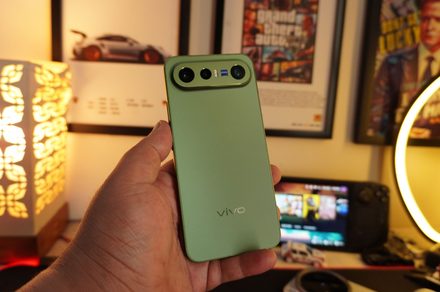

“The Hawkeye of flagship phones.”
- Compact design
- Good cameras
- Battery life
- Weaker ultrawide lense
- USB 2.0
- Pricing on the higher side
Why Hawkeye?
Hawkeye was never the strongest Avenger, nor did he have the flashiest suit or superpowers. Yet he consistently proved his worth through precision, reliability, and doing the fundamentals exceptionally well. The Vivo X300 FE follows the same philosophy. It doesn’t chase outrageous specifications or marketing gimmicks. Instead, it quietly nails the essentials with a superb display, dependable performance, excellent cameras, and outstanding battery life. It may not grab all the headlines, but when it matters, it’s the flagship that gets the job done.
I’ve lost count of how many “Lite,” “SE,” and “FE” phones I’ve reviewed over the years. More often than not, they’re flagship phones on a diet – some calories cut from the camera, a little shaved off the processor, and maybe a few corners rounded off to hit a lower price. So, I approached the Vivo X300 FE with the usual skepticism. Thankfully, it proved me wrong.
Rather than trying to be the cheapest member of the X300 family, the FE feels like the most sensible one. It’s built around a compact 6.31-inch LTPO AMOLED display that strikes a sweet balance between usability and immersion. I could comfortably use it with one hand, yet it never felt cramped while watching videos, editing photos, or simply scrolling through social media.
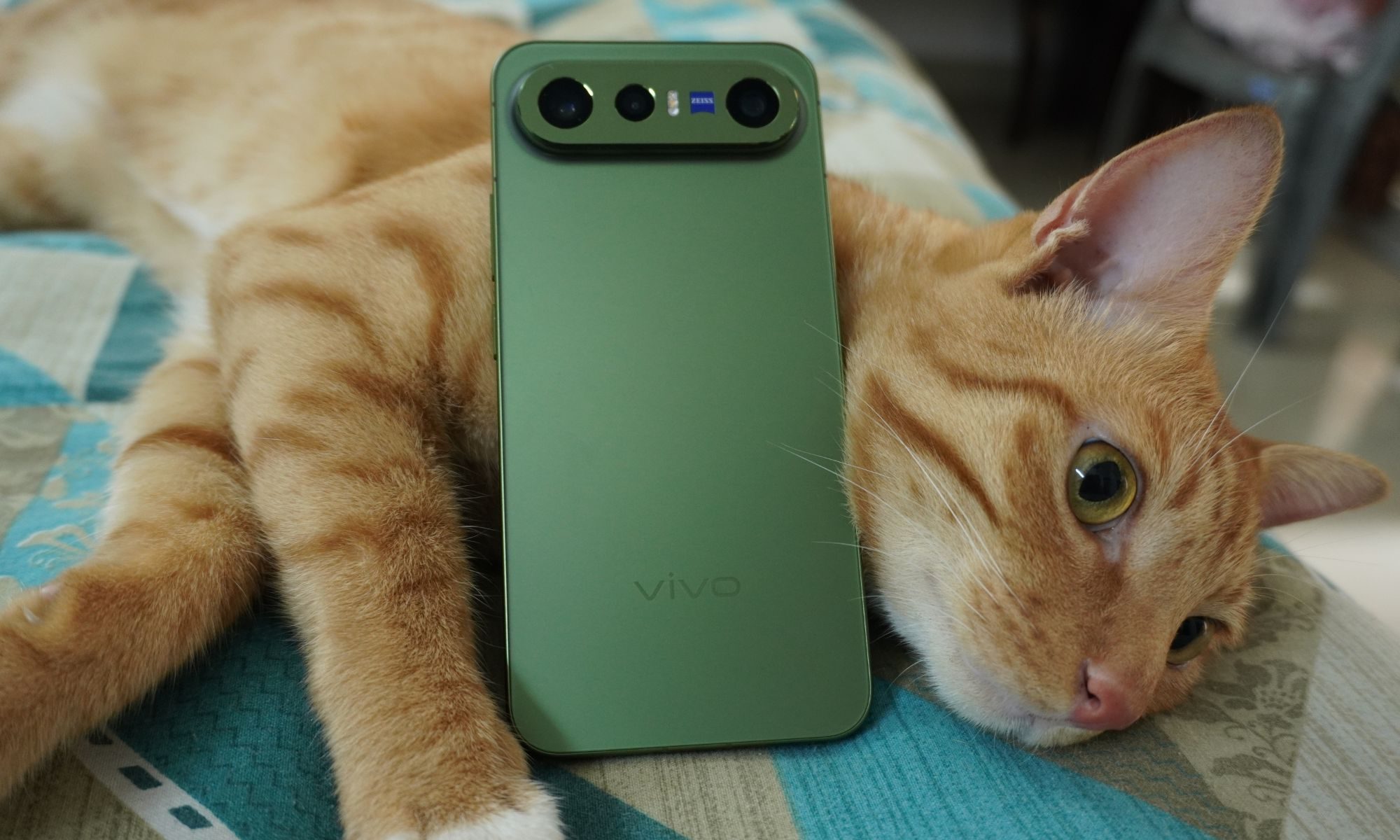
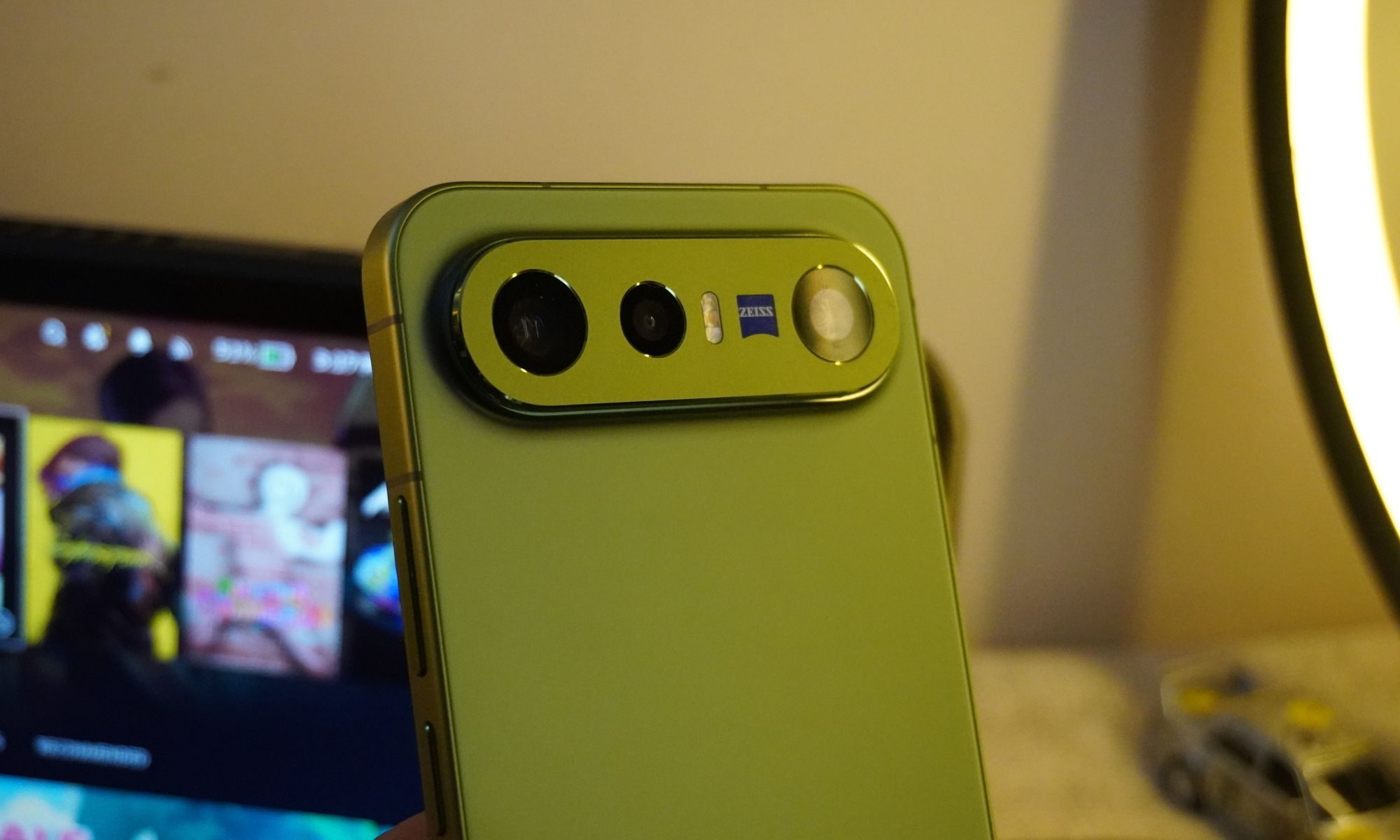
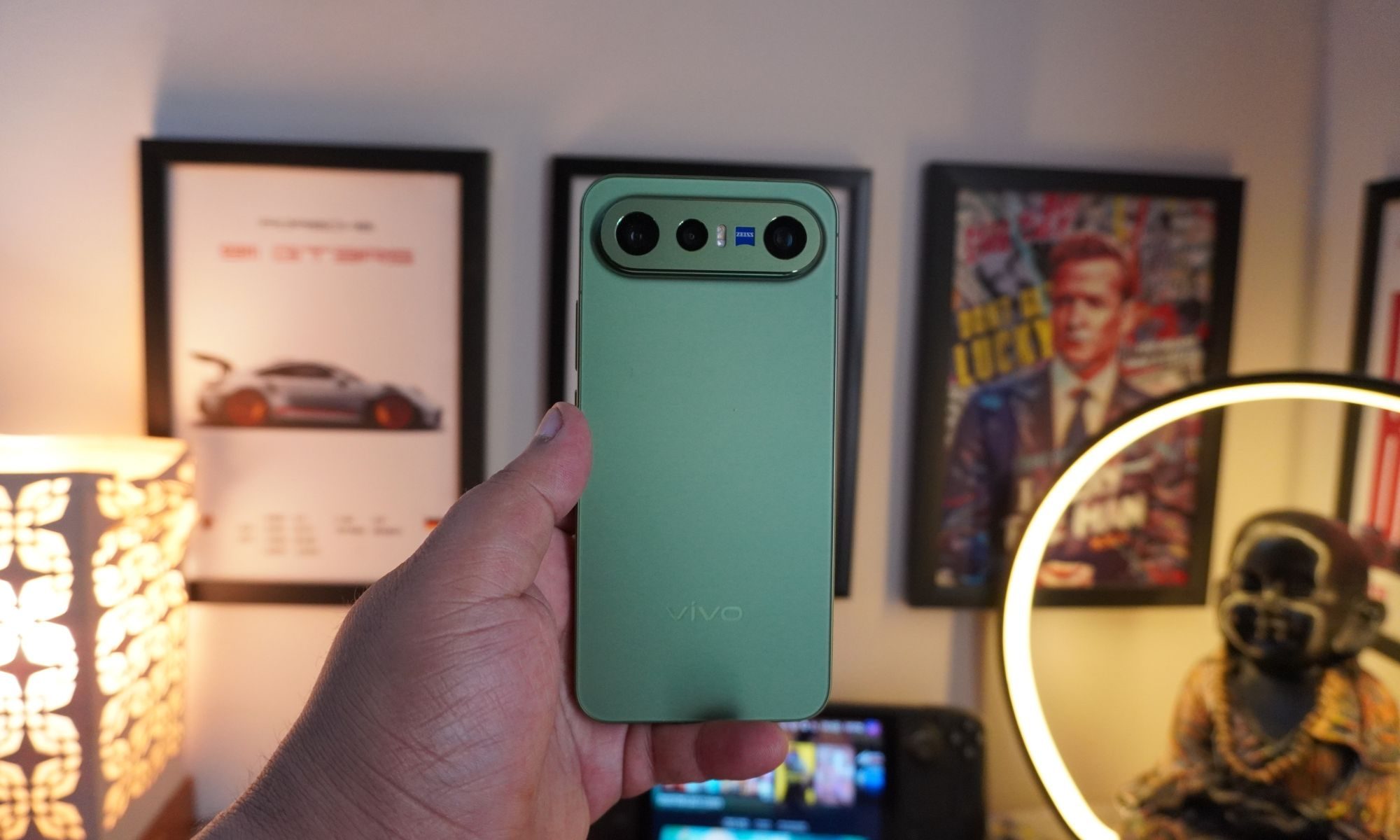
Before we start anything else, the design also deserves a mention. Instead of Vivo’s familiar circular camera island, the phone adopts a horizontal camera bar that immediately reminded me of Google’s recent Pixel devices. It’s a noticeable departure, but one that gives the phone a cleaner and more distinctive identity.
At around $1,100 in global markets, the Vivo X300 FE isn’t exactly inexpensive, and buyers in the US will have to import one since it isn’t officially sold there. Even so, after spending time with it, I came away thinking this is the phone I’d recommend to most people in the X300 lineup. It makes a few sensible compromises, gets almost everything else right, and proves that a compact flagship doesn’t have to feel like a compromise at all.
Oh, and what a compromise it would have been – and with it, the Vivo X300 FE review is here!
Quick take
The Vivo X300 FE proves that not every flagship needs to be enormous or cost a fortune to feel premium. It combines a compact, comfortable design with an excellent 6.31-inch LTPO AMOLED display, dependable Snapdragon 8 Gen 5 performance, polished OriginOS 6 software, and a massive 6,500mAh battery that easily lasts a full day.
The cameras are another highlight, particularly the excellent 50MP primary and 50MP 3x telephoto sensors, although the 8MP ultrawide feels like the one obvious compromise. Fast 90W wired and 40W wireless charging only strengthen the package. At around $1,100, it isn’t exactly inexpensive, but it delivers a flagship experience without trying to impress through sheer size or unnecessary specifications. If you’re looking for a compact Android flagship that gets the fundamentals right, the Vivo X300 FE is one of the easiest phones I’d recommend this year.
Vivo X300 FE Specifications
| Specification | Vivo X300 FE |
|---|---|
| Dimensions | 150.8 x 71.8 x 8.2 mm |
| Weight | 190g |
| Display | 6.31-inch LTPO AMOLED, 120Hz, HDR10+ |
| Screen Resolution | 2640 x 1216 (1.5K), ~461ppi |
| Chipset | Qualcomm Snapdragon 8 Gen 5 (3nm) |
| RAM | 12GB LPDDR5X |
| Storage | 256GB / 512GB UFS 4.1 |
| OS | Android 16 based OriginOS 6 (5 years of OS updates) |
| Rear Cameras | 50MP main (OIS) / 50MP 3x telephoto (OIS) / 8MP ultrawide |
| Front Camera | 50MP autofocus |
| Battery & Charging | 6,500mAh / 90W wired / 40W wireless / Reverse wired & wireless charging |
Design and build quality
Quick take: I stopped noticing the phone, and that’s the highest compliment.
If there’s one thing Vivo has consistently done well over the past few years, it’s industrial design. The Vivo X300 FE continues that trend, but in a way I honestly didn’t expect. While most flagship phones seem determined to wear their camera hardware like a badge of honour, the X300 FE takes a far more restrained approach. The gigantic circular camera island seen on the rest of the X300 lineup is gone. In its place is a neatly arranged horizontal camera module that not only looks cleaner but also solves one of my biggest pet peeves. The phone barely wobbles when placed on a desk. It’s a small detail, yet one you’ll appreciate every single day.
The design itself feels mature rather than flashy. Vivo has resisted the temptation to add unnecessary textures or exaggerated curves. Instead, the phone relies on clean lines, symmetrical proportions, and a balanced weight distribution to make a strong first impression. It is the kind of design that grows on you rather than demanding your attention the moment you unbox it.
Build quality is exactly what I expect from a flagship. The phone sandwiches a metal frame between two tempered glass panels, with the rear sporting a smooth matte finish that does an excellent job of hiding fingerprints. The frosted metal frame complements the back nicely and gives the device a premium feel without becoming overly slippery. Well, almost. The finish is so smooth that the phone occasionally reminded me it had ambitions of becoming a paperweight on my tiled floor. Thankfully, Vivo includes a colour-matched protective case in the box, and I’d recommend using it from day one.
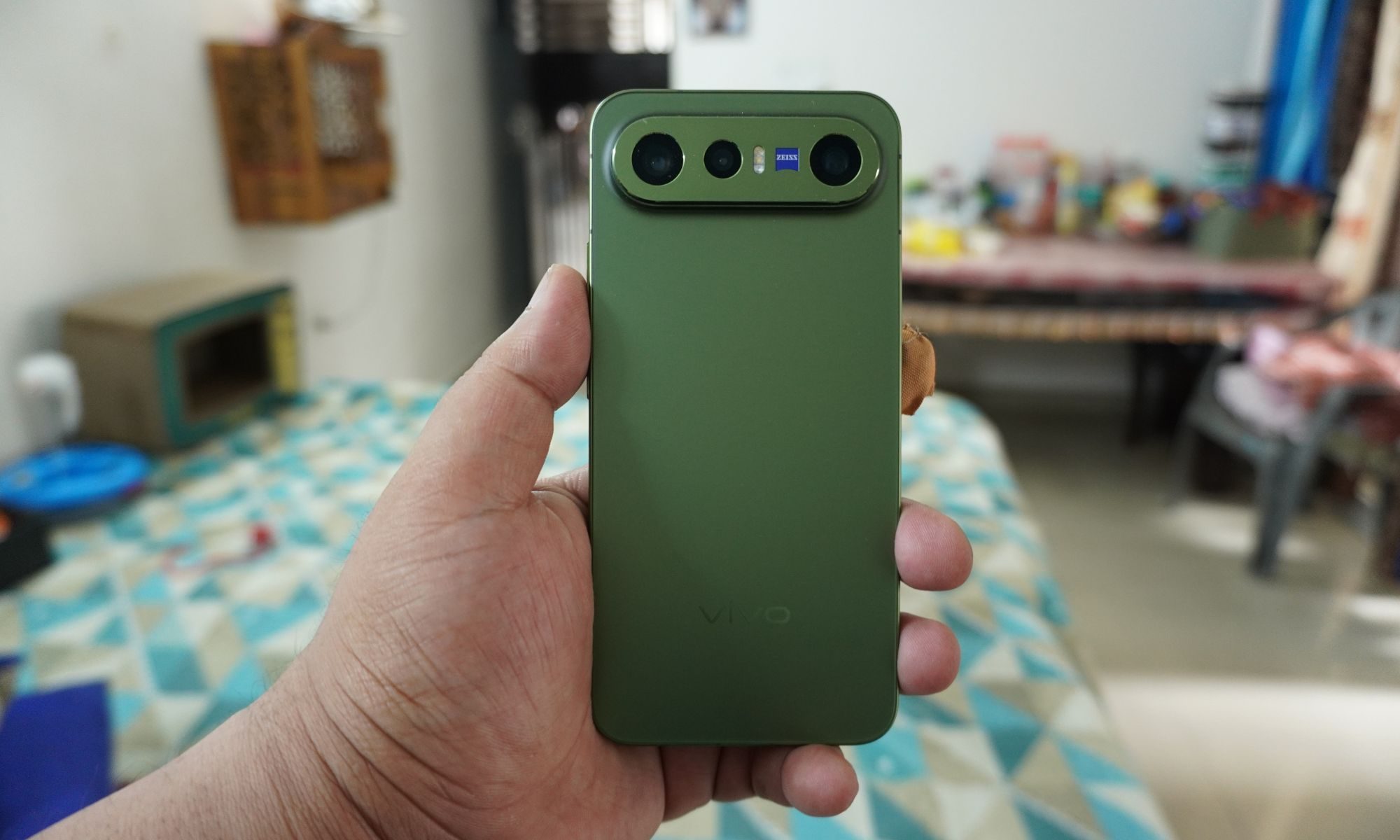
The X300 FE also comes with IP68 and IP69 certification, making it resistant to dust, water immersion, and even high-pressure water jets. It’s reassuring to know the phone can survive more than just an accidental splash of coffee during a busy workday.
At 150.8 x 71.8 x 8.2mm and 190g, the X300 FE comfortably sits in the sweet spot between compact and conventional. It’s noticeably easier to handle than the growing army of Ultra and Pro Max smartphones, yet it doesn’t feel tiny either. If you’re expecting Galaxy S25 levels of compactness, you’ll still find the Vivo slightly larger and heavier. That said, after using oversized phones for months, switching back to the X300 FE felt genuinely refreshing.
The 6.31-inch LTPO AMOLED display dominates the front with remarkably slim and uniform bezels, giving the phone a modern appearance. The centred punch-hole houses a 50MP autofocus selfie camera, while an almost invisible earpiece doubles as part of the stereo speaker setup. Beneath the display sits an ultrasonic fingerprint scanner that proved consistently fast and reliable throughout my testing.
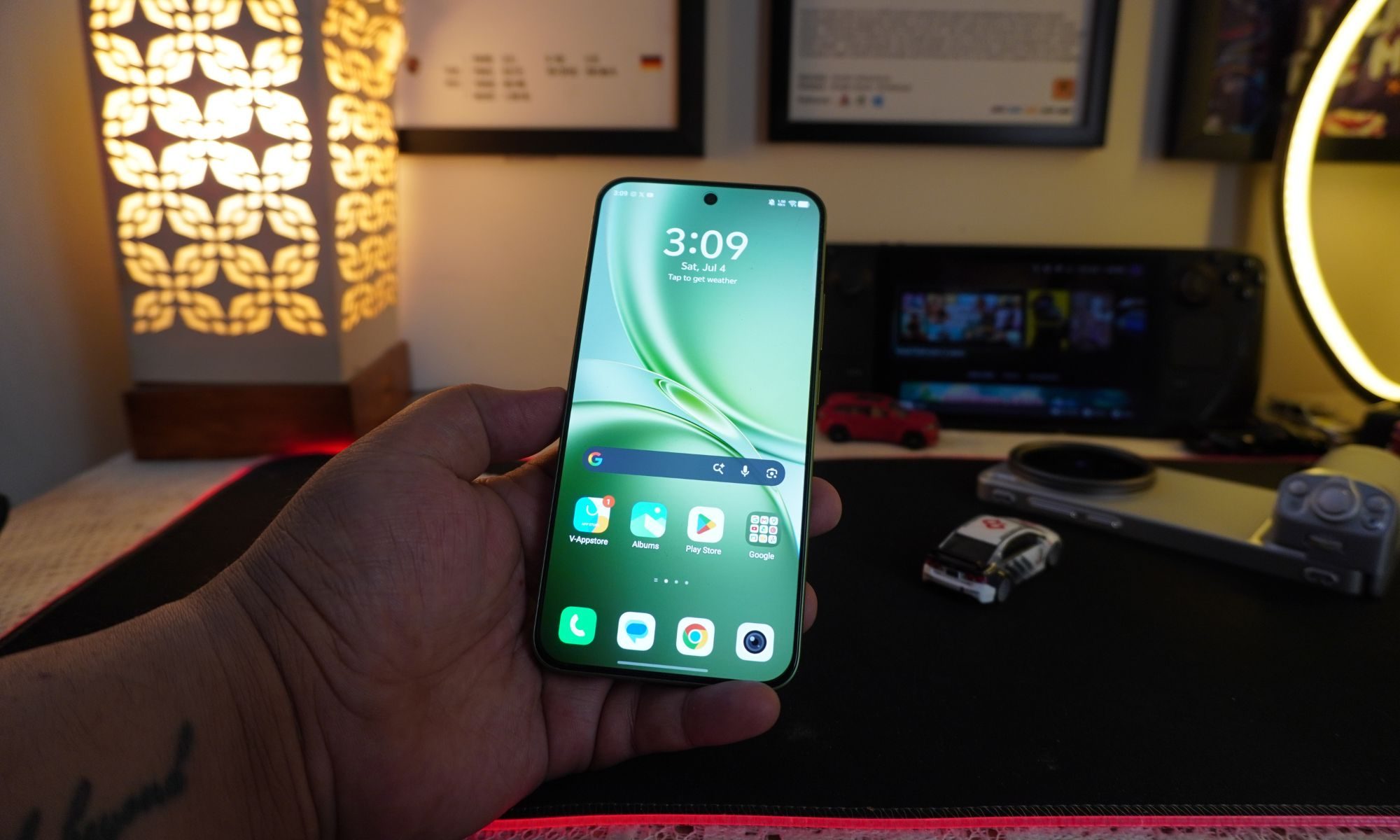
Around the edges, Vivo has kept things straightforward. The power and volume buttons sit comfortably on the right, the left side remains clean, while the top houses an IR blaster, microphone, and speaker outlet. At the bottom, you’ll find the USB-C port, dual-SIM tray with eSIM support on my review unit, another microphone, and the second stereo speaker.
After spending several days with the phone, I came away appreciating how little there is to complain about. It isn’t the lightest phone in its class, nor is it the smallest. What it does exceptionally well is disappear into your daily routine. It feels comfortable in the hand, looks understated without being boring, and reminds me that good design isn’t always about making the loudest statement. Sometimes, it’s about getting the basics right.
Score: 9/10
Display
Quick take: I never once wished for a better screen.
Vivo has taken the familiar route with the X300 FE’s display, and honestly, I have no complaints. Rather than reinventing the wheel, the company has reused the same excellent 6.31-inch LTPO AMOLED panel found on the X300 and the X200 Pro Mini. When the original recipe already works this well, there isn’t much reason to change it.
The display carries a crisp 1.5K resolution of 2640 x 1216 pixels with 10-bit colour support and a dynamic 120Hz refresh rate. It also peaks at an astonishing 5,000 nits, while maintaining an HBM brightness of 1,800 nits. On paper, those numbers are impressive. In everyday use, they translate into a screen that’s perfectly readable even under harsh afternoon sunlight. I never found myself squinting or hunting for shade just to reply to a message.
The panel itself is gorgeous. Colours are vibrant without looking artificially boosted, contrast is excellent, and blacks are as deep as you’d expect from a flagship OLED display. I spent hours watching Netflix, YouTube, and HDR content, and the experience never disappointed. HDR10+ support works exactly as it should, delivering richer highlights and more natural colours when compatible content is available.
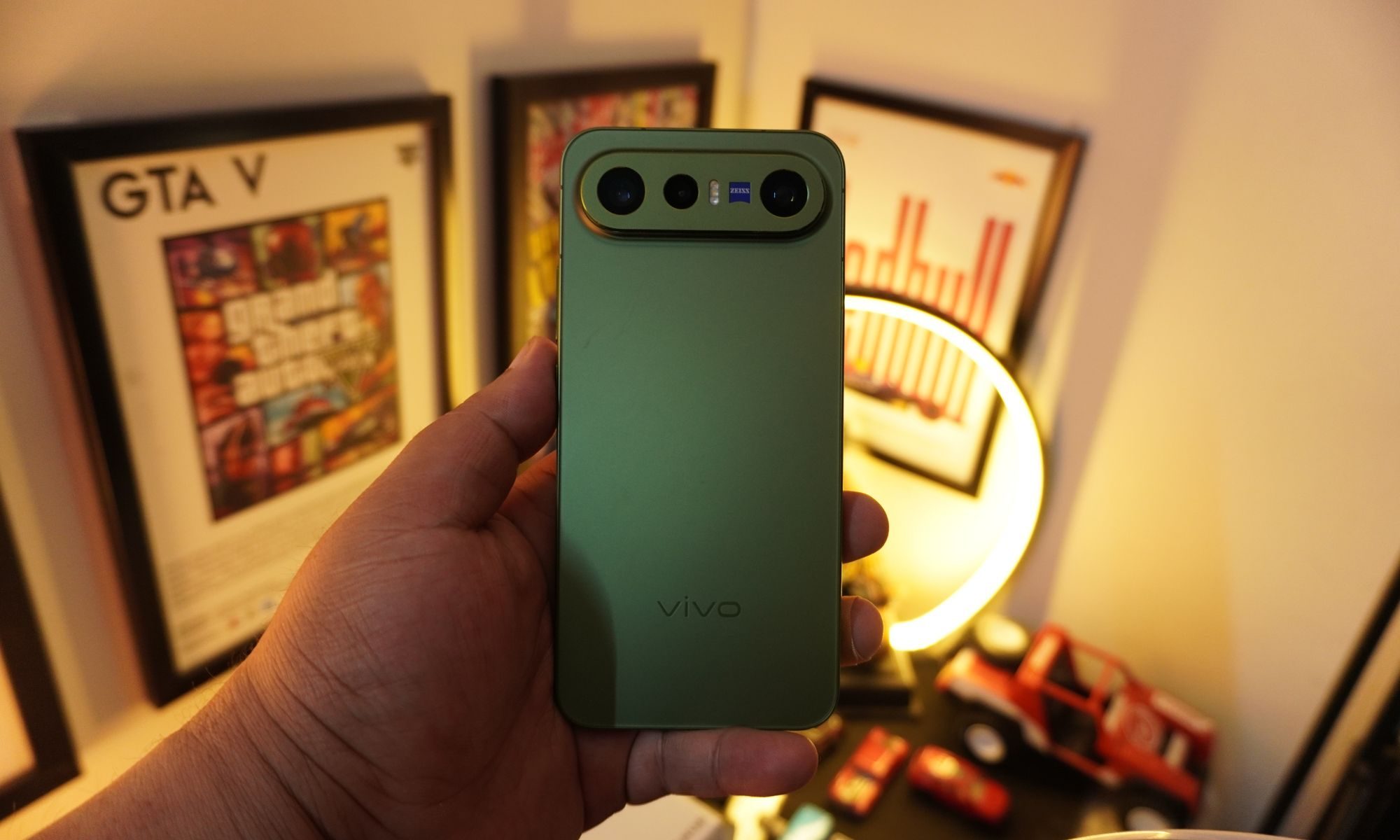
Being an LTPO panel also means the refresh rate intelligently shifts between 1Hz and 120Hz depending on what you’re doing. Whether I was scrolling through social media, reading articles, or playing games, animations felt consistently smooth without unnecessarily draining the battery. Vivo also gives you the flexibility to choose between Auto, High, and Standard refresh rate modes if you prefer manual control.
One area where Vivo deserves extra credit is display calibration. The phone offers Standard, Bright, and Professional colour profiles, with the Professional mode quickly becoming my favourite thanks to its accurate, natural-looking colours. Long reading sessions also proved comfortable because of the panel’s 2160Hz PWM dimming, which can be expanded to 4320Hz through developer settings, alongside SGS Low Blue Light certification. Add Schott Xensation Core glass protecting the display, and it feels every bit like a premium flagship.
The experience is rounded off by a capable stereo speaker setup. Audio gets comfortably loud without sounding harsh, and dialogue remains clear while streaming movies or watching YouTube videos. Push the volume all the way to 100 percent, however, and a slight hint of distortion begins to creep in. Keeping it around the 80 percent mark delivered the sweetest balance between loudness and clarity during my testing.
Overall, this is exactly the kind of display I’d expect from a flagship phone. It’s bright, colour accurate, fluid, and enjoyable to use every single day. Sometimes, sticking with a proven formula is the smartest decision a company can make, and Vivo has done exactly that here.
Score: 9/10
Software
Quick take: OriginOS finally made me forget Funtouch ever existed.
For years, Vivo users outside China had to settle for FuntouchOS while the more polished OriginOS remained an exclusive perk for the domestic market. Thankfully, that divide is finally gone. The Vivo X300 FE ships with the global version of OriginOS 6, and after spending time with it, I can confidently say this is one of the biggest upgrades the phone brings to the table. Vivo also promises five years of software support, which is reassuring if you plan on holding onto your phone for more than a couple of upgrade cycles.
The first thing I noticed wasn’t a flashy new feature. It was how everything moved. OriginOS 6 feels noticeably more refined than FuntouchOS ever did. Animations respond naturally to your gestures, transitions are smoother, blur effects are subtle instead of overdone, and the interface simply feels more alive. It is one of those improvements that’s difficult to showcase in screenshots, but impossible to ignore once you start using the phone. It finally feels like Vivo’s software is keeping pace with its excellent hardware.
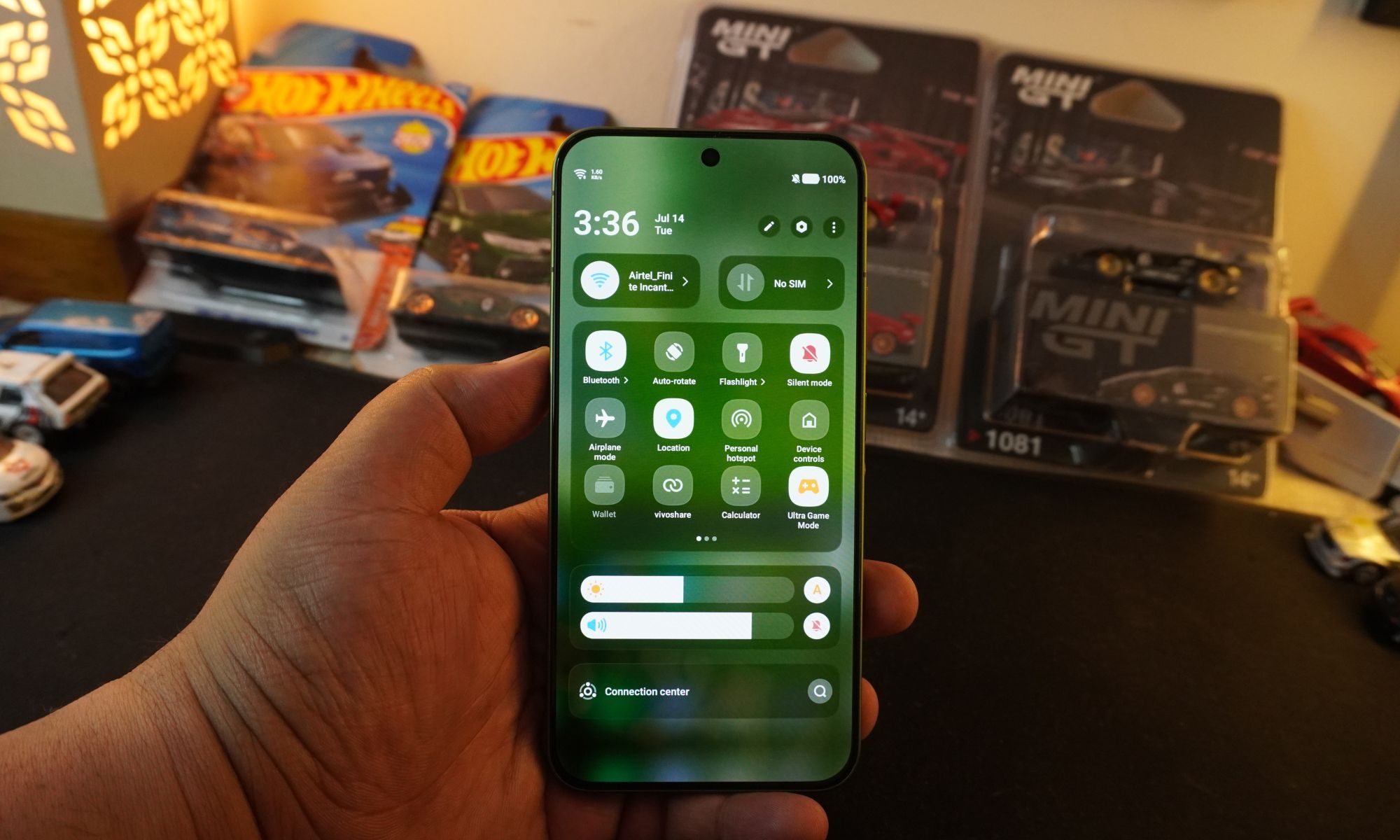
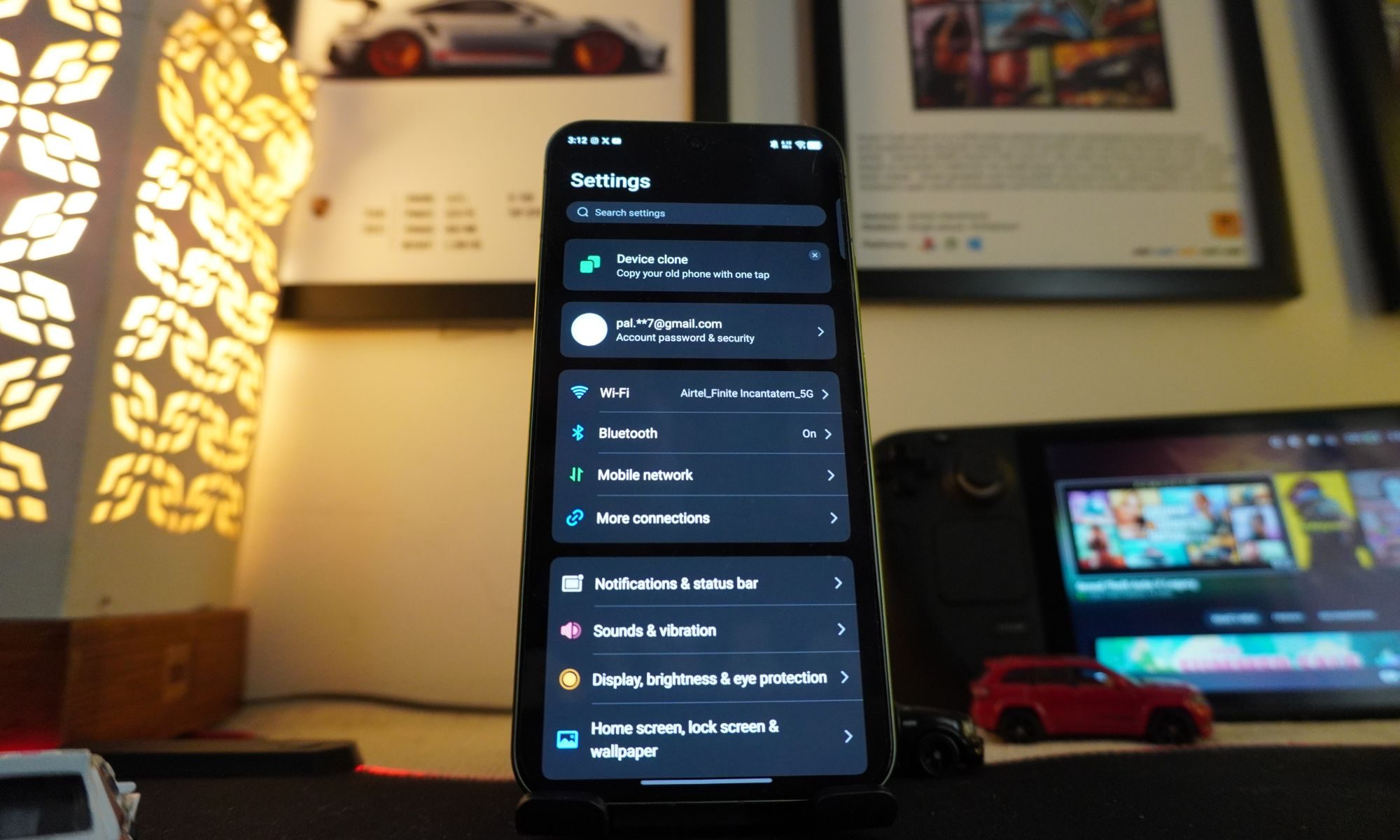
The visual overhaul is equally welcome. The redesigned Settings app is easier to navigate, the notification shade and Control Center look far more modern, and Vivo has introduced a custom system font alongside thousands of redesigned icons that maintain a consistent look throughout the interface. The new Gradient Blur effects add a premium touch without becoming distracting. Yes, the Control Center does remind me of recent iOS design trends, but let’s be honest. Every smartphone company has spent the past few years borrowing ideas from everyone else. The real question is whether it works, and here it absolutely does.
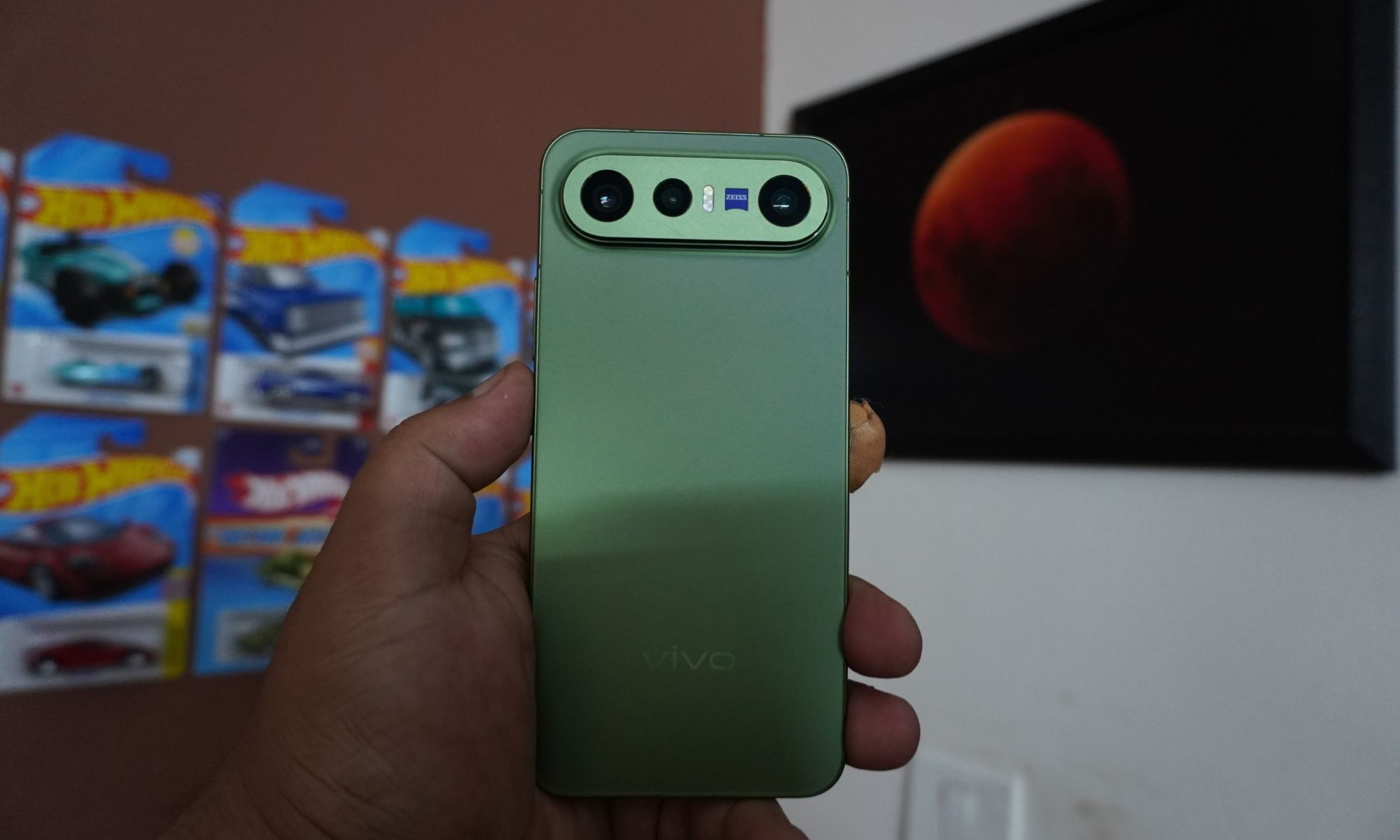
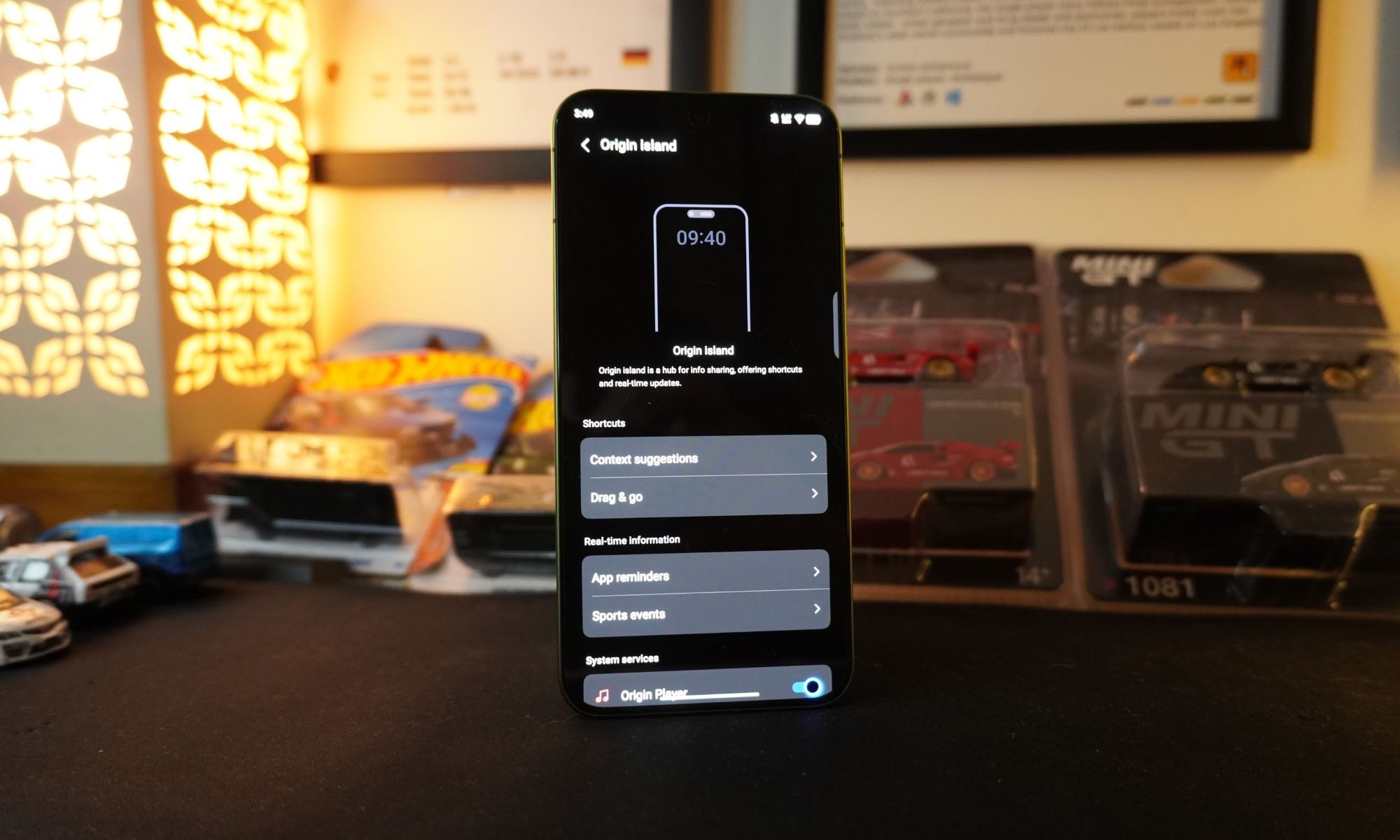
OriginOS also adds plenty of thoughtful customization options. The Flip Cards lock screen lets me rotate between multiple wallpapers simply by tilting the phone, while the lock screen itself supports depth effects and widgets similar to what many users now expect. Vivo’s Origin Island is another familiar concept, serving contextual information around the selfie camera for timers, music playback, and other background activities. It is hardly revolutionary, but it is genuinely useful.
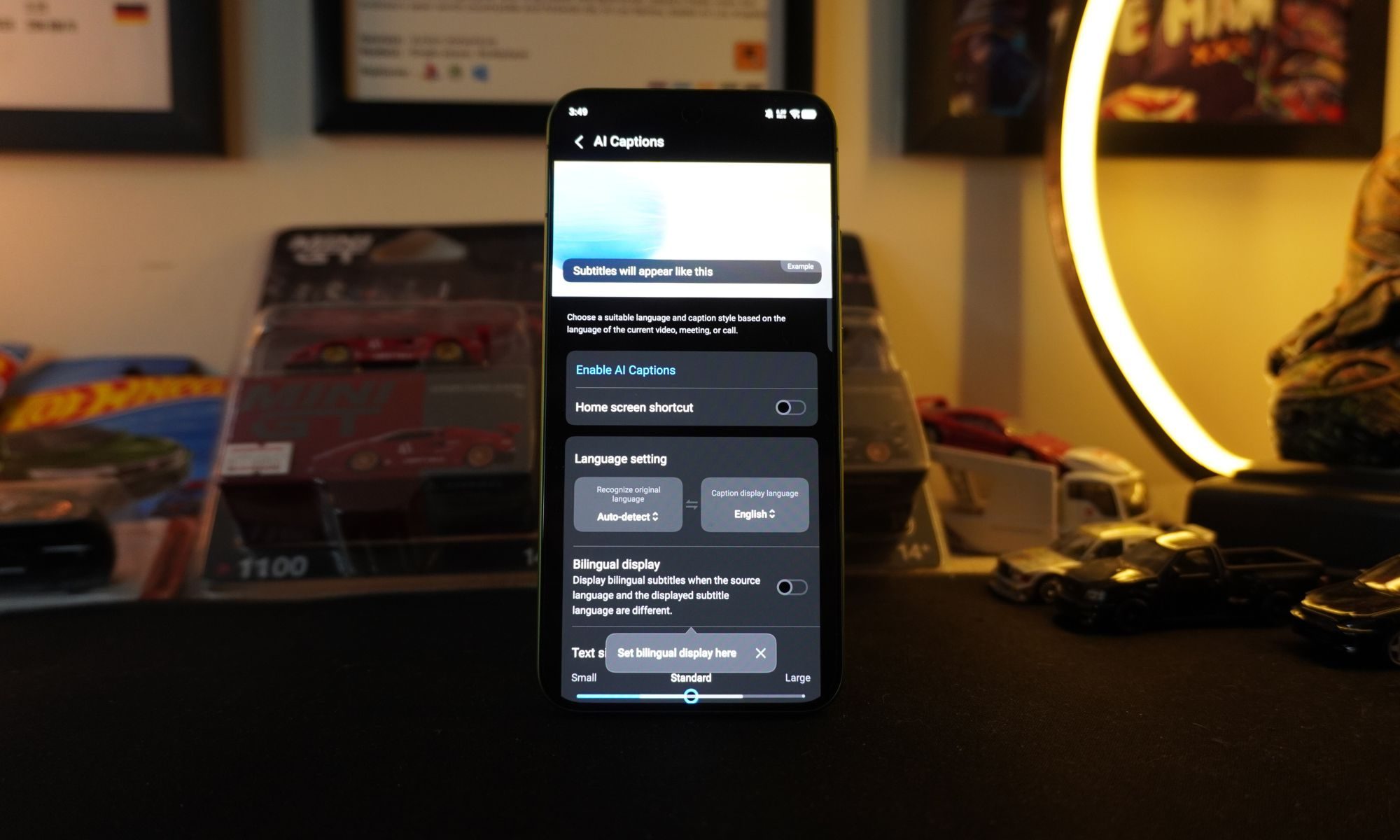
Artificial intelligence naturally finds its way into almost every corner of the software. The built-in writing assistant can proofread, rewrite, or summarize text, while AI Captions handles live transcription and translation. Document editing for PDF and Word files also gets AI enhancements, and the Gallery app now neatly groups image editing tools in one place. Circle to Search has also gained scrolling translation, making multilingual browsing far more convenient.
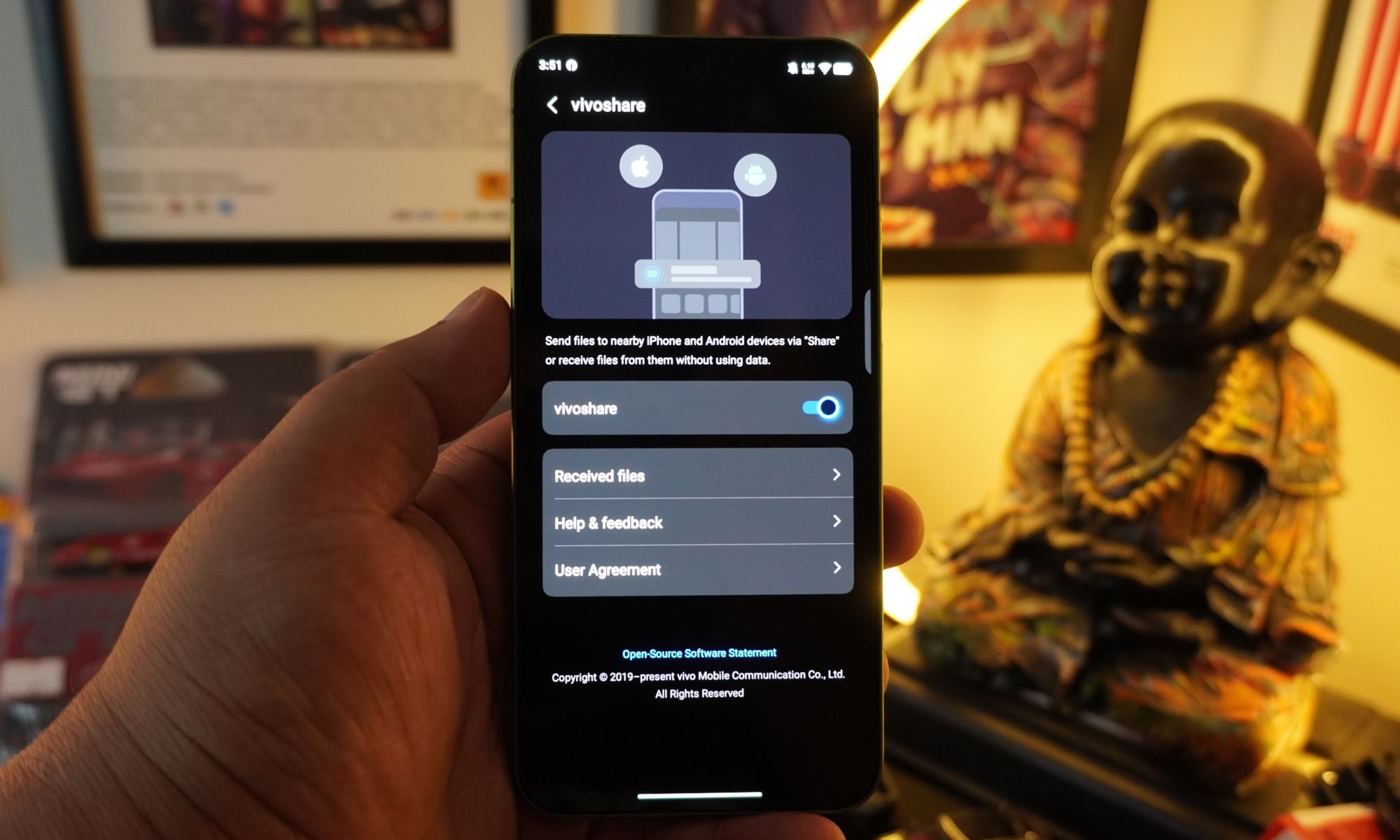
Cross-device features have also matured. The new Connection Center allows screen mirroring, file transfers, and task handoff with PCs, while EasyShare enables transfers to other Vivo phones and even iPhones after a quick setup. Add Private Space for sensitive files and app cloning for running multiple accounts, and OriginOS 6 feels remarkably complete.
After using it on a daily basis, I honestly don’t miss FuntouchOS. OriginOS 6 looks cleaner, feels faster, and brings enough meaningful improvements to make the software experience finally worthy of Vivo’s flagship hardware. In many ways, this feels less like a routine update and more like the software reset Vivo should have delivered years ago.
Score: 9/10
Performance and benchmarks
Quick take: I stopped checking benchmarks because performance was that good for a compact phone.
If there’s one area where the Vivo X300 FE surprised me, it was performance. On paper, the Snapdragon 8 Gen 5 sits one rung below Qualcomm’s flagship Snapdragon 8 Elite Gen 5. Naturally, that raises the question of whether you’re sacrificing anything meaningful. After using the phone for several weeks, my answer is simple: not really.
Yes, Qualcomm has trimmed a few things to create this chip. The Prime and performance cores run at lower clock speeds than the Elite variant, the Adreno 829 GPU isn’t as powerful as the flagship Adreno 840, and the modem and memory subsystem have also been dialled back slightly. None of that sounds particularly exciting on a specification sheet, but in day-to-day use, I honestly forgot I wasn’t using Qualcomm’s absolute best silicon.
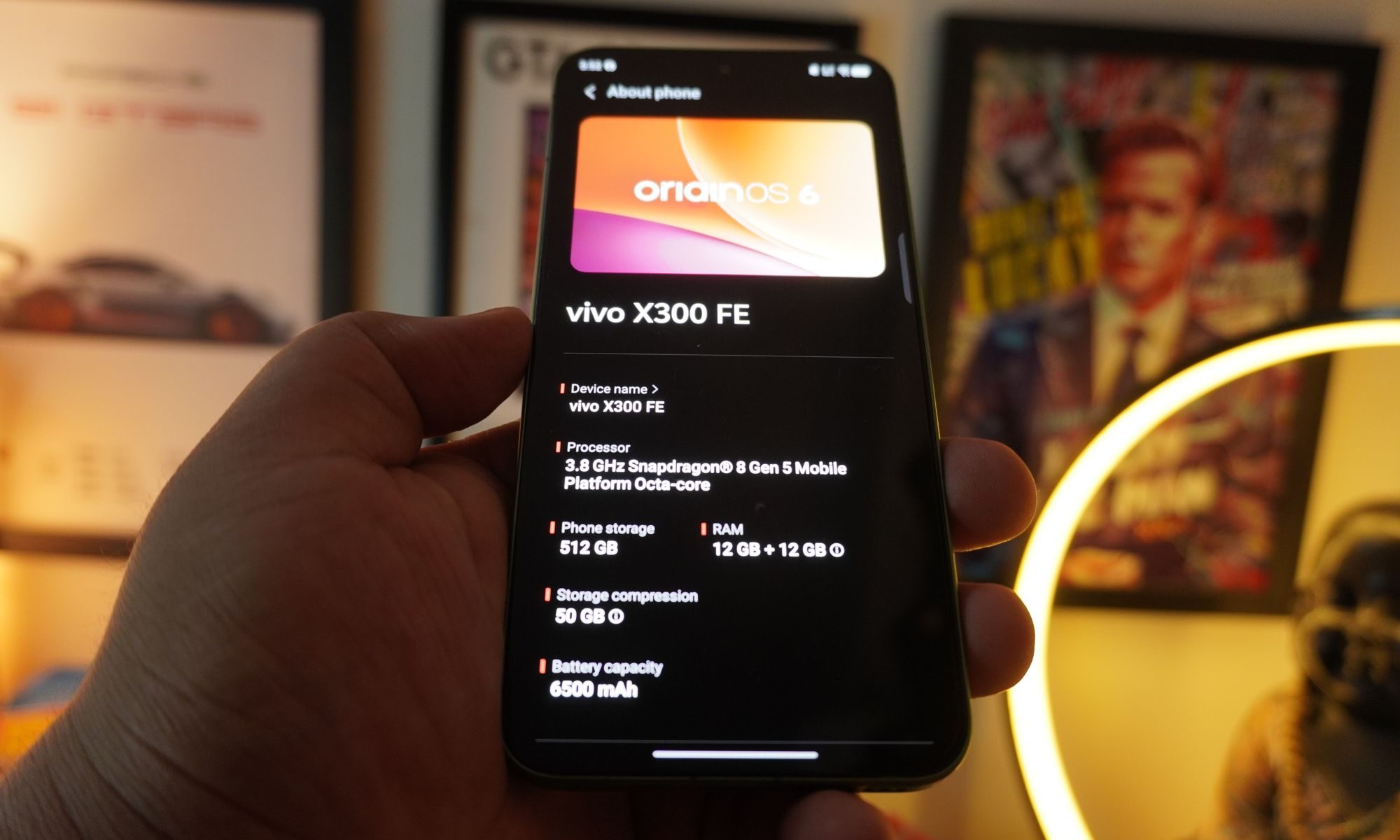
My review unit came with 12GB of LPDDR5X RAM and 512GB of UFS 4.1 storage, and the combination made the phone feel effortlessly fast. Apps launched instantly, multitasking was seamless, and I never found myself waiting for the phone to catch up. Whether I was editing photos, switching between half a dozen apps, or opening embarrassingly large Chrome tab collections that I swear I’ll read later, the X300 FE handled everything without complaint.
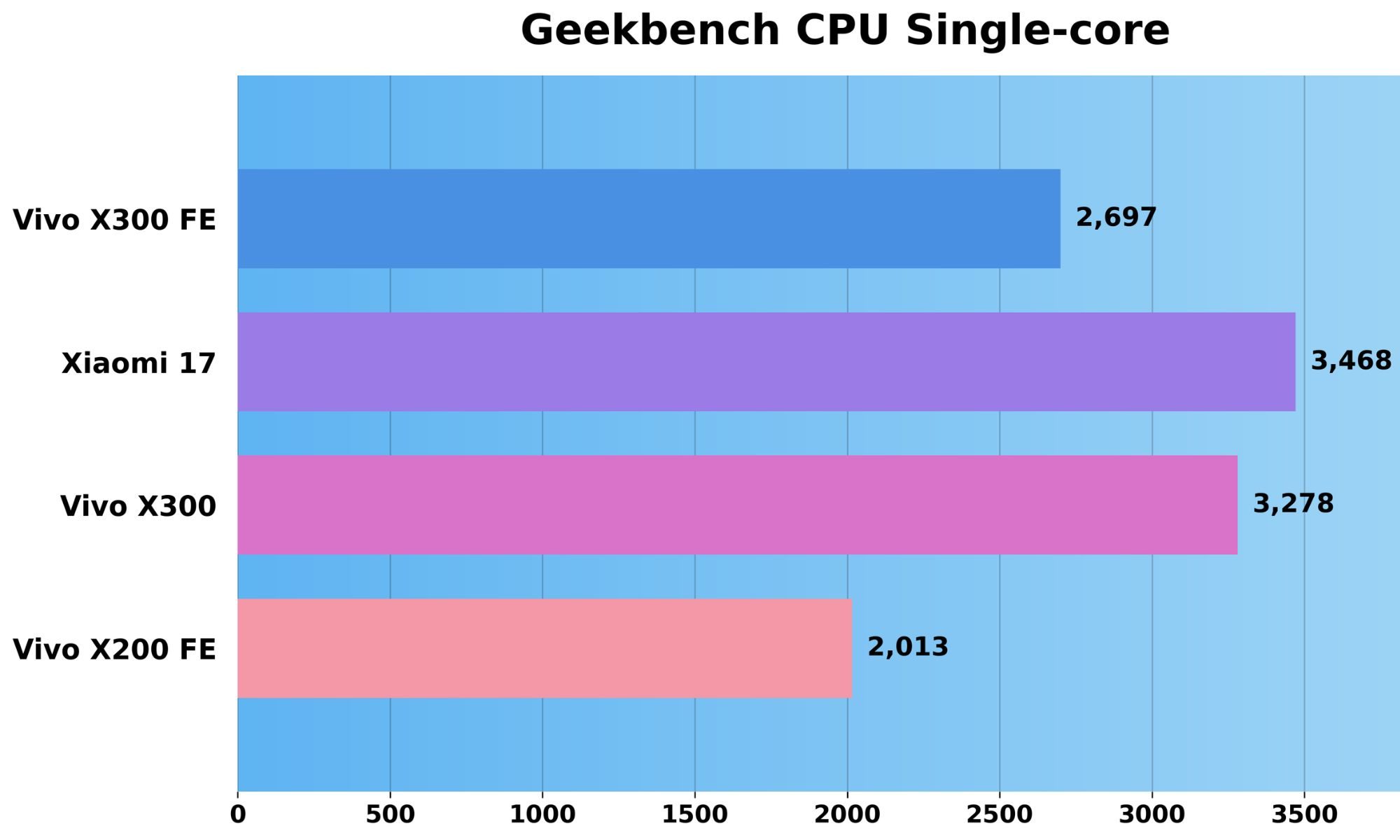
Synthetic benchmarks only tell part of the story, but they do offer a good indication of where the Vivo X300 FE sits in the flagship hierarchy. The Snapdragon 8 Gen 5 doesn’t quite match Qualcomm’s Elite chipset or MediaTek’s latest Dimensity flagship, yet it comfortably delivers true flagship-class performance.
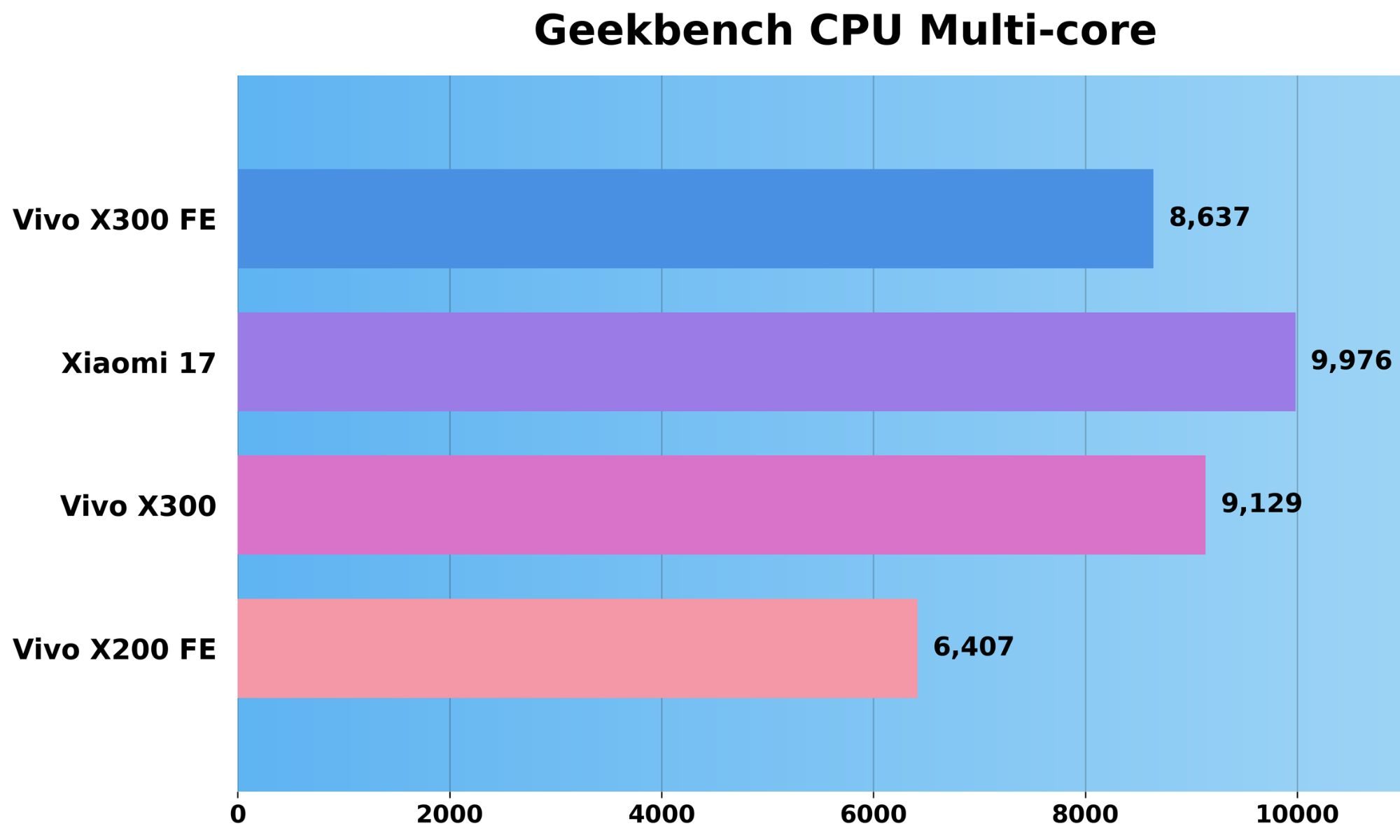
Starting with Geekbench, the X300 FE scored 2,697 in the single-core test and 8,637 in the multi-core test. That puts it well ahead of last year’s X200 FE, which managed 2,013 and 6,407, respectively. The Xiaomi 17 and Vivo X300 still hold an advantage with their more powerful chipsets, but the gap isn’t large enough to translate into a noticeable difference during everyday use.
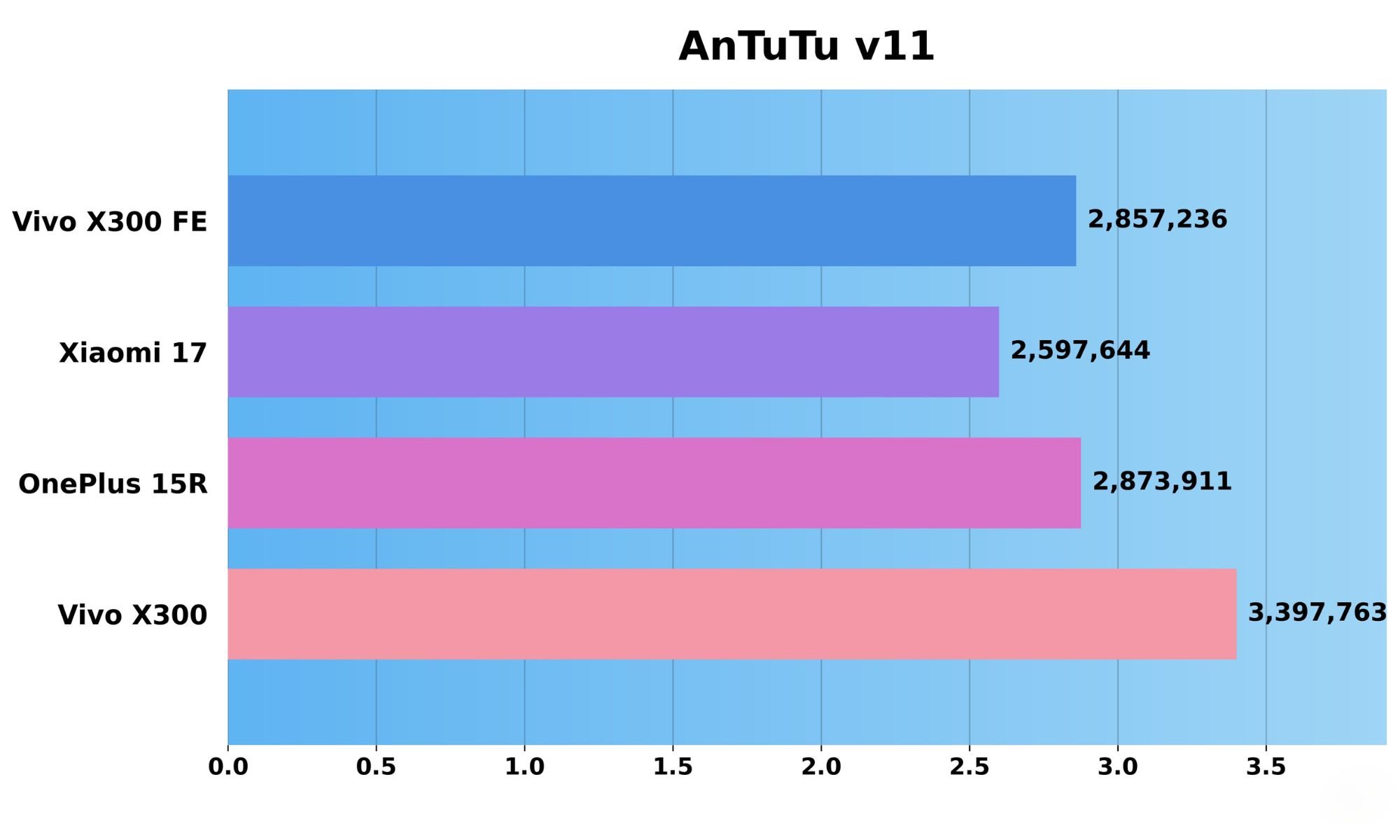
AnTuTu paints an equally positive picture. The X300 FE posted 2,857,236 points, edging past the OnePlus 15R’s 2,873,911 by only a small margin while comfortably outperforming the Xiaomi 17’s 2,597,644. Only the flagship Vivo X300, with its 3,397,763 score, establishes a significant lead.
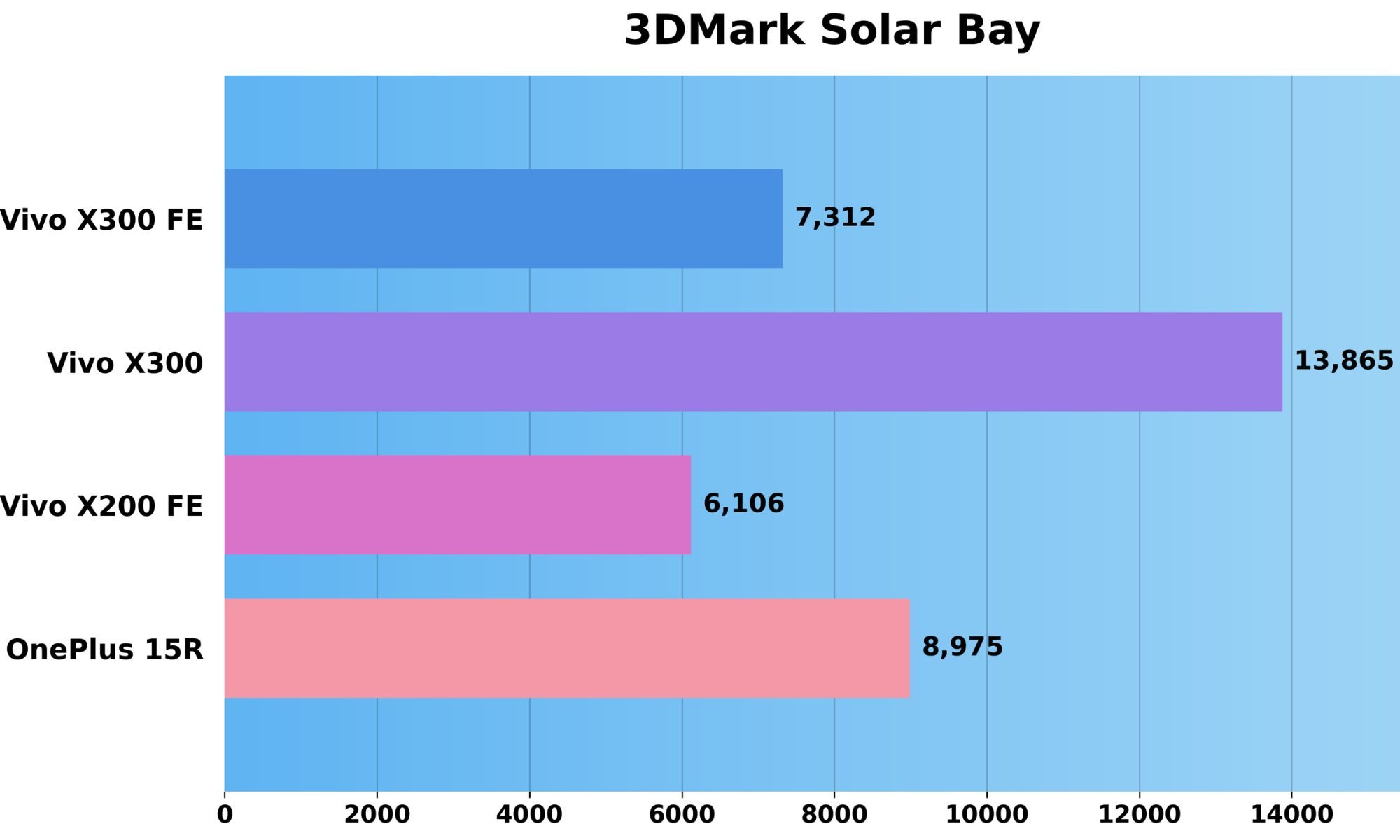
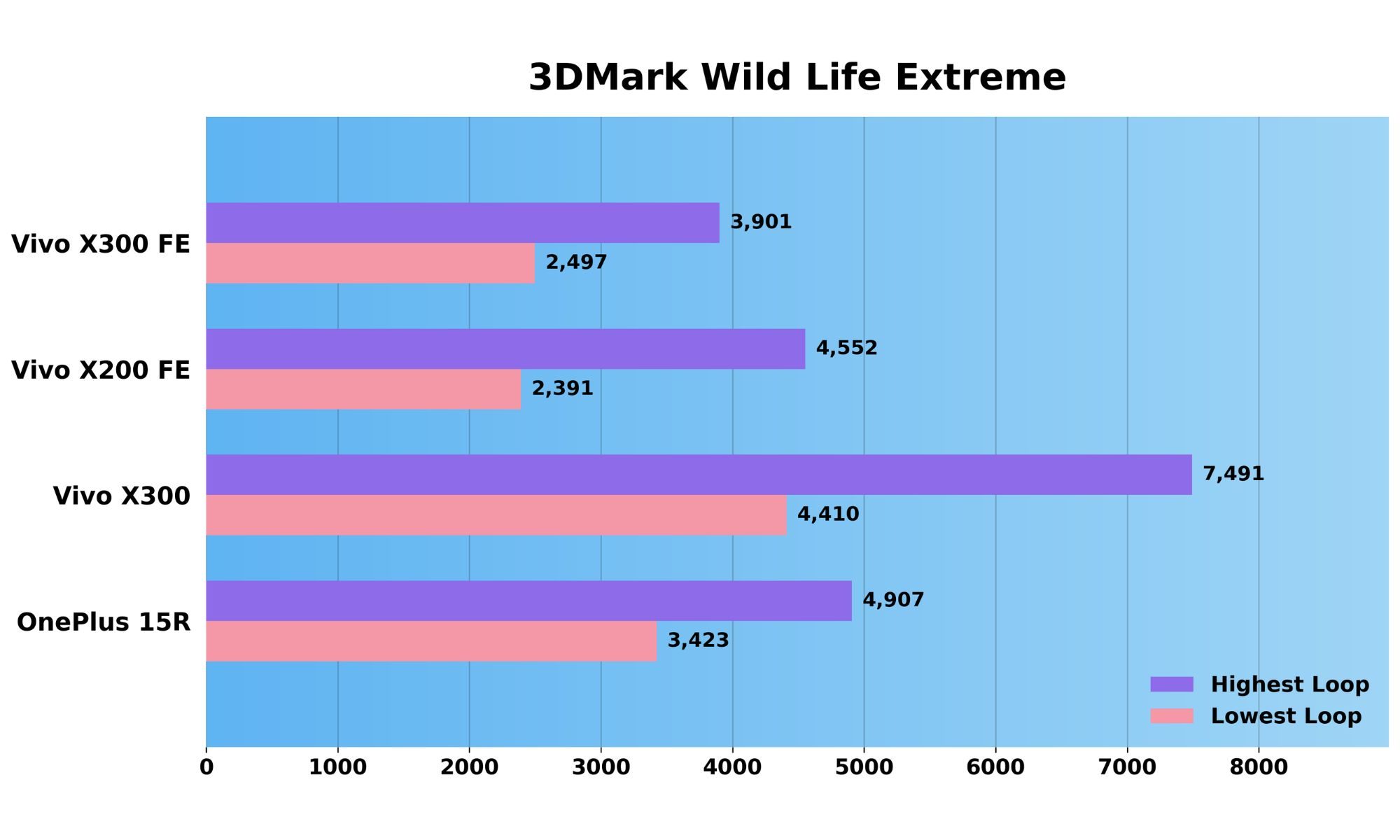
Graphics performance tells a slightly different story. In 3DMark Wild Life Extreme, the X300 FE achieved a peak score of 3,901, falling behind both the OnePlus 15R (4,907) and Vivo X300 (7,491). Interestingly, sustained performance remains respectable, with the lowest loop score of 2,497 slightly exceeding the X200 FE’s 2,391, indicating decent thermal management under prolonged load. The Solar Bay benchmark also reflects the GPU’s position. The X300 FE scored 7,312, improving upon the X200 FE’s 6,106, but trailing the OnePlus 15R (8,975) and Vivo X300 (13,865).
Overall, the benchmark numbers reinforce exactly what I experienced during testing. The Vivo X300 FE isn’t trying to be the fastest flagship on the market. Instead, it offers consistently excellent performance without compromising efficiency, thermals, or battery life, which ultimately matters far more in everyday use than chasing record-breaking benchmark scores.
Numbers aside, what impressed me more was consistency. The Snapdragon 8 Gen 5 represents a noticeable step up from the Dimensity 9300 found in the previous X200 FE, and outside of dedicated stress tests, I rarely encountered noticeable thermal throttling. Even during longer gaming sessions, frame rates remained stable, and the phone never became uncomfortably warm.
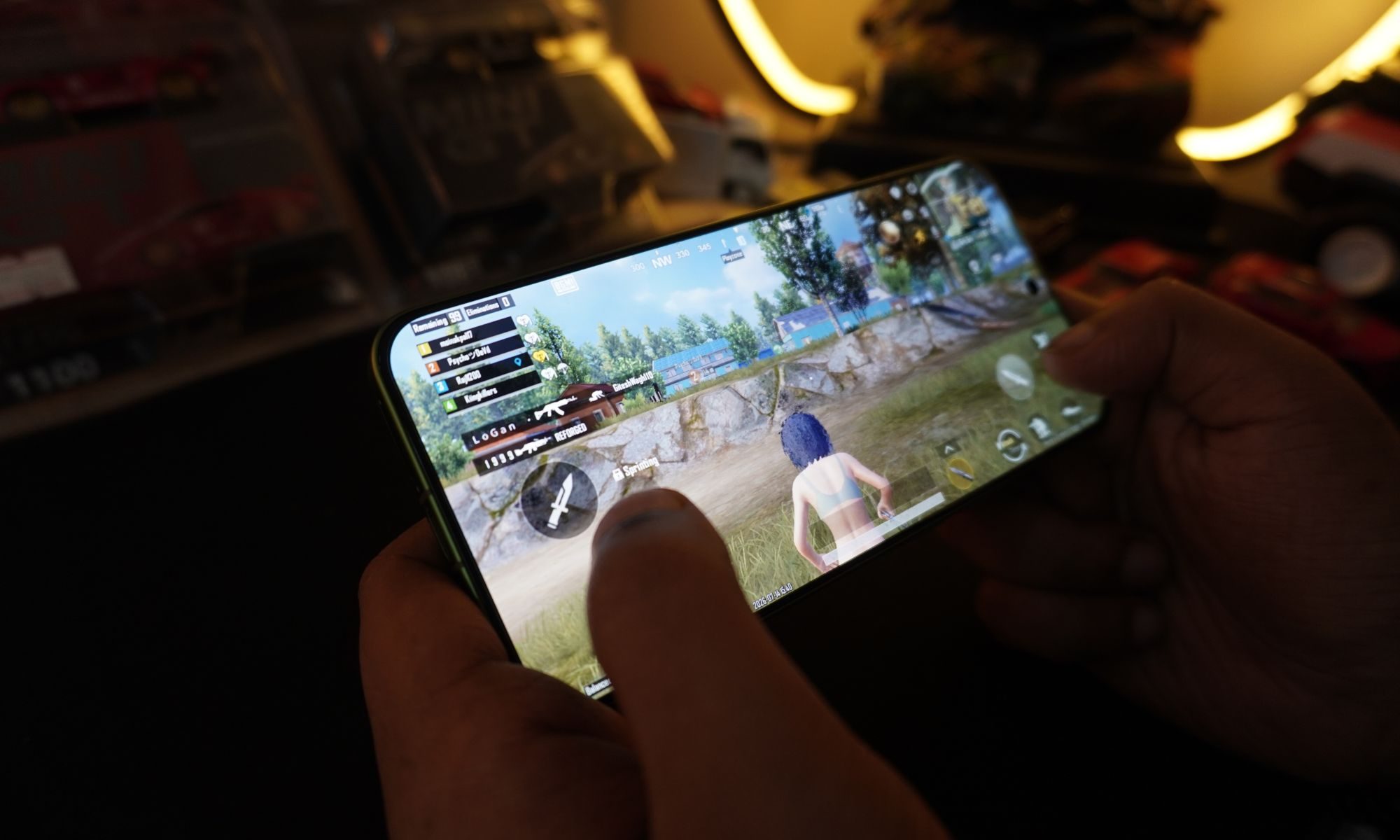
Could you squeeze a few extra frames per second out of a Snapdragon 8-powered flagship? Absolutely. Will most people notice the difference while playing BGMI, Genshin Impact, or Call of Duty Mobile? Probably not. At this point, flagship smartphone performance has reached a stage where the benchmark charts matter far more to reviewers than they do to buyers.
The Vivo X300 FE delivers exactly the kind of performance I’d expect from a premium phone. It is fast, reliable, thermally well-behaved, and never once left me wishing it had the Elite chip instead. That’s perhaps the biggest compliment I can give it.
Score: 9/10
Camera
Quick take: Portraits became the camera’s secret superpower.
Vivo has clearly followed the “if it isn’t broken, don’t fix it” philosophy with the X300 FE’s cameras. On paper, the setup looks almost identical to last year’s X200 FE. You get a 50MP primary camera, a 50MP 3x telephoto, an 8MP ultrawide, and a 50MP autofocus selfie camera. The hardware changes are minimal, but as I quickly found out, image processing has evolved enough to make this feel like a more polished camera system.
I spent most of my time shooting with the main camera, and it rarely disappointed. The 50MP Sony Lytia sensor captures images with plenty of detail, excellent dynamic range, and consistently reliable white balance. Vivo still likes its colours on the vibrant side, particularly when it comes to greenery, which occasionally looked a little more enthusiastic than nature intended. Thankfully, it never crossed into cartoon territory. Images have plenty of contrast, shadows retain good detail, and highlights are handled confidently even in tricky lighting.
Human subjects are another strong point. Skin tones looked lively without becoming overly processed, facial details remained sharp, and portrait mode did an excellent job separating people from the background. I found myself happily switching between the standard Portrait mode and the tighter 50mm option depending on the scene, and both produced results I’d be happy to share without editing.
One feature I ended up using more than expected was the 2x crop from the main sensor. In good lighting, it delivers remarkably clean photos and doubles as an excellent close-up camera. Since the dedicated telephoto doesn’t focus particularly close, this 2x mode quietly becomes one of the phone’s most useful tricks.



Speaking of telephoto cameras, Vivo has absolutely nailed this one. The 50MP 3x shooter consistently delivered some of my favourite images during testing. Detail is excellent, colours remain pleasing, and dynamic range is impressive. Whether I was photographing buildings, pets, or people, the telephoto camera felt dependable enough to use without hesitation. Portraits at the native 85mm focal length looked especially natural, producing flattering compression and convincing background separation.
The zoom options beyond 3x are surprisingly usable as well. Vivo offers intermediate zoom levels between the optical focal lengths, and while image quality naturally drops as you push further, I still managed to capture plenty of usable shots around the 6x mark. The dedicated 10x mode is a different story. AI sharpening does its best to rescue distant subjects, but it often leaves images looking artificial. Let’s just say it’s more impressive in marketing slides than in my camera roll.





The ultrawide camera is where the compromises become obvious. An 8MP sensor simply doesn’t sound exciting in 2026, and I wasn’t expecting miracles. To Vivo’s credit, it performs better than the specifications suggest. Landscape shots looked detailed enough for social media, colours matched the primary camera reasonably well, and the overall image quality exceeded my expectations. I did miss autofocus, though. Close-up ultrawide photography is simply off the table.


Low-light photography turned out to be another pleasant surprise. The main camera captures bright, well-balanced images without going overboard on artificial sharpening. Night mode processing remains restrained, preserving natural textures while maintaining excellent dynamic range and accurate colours. Even the 2x crop mode held up surprisingly well after sunset, making it an easy recommendation when the telephoto framing felt too tight.
Selfies deserve special mention because they’re genuinely excellent. The 50MP autofocus front camera consistently produced sharp images with natural skin tones and plenty of detail. Whether I was taking selfies outdoors or making video calls indoors, I rarely found myself wishing for anything better.





Video recording is equally capable. The main camera supports up to 8K at 30fps and 4K at 120fps, while the telephoto and selfie cameras shoot up to 4K at 60fps. Electronic stabilisation is enabled across virtually every recording mode, and Vivo also includes an Ultra Stabilisation mode for even smoother footage, albeit capped at 1080p. My only disappointment was the ultrawide camera, which is limited to 1080p at 30fps. That feels unnecessarily restrictive on a phone positioned this high in the market.
After spending days shooting with the X300 FE, I came away convinced that Vivo has once again built one of the strongest camera systems in its class. The ultrawide is the only obvious compromise, but the excellent primary sensor, outstanding telephoto camera, dependable portraits, and one of the best selfie cameras I’ve used more than make up for it. If mobile photography is high on your priority list, the X300 FE gives you very little to complain about.
Score: 8/10
Battery
Quick take: Compact phone does not equal battery anxiety.
If there’s one specification that genuinely impressed me before I even switched the phone on, it was the battery. The Vivo X300 FE packs a massive 6,500mAh cell, making it one of the biggest batteries you’ll find in a compact flagship today. In daily use, that translated into exactly what I hoped for. I comfortably made it through a full day of heavy use with enough charge left over to stop worrying about where my charger was.
When I finally did need to plug it in, the bundled 90W FlashCharge adapter made short work of the battery. The phone climbed from 0 to 32 percent in just 15 minutes, reached 61 percent after half an hour, and hit 100 percent in roughly 49 minutes. For a battery this large, that’s seriously impressive. Wireless charging hasn’t been forgotten either, with support for 40W wireless charging, alongside both wired and wireless reverse charging.
Vivo has also packed in a handful of thoughtful battery features. You can cap charging anywhere between 70 and 100 percent to reduce long-term battery wear, while adaptive charging learns your routine to optimise charging speeds. My favourite addition, however, is bypass charging. During gaming, the phone can power the system directly instead of constantly charging the battery, helping keep temperatures under control. There’s also an option to disable fast charging altogether if you’d rather prioritise battery health over shaving a few minutes off charging time. It’s the kind of flexibility I wish more smartphone makers offered.
Score: 9/10
Final verdict
The Vivo X300 FE is one of those phones that quietly wins you over. It doesn’t chase outrageous benchmark numbers, squeeze in four unnecessary camera sensors, or scream for attention with an oversized camera island. Instead, it focuses on getting the fundamentals right, and after spending considerable time with it, I think Vivo has built one of the most well-rounded compact Android flagships of the year.
The highlights are easy to appreciate. The compact form factor makes it genuinely comfortable to use, the display is among the best in its class, OriginOS 6 finally gives Vivo’s global software the polish it has long deserved, and the Snapdragon 8 Gen 5 delivers flagship performance without ever becoming a thermal nightmare. Add to that a 6,500mAh battery that comfortably lasts a full day, blazing-fast charging, and a camera system led by an outstanding primary and telephoto duo, and there’s very little to fault in everyday use.
Of course, it isn’t perfect. The 8MP ultrawide camera feels like an obvious cost-cutting measure, the USB-C port misses out on faster transfer speeds, and at around $1,100, it isn’t exactly the bargain “Fan Edition” name might suggest. Buyers in the US will also need to import one.
Still, none of those compromises significantly affected my overall experience. The Vivo X300 FE doesn’t try to be the most powerful phone or the absolute best camera phone. It simply aims to be a flagship that excels where people actually spend most of their time, and it succeeds remarkably well. If you’re looking for a compact Android phone that delivers premium hardware, excellent cameras, outstanding battery life, and polished software without feeling like a compromise, the Vivo X300 FE deserves a place near the very top of your shortlist.
Why should you buy the Vivo X300 FE?
The Vivo X300 FE is the kind of phone I’d recommend to someone who simply wants a flagship that gets the basics right. It strikes an excellent balance between size, performance, cameras, battery life, and software without overcomplicating the formula.
The compact 6.31-inch form factor is genuinely refreshing in a market dominated by oversized devices, while the Snapdragon 8 Gen 5 delivers more than enough performance for years to come. I was equally impressed by the 6,500mAh battery, which comfortably lasted a full day, and the 90W charging that made battery anxiety almost irrelevant.
The camera system is another highlight, particularly the excellent primary and 3x telephoto cameras, which consistently produced flagship-quality images. Add OriginOS 6, five years of software updates, IP69 durability, wireless charging, and thoughtful extras like the bundled charger and case, and you have one of the most complete compact Android flagships currently available.
Why should you skip it?
As much as I enjoyed using the Vivo X300 FE, it isn’t for everyone. At around $1,100, it’s priced firmly in flagship territory, which naturally invites tougher competition. The biggest compromise is the 8MP ultrawide camera. While it performs better than the specifications suggest, it still feels out of place alongside the otherwise excellent camera system.
The USB-C port also lacks faster USB 3.x transfer speeds, which may disappoint content creators who frequently move large video files. If you live in the United States, availability becomes another issue since Vivo doesn’t officially sell the phone there, leaving imports as your only option.
Finally, if you’re someone who always wants the absolute fastest chipset or the very best camera hardware regardless of price, there are stronger alternatives available. The X300 FE focuses on balance rather than chasing specification records, and some buyers may prefer a phone that pushes every category to its limits.
Why not try?
Google Pixel 10: If photography and software matter more than raw performance, I’d seriously consider the Google Pixel 10. Google’s computational photography continues to be among the best in the business, while the clean Android experience, exclusive AI features, and seven years of software updates make it an excellent long-term investment. The Tensor G5 still trails Qualcomm in benchmark numbers, but the overall user experience remains polished and reliable.
Samsung Galaxy S26 Plus: The Samsung Galaxy S26 Plus is the safest all-round alternative. It offers Samsung’s mature One UI ecosystem, excellent productivity features, DeX desktop mode, faster USB connectivity, and one of the strongest software support commitments on Android. If you already own a Galaxy Watch, Galaxy Buds, or other Samsung devices, the ecosystem integration alone makes the S26 Plus difficult to ignore.
Apple iPhone 17: The iPhone 17 is the obvious choice if you’re already invested in Apple’s ecosystem. It offers a compact design, Apple’s latest A-series chip, years of software updates, and seamless integration with products like the Apple Watch, AirPods, and Mac. While it may not match some Android rivals in charging speeds or battery capacity, it delivers excellent performance, dependable cameras, and one of the most polished software experiences available. If ecosystem integration, long-term support, and reliability matter more than raw hardware specs, the iPhone 17 is a compelling alternative.
How we tested
The Vivo X300 FE was used as my primary smartphone for nearly a month, running the latest version of OriginOS 6 throughout the review period. I relied on it for everyday tasks, including messaging, social media, emails, video calls, navigation, photography, streaming, and productivity, to evaluate how it performs in real-world usage rather than controlled conditions.
Gaming was an important part of the review. I spent several hours playing BGMI at the highest supported frame rate to assess sustained performance, thermal management, and frame stability during extended sessions.
To complement my real-world experience, I also ran a suite of synthetic benchmarks, including Geekbench 6, AnTuTu v11, 3DMark Wild Life Extreme, and 3DMark Solar Bay, to measure both CPU and GPU performance. Battery life was evaluated across mixed Wi-Fi and 5G usage, combining photography, gaming, streaming, navigation, and standby time, while charging tests were conducted using the bundled 90W FlashCharge adapter to measure real-world charging speeds.