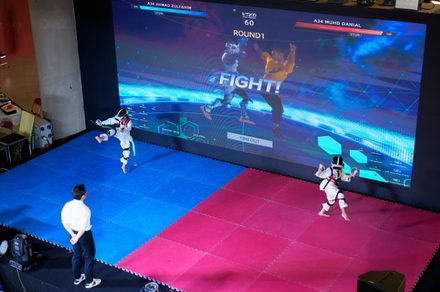
Virtual taekwondo sounds ridiculous in the easiest way. Put on a headset, strap sensors to your body, kick at empty air, and call it a combat sport. Somewhere, Wii Sports is quietly stretching.
Athletes are still kicking, reacting, and gasping through the work. The difference is that the hits land on avatars instead of bodies.
That makes its Asian Games debut more than a novelty slot for VR. The format gives taekwondo a way to stay physically demanding without making contact the price of entry.
Why no contact changes the game
Traditional taekwondo has a clear appeal, but sparring also creates a clear barrier. Some people want the discipline, movement, and competition without signing up to get kicked by another human.
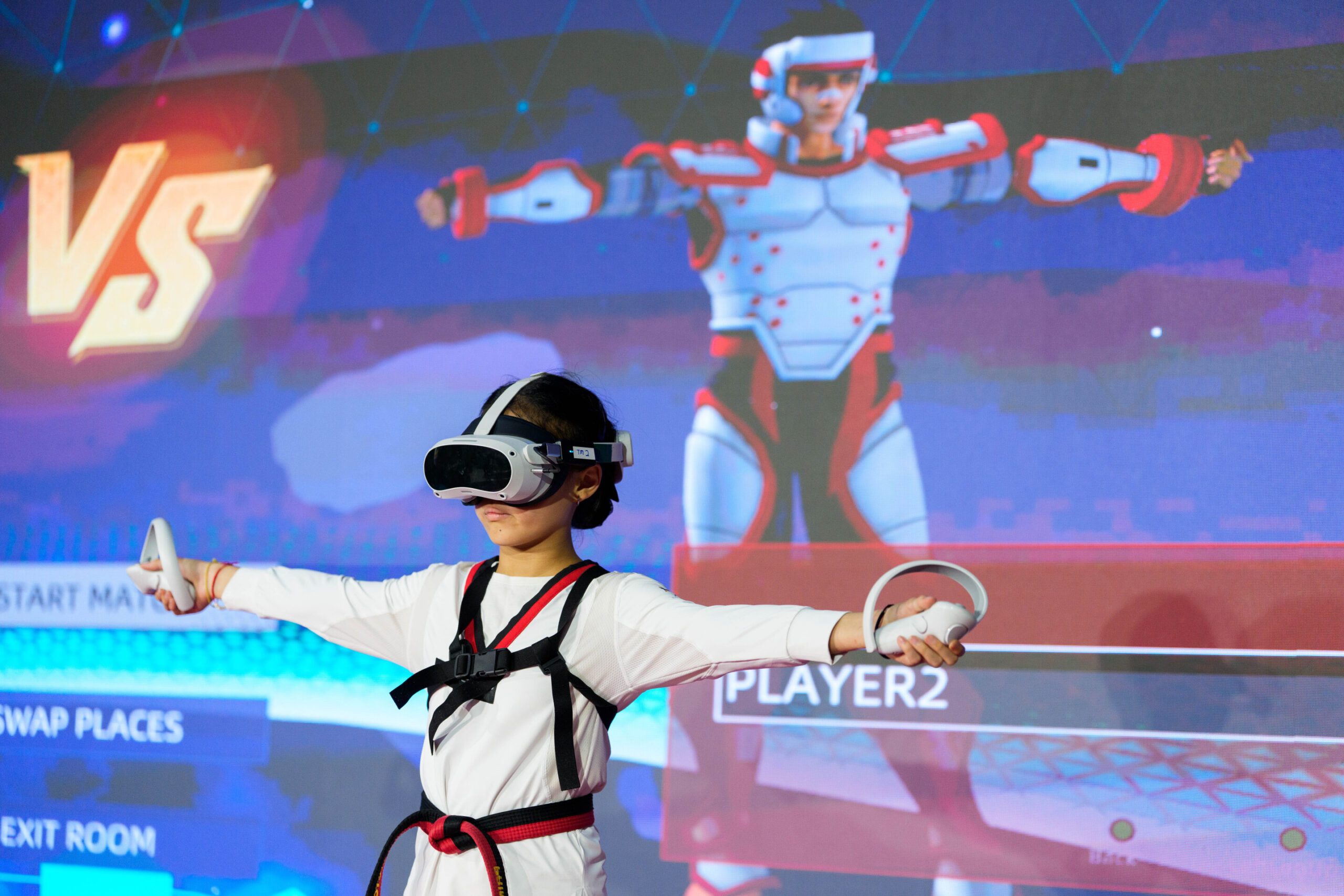
Virtual taekwondo moves that fight into a digital arena. Athletes wear VR headsets and motion-tracking sensors, then use real kicks and footwork to control avatars in one-minute bouts. The system still rewards speed and timing, but it removes the collision that can make combat sports feel intimidating.
The format also changes who can share the same space. Instead of separating competitors by age, weight, and gender, virtual taekwondo puts them into the same digital match, where technique and conditioning do more of the sorting.
How hard can VR kicking get
The lower injury risk doesn’t make the workout fake. Coaches treat virtual taekwondo as a full-body sport built around endurance, flexibility, and fast execution. Repeated kicks are still deeply rude to the lungs.
That’s where the gaming comparison starts to fall apart. The bouts are short, but each one demands constant pressure. Nobody wins by lounging around with a controller and vibes.
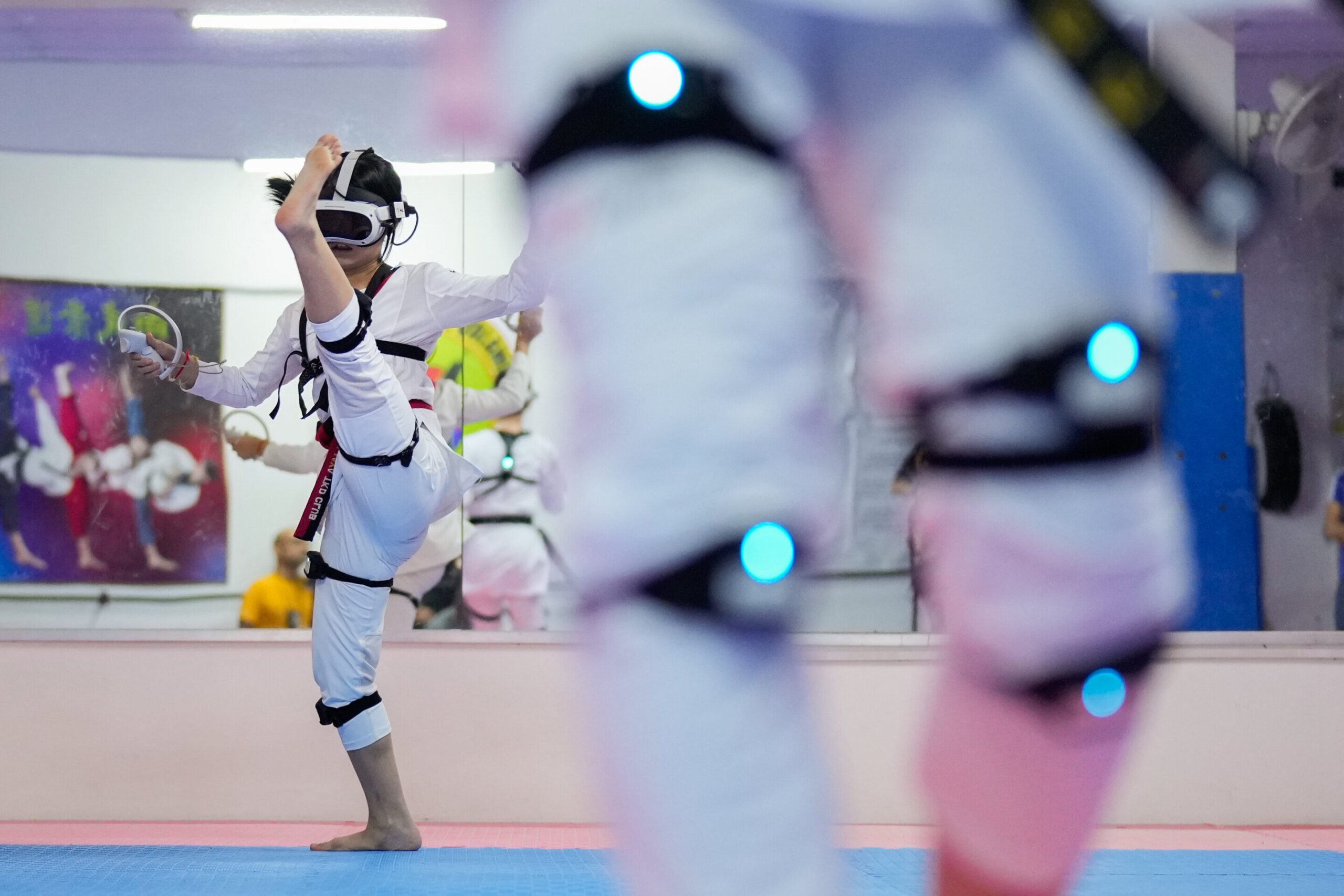
There’s also a real learning curve. Some athletes felt dizzy at first. Others had to learn how to judge distance in a space they couldn’t physically feel. Winning depends on when to move, when to strike, and how quickly the body can follow.
Who gets to compete now
Access is the strongest argument for virtual taekwondo. More people may try martial arts when the first step isn’t full-contact sparring.
Coaches in Southeast Asia are already seeing that shift. Parents get a sport that burns energy with less collision risk. Older athletes and women get a competition format where impact matters less than movement and strategy.
Cost is the obvious catch. The gear is still expensive, which limits how quickly clubs can adopt it. But as virtual taekwondo moves from showcases to medal events, clubs have a clearer reason to invest. It’s harder to call something a gimmick when people are already training for the podium.