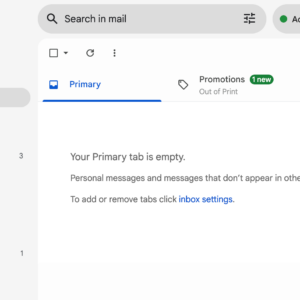
The idea of declaring “email bankruptcy”—just deleting all the emails in your inbox past a certain date—is so popular, it has its own Wikipedia entry. I can see why it’s tempting to just blow everything up and start over, and the temptation goes far beyond emails: Declaring a personal bankruptcy and mass-deleting games, movies, and e-books you fear you’ll never play, watch, or read is a practice with proponents far and wide (including some of us here at Lifehacker).
But declaring bankruptcy is such a drastic step. What if you tried inbox amnesty instead?
What is inbox amnesty?
The idea for inbox amnesty comes from Lifehacker’s health editor, Beth Skwarecki, who advocates for achieving inbox zero by selecting all your emails and archiving them, instead of deleting them. “BOOM,” she says. “You have inbox zero and will do better in the future.”
While there are tricks you can employ to manage your inbox in real time and keep the number of unread messages down (like the “one touch” rule), there will still be times when your inbox gets unruly. That doesn’t bother some people, but the ever-increasing number in the notifications badge makes others feel like they’re losing their minds. If that’s you, declare inbox amnesty and just start over.
Personally, I don’t much care what the red badge on my email app says. I have maintained the same primary email address since I was in high school and have designated numerous other addresses for various needs in my life. I gave up on the idea of “inbox zero” long, long ago. But I still get the compulsion to go bankrupt in other spheres. A bit over a year ago, I did a major cleaning and organizing overhaul in my apartment. I began by going scorched-earth, throwing things away right and left. I came to regret that quickly, as I tossed things I ended up needing, or at least could have sold or donated. Eventually, I designated two different closets as liminal spaces where I could let things marinate while I figured out what to do with them. That was my version of amnesty, and now, months later, I’ve freed up enough space and time to dedicate myself to my resale business, and I’m glad I didn’t just go the bankruptcy route.
Why inbox amnesty is better than inbox bankruptcy
While inbox amnesty and bankruptcy both rely on the same idea—nuking all the emails and starting again, determined not to let the unreads get out of hand this time—there is one key difference: Amnesty doesn’t destroy the emails forever, it just marks them as read and tucks them away, out of sight. Just as I learned the value of keeping unwanted things around when I did my big apartment decluttering, you might learn it when you accidentally delete an email you need back in the future. Email amnesty helps you avoid learning the hard way.
With amnesty, you can go back into that archive if you need to, finding contact information or threads that you might actually need to follow up on in the future. If you go bankrupt and destroy them all, you won’t be able to refer to anything from the past—and you just know something will come up that requires you to look at an older email you no longer have.
You can set a reminder for yourself to fully delete your archived messages after six months if they don’t become necessary, but as long as they’re not clogging up too much of your storage, feel free to hold onto them in case of emergency.