We may earn a commission from links on this page.
If you’ve spent any time shopping for a fitness tracker or smartwatch that costs less than $400, you’ve probably run into Amazfit. And you’ve probably also experienced a moment of confusion, as the name sounds suspiciously close to something Amazon would put out. Surprise! The two companies aren’t related: Amazfit is a Chinese brand owned by Zepp Health Corporation, formerly Huami.
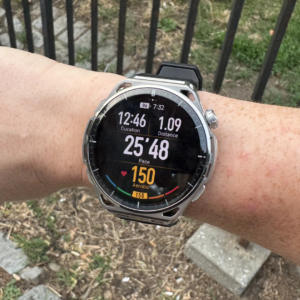
Amazfit has slowly but surely been making a name for itself as a budget-friendly alternative to bigger names like Garmin, Coros, or even Apple. I’ve tested a number of their watches (including the Balance 3 and Cheetah 2 Pro) to see if Amazfit really is a worthwhile competitor to those bigger names, and my short answer is a cautious yes. But I also need to zoom out and break down what fitness trackers Amazfit has to offer, and what kind of person each is targeting.
$79.00
at Amazon

$79.00
at Amazon
$169.99
at Amazon

$169.99
at Amazon
$369.99
at Amazon

$369.99
at Amazon
$449.99
at Amazon

$449.99
at Amazon
$226.09
at Amazon
Save $53.90

$226.09
at Amazon
Save $53.90
$99.99
at Amazon

$99.99
at Amazon
Who Amazfit watches are best for
Amazfit’s current reputation is as a value brand for people who want the health-tracking and outdoor-readiness of a Garmin without paying Garmin prices, and who don’t necessarily need a full smartphone-replacement experience like an Apple Watch or Galaxy Watch. If you want deep app integration, Google Play access, or Spotify running natively on your wrist, Amazfit will disappoint you—Zepp OS is a closed, sparse ecosystem. But if you want long battery life, solid everyday health metrics, and the option to go as rugged or as minimalist as you like, Amazfit has some great options.
Amazfit’s budget option: Bip
The Bip series (currently the Bip 6) is Amazfit’s entry-level device, priced around $79. I haven’t tested a Bip personally, but their selling point seems to be simplicity: solid battery life, core health metrics (heart rate, SpO2, sleep, stress), and an easy setup. GPS, if present at all, is only single-band. This looks to be the right line for someone who wants a basic activity tracker and straightforward daily summaries. Think of it as Amazfit’s version of a Fitbit Inspire.
Amazfit’s “everyday” option: The Active line
The Active line is Amazfit’s sweet spot for general use. Currently the lineup includes the original Amazfit Active, the larger Active Max, the Active 2, and the Active 3 Premium. In particular, the Active Max, priced at around $170, has been called out repeatedly as the best all-around value in the lineup. It has dual-band GPS, solid battery life, and most of the health-tracking depth of pricier models. If someone asked me “which Amazfit should I just buy without overthinking it?” the Active Max would be my answer. It’s not the most premium watch the brand makes, but it’s the one with the clearest “budget alternative” selling point.
Amazfit’s hybrid athlete line: Balance
If I was making a recommendation solely based on my own testing, the Balance line (including the Balance 2, the Balance 3, and the Balance Ultra) is where I’d point most people. These watches are all a feature-rich step above the Actives, with a more rugged look and feel. The Balance line is also where you start to benefit from Amazfit’s partnership with Hyrox, which has given it dedicated transition and pacing tools for hybrid-style competitions. If you want one watch that handles daily wear, strength training, tons of sports, and running (without being a dedicated running watch), this is the line to consider. It feels like the most “polished” offering I’ve tested from Amazfit so far.
Amazfit’s runner line: Cheetah
As a runner, I find this to be Amazfit’s weak spot. The Cheetah line (now up to the Cheetah 2 Pro, which I have reviewed, and the trail-oriented Cheetah 2 Ultra, which I’m currently testing) collects Amazfit’s dedicated running watches, built to compete with Garmin’s Forerunner series and Coros devices. On paper, the specs are excellent: dual-band GPS, running power, lactate threshold estimates, offline maps, titanium builds, and AI coaching through a feature called Zepp Coach that builds race-specific training plans.
Unfortunately, despite being marketed as a runner’s watch “engineered for runners,” my experience with the Cheetahs is they don’t feel designed by real runners. Don’t get me wrong—these are far from “bad” watches. There are just filled with little quirks that really add up. For instance, no serious runner wants a watch that labels heart rate zones with “fat burning” language, but that’s what Amazfit does. If you’re training for a marathon and care about in-depth workout analytics, I’d opt for a Garmin Forerunner alternative, even if it’s a less “premium” option at a similar price point.
Amazfit’s rugged-outdoors line: T-Rex
The T-Rex series (now at T-Rex Ultra 2 and T-Rex 3 Pro) is Amazfit’s answer to Garmin’s Fenix or Instinct lines, with a focus on durability, maps, multi-week to multi-month battery life, and so on. However, the trade-off here is the same one you see with Cheetah: the hardware punches above its price point, but the software and mapping experience isn’t as polished as the competition. As a general rule, Amazfit nails general-use budget options, but as its models creep up into more premium prices, the flaws start to show.
Amazfit’s screenless tracker: The Helio Strap
Not a watch at all, this is Amazfit’s answer to Whoop bands. While it’s not a perfect alternative, according to my colleague Beth Skwarecki’s review, the data is still accurate and no other company is doing this for a better price. Best of all, there’s no subscription fee.
There’s also a Helio Ring, which is naturally a $150 budget alternative to the Oura Ring, which typically runs $349 to $499 (not including subscription costs).
Discontinued Amazfits: GTR and GTS
The GTR (round face) and GTS (square face) series were two more fashion-forward mid-budget options from Amazfit, but they have since been replaced (or at least, overshadowed) by the newer Active and Balance lines.
The bottom line
Amazfit’s main strengths are in its more general-use, daily-wear value options, with sensors, batteries, and hardware that would cost noticeably more coming from Garmin, Apple, or Samsung. Where the brand comes up short is its software and the depth of its ecosystem, especially in the areas that matter most to specialist users—say, serious runners or cyclists heading out into the mountains.
That’s why the Amazfit Balance line is my top pick: It’s where the company’s strengths (battery life, sensors, interface) truly stand out. If you’re a dedicated marathoner chasing every last percent of accuracy, you’ll probably still be better served by a Garmin or Coros device. But for almost everyone else, Amazfit makes some of the best all-around value options in the wearables market today.