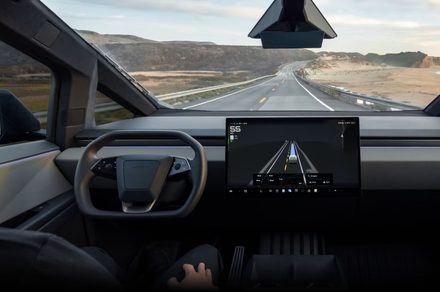
For years, Tesla owners with Hardware 3 cars (sold between 2019 and 2023) have waited for a software update that unlocks fully autonomous driving. However, on April 22, 2026, during Tesla’s quarterly earnings call, Elon Musk finally delivered the answer, and it wasn’t the one everyone was hoping.
Musk confirmed that the cars running the company’s third-generation hardware cannot achieve unsupervised Full Self-Driving through software alone; the vehicles need physical hardware upgrades. In other words, about four million vehicles sold globally can’t achieve FSD (via TechCrunch).

What did Musk actually say about FSD on Hardware 3 cars?
“Hardware 3 simply does not have the capability to achieve unsupervised FSD,” Musk said on the call. Instead, Tesla’s Hardware 3 vehicles need a new computer and new cameras to unlock the FSD promise (via over-the-air updates) that the company has been making for years.
Now, FSD has been one of the core selling points that has led many buyers to purchase the vehicles in the first place. This is why the announcement is a disappointment to owners who bought their Tesla EVs between 2019 and 2023.
Given below is a table that contains the names of the Hardware 3 models.
| Model | Type | HW3 Period | Notes |
|---|---|---|---|
| Model S & Model X | Retrofit | Oct 2016 – Mar 2019 | Originally shipped with HW2.0 or HW2.5; upgraded free to HW3 |
| Model 3 | Retrofit | 2017 – mid-2019 | Early units shipped with HW2.5; retrofitted to HW3 |
| Model S & Model X | Factory Built | Mar 2019 – Jan 2023 | Shipped standard with HW3 from factory |
| Model 3 | Factory Built | Apr 2019 – late 2023 | Standard until the “Highland” refresh (Oct 2023 most markets; Jan 2024 US) |
| Model Y | Factory Built | 2020 – May 2023 (US) | US-made cars until May 2023; some China-produced models as late as Feb 2024 |
So, what happens to Hardware 3 owners?
For now, they’re not entirely left out. While Tesla will continue rolling out incremental FSD software updates for its Hardware 3 vehicles, anything that approaches true autonomy requires the hardware upgrade we discussed earlier.

The scale of the task, naturally, is substantial enough that the company is exploring building “micro-factories” in major cities to handle the workload; existing service centers can’t manage the upgrade volume on their own.
Crucially, Tesla has not publicly confirmed whether the hardware upgrades will be free for buyers who paid up front for FSD capability or will incur an additional cost. There are rumors about a discounted trade program, implying that owners can trade in their Hardware 3 vehicle for a discount toward a newer Hardware 4 model, but Tesla hasn’t confirmed anything at the moment.
I’d say that Tesla understands the reputational and legal aspects of inaction, and whether owners receive free upgrades or face additional costs (after paying for the FSD add-on) could determine whether this admission becomes a goodwill gesture from the company or triggers a backlash among buyers.