The death of design by committee in the age of AI
In my previous writing, I explored two ideas that initially seemed separate.
In AI made everyone a creator, not a designer, I argued that AI is fundamentally changing the relationship between creation and design. When anyone can generate interfaces, visuals, and concepts in seconds, the designer’s value no longer comes from producing more outputs. It comes from knowing which outputs deserve to exist.
In the organizational cost of low taste, I looked at what happens when that judgment disappears inside organizations. Not because people suddenly lose their ability to recognize quality, but because decisions become diluted across layers of alignment, compromise, and approval.
The more I think about it, the more I believe these are not two separate conversations. They describe the same problem from different directions. One asks whether AI can replace design judgment. The other asks whether organizations have already done it. Both rest on the same misunderstanding.
We increasingly talk about taste as though it were something that can be collected, measured, or encoded. We assume that if enough people agree, or if enough data is available, the right answer will eventually emerge. But taste has never worked that way.
Taste begins with knowing what good looks like. It comes from exposure to exceptional work, from studying history, understanding proportion, typography, interaction, composition, and learning to recognize quality with consistency. Designers who struggle to make strong decisions often do not lack confidence. They simply have not yet built that internal reference library. Yet recognizing quality is only the beginning.
Taste becomes valuable when someone has the responsibility to act on it. That distinction matters because recognizing quality and deciding what should exist are not the same thing. This is where both AI systems and modern organizations reveal the same limitation. Both are becoming remarkably good at identifying what is preferred. Both are much less capable of deciding what deserves to happen next.
The illusion of encoded taste
As generative AI becomes increasingly capable of producing interfaces, brands, illustrations, products, and entire user experiences, a familiar claim keeps appearing: AI is learning taste.
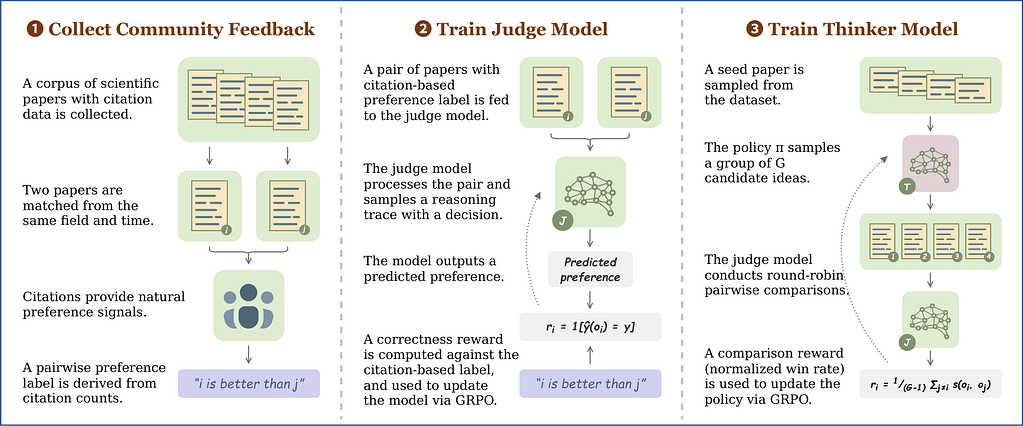
On the surface, the argument makes sense. These models are trained on enormous collections of human-created work. They learn from rankings, comparisons, reinforcement learning, and millions of examples of what people tend to prefer. As the models improve, they become increasingly effective at predicting what users are likely to consider successful. But prediction is not judgment.
Preference describes what people choose. Judgment explains why something is the right choice.
A model can learn that users generally respond well to clean interfaces, balanced layouts, familiar navigation patterns, generous spacing, or restrained typography. It can detect statistical relationships between visual decisions and positive feedback at a scale no human could ever match.
What it cannot understand is intent.
It cannot know whether removing an element creates clarity or removes personality. It cannot know whether breaking a convention introduces unnecessary friction or fundamentally improves the experience. It cannot evaluate a design decision against an ambition that does not yet exist. Because every important design decision is made in context.
The right interface for a banking application is not the right interface for a children’s learning platform. The right visual language for a heritage luxury brand is not the right language for a startup trying to challenge an entire category. The same design principle can be brilliant in one situation and completely wrong in another. Patterns alone cannot resolve those tensions.
Only judgment can.
This is why design has never simply been the application of best practices. Best practices describe what has worked before. Design decides when the future requires something different. That distinction is easy to miss because successful design decisions often appear obvious in retrospect.
Before the iPhone, the smartphone industry was built around physical keyboards. Devices like the BlackBerry represented the prevailing belief that serious mobile computing required tactile input. Every observable signal reinforced that assumption. Business users valued keyboards. Manufacturers competed by refining them. Existing preferences all pointed in the same direction.
https://medium.com/media/2a1972d87b67c90ae55a5db835596a9b/href
Apple asked a different question. Instead of asking how to improve the existing smartphone, it asked what a phone could become if the interface itself disappeared. Removing the keyboard looked irrational through the lens of current preferences. Through the lens of judgment, it created something entirely new. The multi-touch display was not simply another interface choice. It transformed the phone into a software-defined device that could continuously evolve instead of being constrained by its hardware. The decision was not an optimization. It was a bet on a future users had not yet experienced. That is the difference between preference and judgment. Optimization improves what already exists. Judgment decides what should exist next.
Organizations made the same mistake before AI
The interesting part is that artificial intelligence did not invent this problem. Many organizations have been trying to replace judgment with preference aggregation for years.
A design proposal enters a meeting, and suddenly everyone becomes a reviewer. Product managers raise legitimate product concerns. Engineers explain technical constraints. Marketing protects positioning. Sales represents customer objections. Leadership evaluates business impact. Legal assesses risk. Every perspective contributes something valuable.
The problem is not collaboration.
The problem begins when collaboration replaces ownership. As more people participate, accountability quietly disappears. Decisions become increasingly shaped by what survives discussion instead of what best serves the product. The strongest idea slowly becomes the safest idea. Nobody explicitly asks for average design. Average design is simply what emerges when every decision must satisfy every stakeholder equally. Organizations often describe this as alignment. Design experiences it as erosion. The irony is that committees are often excellent at identifying what people already like. That is exactly why they struggle to create something people have never seen before. Innovation almost always begins by making a decision that feels uncomfortable before it feels inevitable.
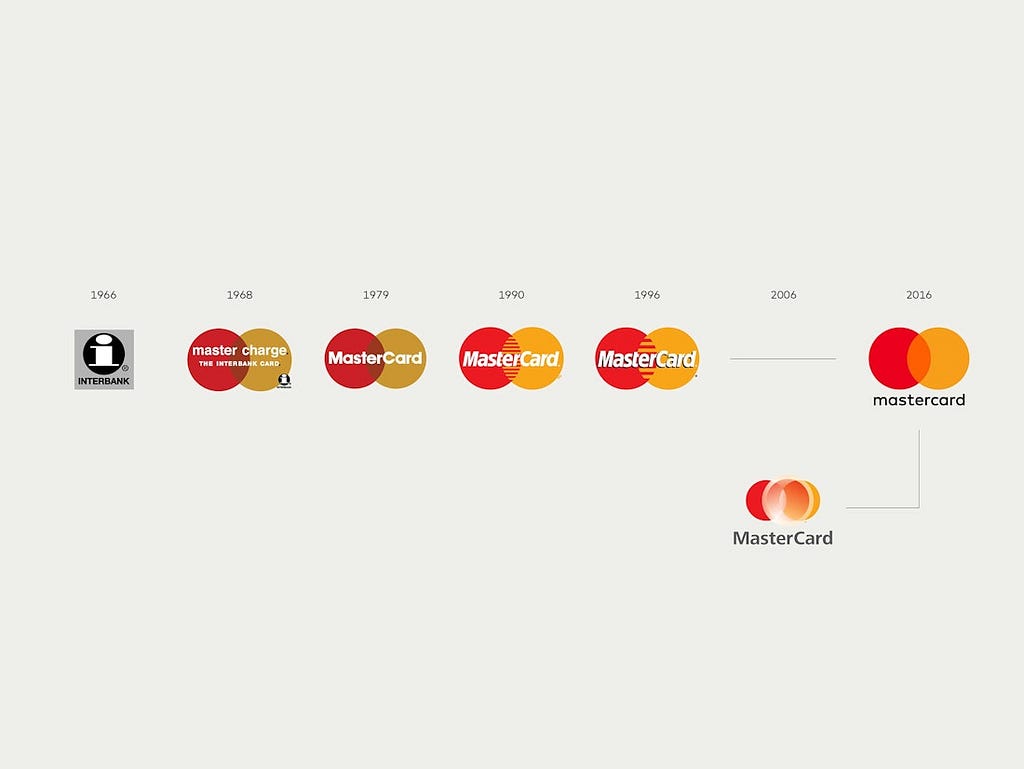
The same pattern appears in branding. When Mastercard redesigned its identity in 2016, the most significant decision was not changing the logo itself. It was removing the company name from many applications altogether. Viewed through the logic of stakeholder approval, that decision looked unnecessarily risky. Financial institutions depend on recognition and trust. Removing the name seemed to weaken both. But the designers recognized something metrics alone could not capture. After decades of consistency, the overlapping circles had accumulated enough meaning to carry the brand by themselves.
The word had become redundant. The redesign was not an exercise in minimalism because minimalism happened to be fashionable. It was an acknowledgment that one element had stopped contributing to the communication. That is another form of judgment. Not knowing what to add. Knowing what no longer needs to be said.
The danger of optimizing only what can be measured
The same pattern extends far beyond branding. Digital products are increasingly optimized through metrics. Every interaction can be measured. Every screen can be tested. Every decision can be validated against clicks, conversions, engagement, retention, or time spent. Those signals are valuable. The mistake is assuming they are sufficient. Metrics tell us whether something is performing against today’s objective. They rarely tell us whether we are building the right objective in the first place. That distinction explains why some of the most influential digital experiences did not emerge from optimization alone.
When The New York Times published Snow Fall: The Avalanche at Tunnel Creek in 2012, it was more than an article. It reimagined what digital storytelling could become by weaving long form writing with video, photography, animation, maps, and interaction into a single narrative experience. The project became influential not because it optimized an existing format, but because it challenged the assumption that online journalism should simply replicate print on a screen. The decision reflected a broader belief about the future of the medium.
Digital publishing was not just another distribution channel. It was an entirely different storytelling canvas. No experiment could have asked readers whether they wanted that experience before they had seen it. No dashboard could have measured demand for a format that did not yet exist. The judgment came first. The metrics came later.
That is often how meaningful innovation works. Optimization refines the present, when judgment creates the future.
The role of design leadership is protecting judgment
This is why design leadership matters. A design leader is not valuable because they have the strongest aesthetic preferences in the room. They are valuable because they can connect aesthetics, product strategy, user behavior, technical constraints, business objectives, and brand into a coherent point of view. Their responsibility is not to eliminate disagreement, but to resolve it.
Healthy design organizations are not built on consensus. They are built on clear ownership, and feedback should improve a decision. It should not replace the person responsible for making it.
When ownership is unclear, organizations naturally drift toward decisions that satisfy everyone a little instead of decisions that excite anyone deeply. The result is rarely bad design. In fact, average design often feels remarkably competent. The interface is usable, the typography is clean, the flows work, the branding is consistent. Nothing is obviously wrong.
Nothing is particularly memorable either. That is what design by committee usually produces: not failure, forgettability.
Taste requires exposure, but responsibility creates judgment
Taste is often described as intuition. In reality, judgment is built, and it begins with exposure. Studying exceptional work. Understanding history. Developing sensitivity to proportion, typography, composition, interaction, and detail. Many designers struggle to make strong decisions not because they lack confidence, but because they have not yet developed a reliable sense of what good looks like. But recognizing quality is only the beginning.
Judgment emerges when taste meets responsibility. It develops when decisions have consequences. When you must choose between competing priorities. When you defend a direction without complete certainty. When you accept that a good decision may initially make people uncomfortable before it becomes obvious.
Knowing what looks good is a prerequisite. Knowing what matters is what turns taste into leadership.
AI will not replace taste. It will reveal where taste was missing.
AI systems will continue to improve at predicting what people prefer. Organizations will continue to improve at collecting opinions.
Both are valuable. Neither creates judgment.
Judgment is not the result of combining enough signals. It emerges when someone understands the context, accepts the trade offs, and takes responsibility for deciding what deserves to exist.
The future of design will not belong to the people who can generate the most options. That will soon describe almost everyone. It will belong to the people who can recognize the one worth pursuing. That requires taste.
Not taste as an aesthetic preference. Not taste as a collection of visual references. Taste as the ability to recognize quality. Judgment as the willingness to choose a direction. Leadership as the responsibility to stand behind that choice. Those three qualities have always been connected.
AI changes how we create. It does not change who is accountable for deciding what deserves to exist. Because taste can be assisted. It can be challenged. It can be refined. But it cannot be delegated.
Taste cannot be delegated was originally published in UX Collective on Medium, where people are continuing the conversation by highlighting and responding to this story.