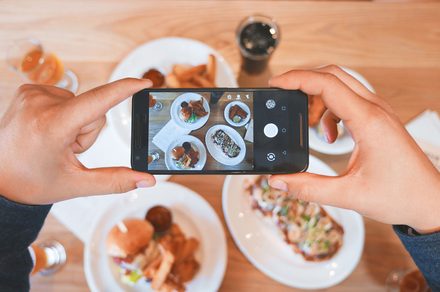
Any headline associated with social media often talks about the harm it causes. But in an oddly unexpected way, it is even pushing people to try to eat better. It seems to have helped people resist cravings instead of feeding them.
Or at least that is the takeaway from a new University of Bristol study, which says people trying to manage food cravings sometimes use social media images of indulgent treats as a substitute for actually eating them. The research is basically challenging the common assumption that seeing tempting food online automatically triggers people towards unhealthy snacking.

How social media is acting as a craving outlet
According to the Bristol research, the study found that dieters may “feast their eyes” on digital food content as a way of satisfying desire without consuming the real thing. Instead of treating every glossy dessert video as a trap, the study suggests that some users may be using those posts as a low-stakes coping tool to fight off cravings.
To be clear, this does not mean that Instagram and TikTok are suddenly wellness apps. It just means that the relationship between food content and eating behaviors might be more complicated than the usual doom-scroll narrative allows.
But there’s still a big problem
This is where the story needs a giant asterisk. A lot of other research points in a much uglier direction when social media intersects with dieting, weight loss, and appearance pressure.

A 2025 systematic review and meta-analysis covering 83 studies and 55,440 participants found that higher online social comparison was significantly associated with greater body-image concerns and greater eating-disorder symptoms. The same review also found an association with lower positive body image. Other reviews have also come to a similar conclusion. A 2023 study in Eating Behaviors argued that content matters more than sheer screen time, finding that exposure to weight-loss content was associated with poorer body image and more disordered eating behaviors.
Social media may sometimes help curb the craving for diet-conscious users. That is a genuinely interesting result. But it sits inside a much larger and much messier body of evidence showing that the same platforms can also cause more body dissatisfaction, normalize extreme thinness, and worsen eating-disorder risk depending on the kind of content people are actually consuming.