Even before the AI boom, data centers were already consuming staggering amounts of energy and natural resources. Now, generative AI has intensified that strain, exposing just how unsustainable our current storage infrastructure really is. It’s forcing us to rethink how we store data and pushing us toward alternative storage solutions.
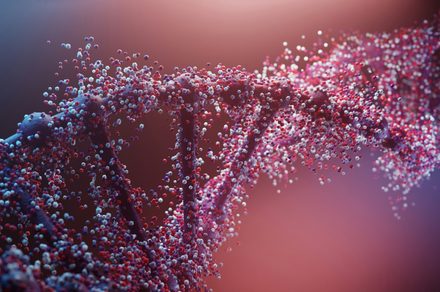
One area gaining serious attention is DNA-based data storage, which encodes digital information into synthetic strands of DNA. A storage medium so compact and durable that it could dramatically reduce the need for sprawling, energy-hungry data centers.
Turning biology into data centers
You might think that it sounds like science fiction. But the concept is surprisingly straightforward, and researchers have been on it for decades.
DNA is nature’s information storage system. It stores all the biological data using four base components: A, C, G, and T. Scientists have figured out how to translate digital data, the zeros and ones that make up photos, videos, and documents, into those same four letters.
The advantages are staggering. DNA can hold massive amounts of information in an incredibly small space. Theoretically, all the world’s data could fit inside a shoebox. It’s also remarkably durable. Kept dry and cool, DNA can remain stable for thousands of years, and it requires no energy to maintain.
The rewrite barrier
Despite its promise, DNA storage faced a critical flaw: it was permanent. It meant that once the data was stored on DNA, there was no way to overwrite and update it. That limitation has kept DNA storage research confined to long-term archiving rather than everyday storage. But researchers at the University of Missouri are changing that.
Reading and writing storage on DNA like a digital file
Li-Qun “Andrew” Gu, a professor of chemical and biomedical engineering at Mizzou Engineering, has said that they are developing a method that allows them to rewrite and update the data written on DNA.
The team is using a nanopore sensor, a molecular-scale detector that reads DNA by measuring subtle electrical changes as strands pass through it. The system is already more compact, faster, and environmentally friendly than existing systems. The researchers are hopeful that they will be able to shrink the device to the size of a USB thumb drive.
This changes everything. For the first time, DNA storage can behave like modern hard drives, where users can write, update, and overwrite data on demand.
What it means for us
While DNA storage is years, possibly even a decade, away from mainstream adoption, the progress is hard to ignore. The technology offers a compelling solution to the growing strain on our data infrastructure and resource consumption.
If successfully developed for real-world use, DNA-based storage could represent the most significant breakthrough in data storage since the invention of the hard drive.