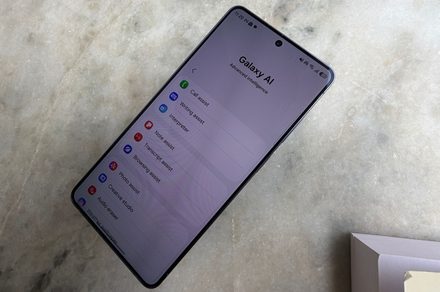
The big hardware innovation on the Galaxy S26 Ultra was designed to stop strangers from peeking. But this feature could also be behind a new issue plaguing Samsung’s top flagship. Some owners and retail display units have reportedly developed a reddish patch around the center of the screen, which has prompted an internal investigation from Samsung.
The company has yet to determine whether this is an isolated incidents or a broader product defect. A Samsung representative told Korean publication Newsway that “We are currently examining the matter internally to confirm the cause”.
Samsung’s Privacy Display is under scrutiny
After the issue surfaced on certain models, attention naturally turned towards the Galaxy S26 Ultra’s Privacy Display. The feature uses changes within the panel itself to restrict side-angle visibility, allowing the person directly in front of the phone to read the screen while making its contents harder for nearby people to see.
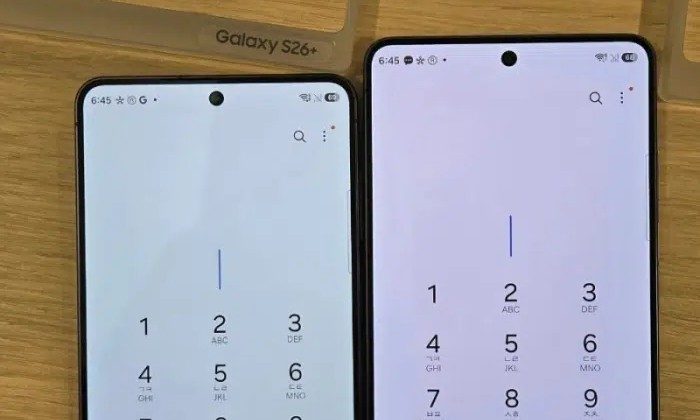
Some industry observers questioned whether the alterations to the panel’s light-emitting structure could affect screen uniformity under certain conditions. Some users have also suggested OLED burn-in, where uneven pixel degradation leaves persistent discoloration or ghost images.
However, neither explanation has been confirmed. The available photos are insufficient to establish whether the reddish area comes from burn-in, the Privacy Display hardware, software calibration, or a limited batch of faulty panels. Samsung needs to reproduce the phenomenon and examine affected devices before reaching a conclusion.
This appears different from a warm screen setting
Samsung already maintains a support page addressing Galaxy S26 screens that appear overly red or yellow across the entire display. The company calls slight overall color variation a normal AMOLED characteristic and recommends adjusting white balance through the Vivid screen settings.

But the newly reported complaint shows a localized reddish area near the middle, which makes it distinct from a simple warm color tone tuning. A calibration problem could potentially be corrected through settings or a software update, while a panel-level defect requires repairs or even replacement.
As of right now, Samsung has announced none of those measures, and there is currently no evidence that every Galaxy S26 Ultra is affected. The Galaxy S26 Ultra already carries known trade-offs by offering Privacy Display, including brightness and viewing-angle variation. A permanent red patch would be considerably harder to accept on Samsung’s most expensive conventional flagship.