
“I run my life from terminal.” Peak 2026 energy. And I get it — I really do.
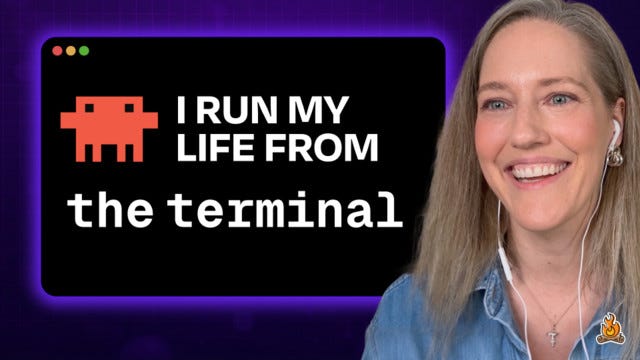
Hilary Gridley was just on “How I AI” — the sister podcast to Lenny’s Newsletter — talking about turning #ClaudeCode into your personal life operating system. Calendar management, task capture, workflow automation, preference learning — all orchestrated from a terminal window. She narrates her day to Claude, lets it observe her behaviour, and it gradually takes work off her plate. No elaborate system design. No complex integrations. Just talking to your terminal and letting it figure out the rest.
She’s not alone. Teresa Torres — who literally wrote the book on continuous discovery — now runs her entire life and business from two Claude Code terminals and an Obsidian vault. Every morning, she types “/today” and Claude generates her to-do list by scanning hundreds of markdown task files. She’s built a three-layer context system so Claude knows her writing voice, her audience, her publishing workflow. Greg Isenberg has gone further — he’s turned Obsidian plus Claude Code into a “second brain” that doesn’t just organize his thinking but generates new product ideas, surfaces unexpected connections across domains, and automates research. Dan Shipper called Claude Code “the most underrated AI tool for non-technical people,” and Lenny Rachitsky ran with it, collecting 50 creative ways people are using it to run their lives.

These are smart, accomplished people. Their workflows are impressive. The results are real. And that’s exactly my point.
Look at what they’re actually celebrating: saving time. Prioritizing tasks. Not doing the grunt work. Automating the tedious. Every single showcase — no matter how sophisticated — is about doing existing work faster. Teresa’s /today command doesn’t invent new categories of product thinking. Greg’s second brain surfaces connections he might have made anyway, just quicker. Hilary’s preference learning optimizes her existing routines.
That’s not transformation. That’s acceleration.
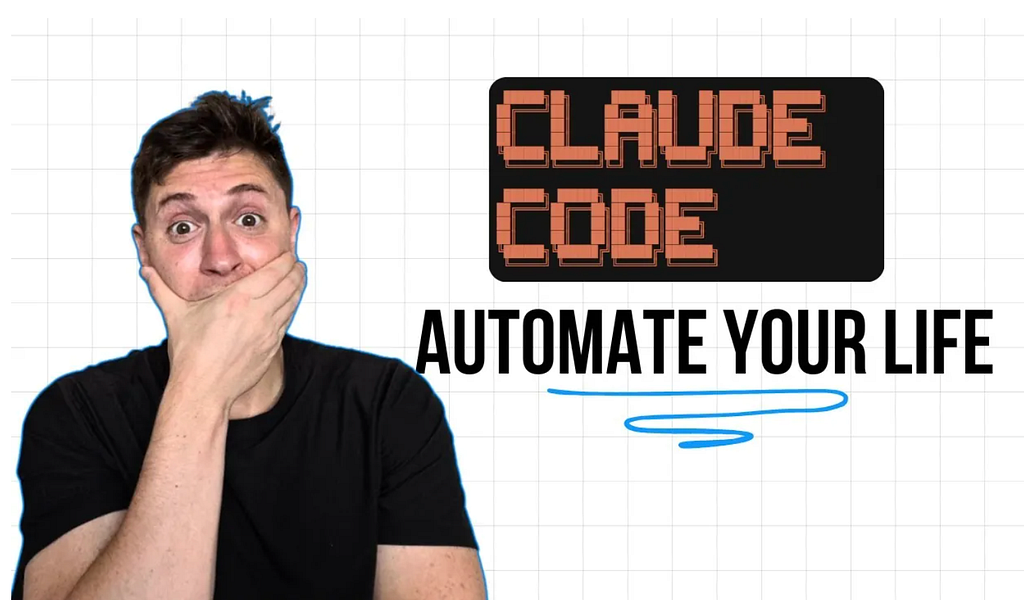
The benefits are real, but the ambition is small. These workflows are proof that AI has yet to unlock true power scaling — the kind where we don’t just do more of the same work, but discover entirely new forms of work we couldn’t have conceived without it. We’re using the most powerful reasoning systems ever built to… manage our calendars and auto-generate to-do lists.
I should know the appeal. I have my own setup connecting Claude Code to GitHub, Obsidian, dozens of AI agents, generating new businesses, and way more of my daily work than you’d believe. Content pipelines. Research synthesis across projects. Automated monitoring. Structured knowledge management. The impact on my throughput, creativity, and ability to connect dots across unrelated projects has been the single most significant shift in how I work since Gmail and cloud storage gave us always-on collaboration over a decade ago.
So trust me when I say this next part comes from experience, not scepticism:
Claude Code is a terrible interface.
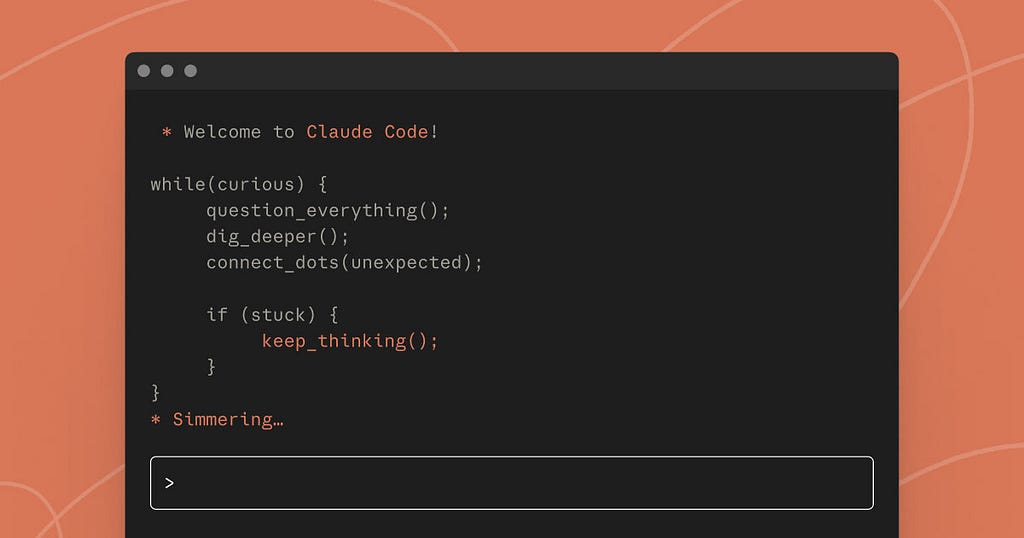
It’s janky. It’s unreliable. It breaks in ways that are hard to diagnose. The experience is objectively bad. And our collective fascination with what it enables has completely clouded our ability to see that.
We’ve jumped the shark on the terminal-as-good narrative.
Think about the battles we waged for over a decade. Human-centred design. Information architecture. Usability. Accessibility. We spent years — careers — proving that technology should meet people where they are, not force them to think like machines. We built entire disciplines around the idea that the best interface is one that disappears. That good design means the user doesn’t have to become a systems thinker to get value from a tool.
Claude Code throws most of that era’s accomplishments out the window in favour of a wildly adaptable orchestration platform.
And look — the orchestration layer is extraordinary. I won’t pretend otherwise. I’m speechless at least three times a week at what these systems enable. I watch Claude chain together tasks across my vault, synthesize research, and produce outputs that would have taken me days — and it does it in minutes. I’m proud of everyone who’s over-achieving because of these tools. I’m excited by the experiments and the new tiers of empowerment they create. It’s real and it matters.
But there’s a dark side we’re not talking about. And the more we celebrate the terminal-as-life-OS narrative without interrogating it, the harder it becomes to see.
This new era is highly exclusionary.
If you don’t think in constructs — if you struggle to look at the world mechanistically — you’re being left behind. Not slowly. Rapidly. Those of us who are robots deep inside have a massive advantage right now. We see systems where others see chaos. We think in workflows, decision trees, and structured data. These platforms were built for minds like ours, and they elevate us enormously.
But for everyone else? We’re widening the gap. And we’re not holding out our hands to lift others up.
The basic platforms and the mechanistic logic of LLMs force us to think down into the machinery rather than out into possibilities. Sure, Claude is a phenomenal sounding board. But we haven’t unlocked the genius inside all of us — we’ve just given the people who already think like engineers a faster engine. Teresa’s three-layer context system is brilliant architecture. It’s also architecture. Greg’s vault management philosophy is “manage the information, not the agent.” That’s systems thinking about systems thinking. These are not tools that meet you where you are. They’re tools that reward you for already being somewhere specific.
The goal shouldn’t be making systems thinkers more productive. It should be unlocking the capability in people who think differently — creatively, associatively, emotionally, intuitively. That’s where the real genius lives. And right now, we’re not even trying.
I know this because I’ve spent the last year having exactly these conversations on the Product Impact Podcast. Maya Ackerman, PhD. told us AI is threatening creativity — not because the technology is incapable, but because we’re designing products that give too much control to the machine. Her concept of “Oracle-mode” models — systems that flatten originality by pulling everyone toward the median — describes exactly what’s happening when we treat Claude Code as a life OS. We’re optimizing toward the average of our past behaviour, not reaching for something we haven’t imagined yet.
Kwame Nyanning argued that the companies that win the agentic era won’t be the fastest to automate — they’ll be the first to redesign their ontology: the invisible system of goals, relationships, and meaning that determines what work even is. That’s the level of ambition we should be bringing to personal AI tools, too. Not “automate my calendar” but “help me reconceive what my time is for.”
Michelle Lee at IDEO showed us that play — not productivity — is the hidden driver of markets that reshape industries. Product teams stuck in incremental roadmaps don’t break out by going faster. They break out by going sideways. By exploring. By being inefficient on purpose. These AI-as-OS workflows are the opposite of that. They’re optimization machines. They reward doing more of what you already do.
And Helen Edwards and Dave Edwards put it most sharply: if AI can replace the humans in your business, does your business have any value at all? Their work on cognitive sovereignty — our ability to remain the authors of our own thinking — is the question underneath all of this. When you hand your daily priorities, your task management, your creative workflow to an AI running in terminal, who’s actually doing the thinking? Are you directing, or are you being directed by a system that’s optimizing for throughput because that’s how it charges you?
The industry is working furiously to unlock this new level of human potential. But we’re burdened by the pressure to increase productivity — and that pressure is limiting our ability to reconceive what work and workflows could become. It shackles our ideas of value creation inside boxes labelled “replace people” and “replace expensive tools.” That’s not vision. That’s cost accounting dressed up as innovation.
We’re also building an economic model that rewards replacing labour rather than producing value.
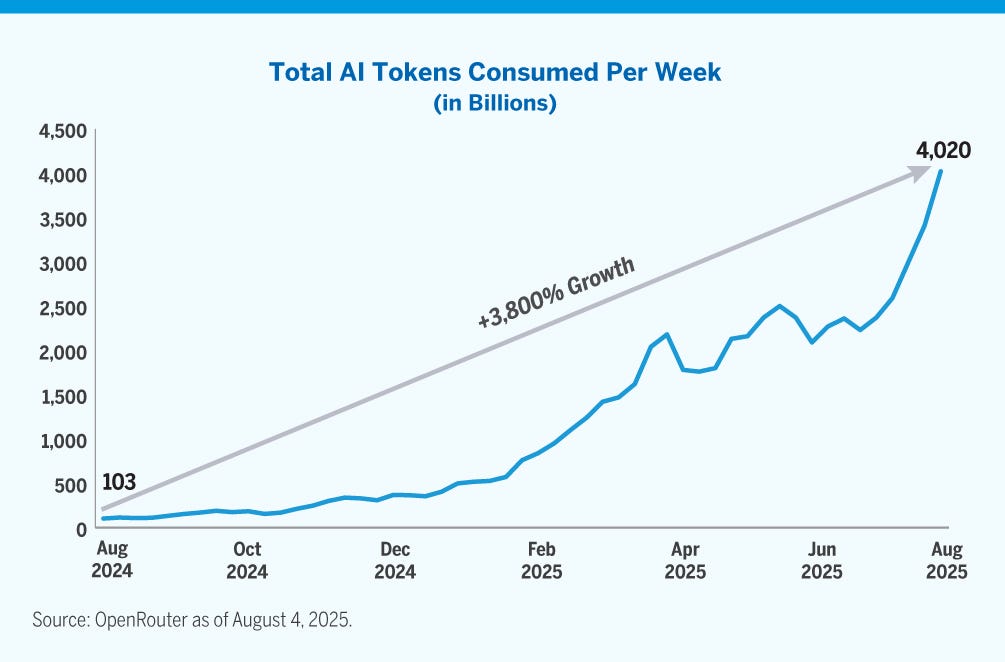
Think about the token economics. Everyone in the AI industry — every model provider, every platform, every tool builder — is incentivized to grow the token burn. More people onboarded. More throughput. More consumption. But getting people to use AI and getting people to succeed with AI are fundamentally different goals. The metrics we’re optimizing for aren’t measuring outcomes. They’re measuring activity.
And these tools don’t act as partners with shared responsibilities, rewards, and returns. They don’t have skin in the game. AI charges you based on time and throughput — not on whether it actually solved your problem, improved your work, or delivered the outcome you needed. You pay the same whether Claude saves you four hours or sends you down a rabbit hole that wastes your afternoon.
That’s not a partnership. That’s a meter running.
My hope is that we achieve escape velocity out of 2026 and land somewhere better.
A world where UX and proactive support are paramount — where the interface actively helps you succeed instead of requiring you to already know how to succeed. Where we get back to outcome-based building, focused on the world and experiences we want to deliver, not high adoption rates and being praised for the volume of tokens we burn.
I want to see AI tools that meet non-technical users with the same power they offer the systems thinkers. Tools that don’t require you to narrate your life into a terminal or architect a three-layer context system to get value. Tools that are measured — and priced — on what they actually accomplish. Tools that help us think outward into new possibilities, not downward into configuration files.
The orchestration revolution is real. The empowerment is real. But so is the regression. So is the exclusion. And so is the gap between what these tools could unlock and what we’re actually using them for.
We fought too hard for human-centred design to abandon it now just because the power users are having a good time.
So build your orchestrations. Challenge yourself to not just optimize your work but to reinvent it — to use these tools for things that didn’t exist before you imagined them. And challenge the industry and its leaders to build an ecosystem that pulls more people up — through better teaching, better interfaces, and tools that make everyone more capable, not just the ones who already are.
And remember to subscribe to the Product Impact Substack for my collection of AI strategy frameworks, podcast episodes, and the conversations shaping how we build, measure, and scale AI products.
Referenced above:
- Hilary Gridley on “How I AI” (Lenny Rachitsky ‘s sister podcast, hosted by Claire Vo ) — “How to turn Claude Code into your personal life operating system”
- Teresa Torres on “How I AI” — “Claude Code for product managers”
- Greg Isenberg — “How I Use Obsidian + Claude Code to Run My Life”
- Product Impact Podcast — Dr. Maya Ackerman: “The Future of Human–AI Creativity” (Ep. 47)
- Product Impact Podcast — Kwame Nyanning: “Agentics: Rebuilding How We Think, Work, and Create with AI” (Ep. 45)
- Product Impact Podcast — Michelle Lee, IDEO: “Play Unlocks the Next Billion-Dollar AI Market” (Ep. 43)
- Product Impact Podcast — Helen & Dave Edwards: “The Human Impact of AI Nobody Wants to Measure” (S02E05)
Running your life from terminal is peak 2026 — and that’s not the flex you think it is was originally published in UX Collective on Medium, where people are continuing the conversation by highlighting and responding to this story.