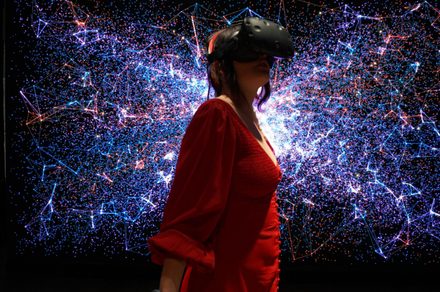
Nvidia and the wider PC gaming industry have spent years chasing hyper-realism as the next big visual flex. But your typical video games might not be the ones to benefit from it the most.
According to a new research from Murdoch University, the most interesting benefits of realistic virtual worlds may have less to do with prettier games and more to do with how people feel inside VR (Virtual Reality).
How hyper-realism could reshape VR

New research suggests that hyper-real virtual reality environments could help trigger positive emotional states such as awe, joy, and calm, opening up possible uses in education, health care, psychological therapy, architecture, and stress reduction. Tom Goates, Murdoch University PhD candidate, says that early VR research often focused on negative emotions like fear and anxiety, while positive emotional effects in nature-based hyper-real VR environments went largely unexplored.
He further adds, “We now know VR has the potential to also elicit positive emotional states, including awe, joy, and calm, which are increasingly recognised for their psychological and therapeutic value. Dynamic lighting can meaningfully contribute to calm; large-scale geometry, such as mountains and trees can induce awe; and geometric manipulation may support calm by enhancing perceptual comfort and visual coherence.”
Why this matters beyond gaming

Murdoch’s report says emotions in VR are not just decorative. They influence engagement, memory retention, and decision-making, which is why the researchers believe better visual design in virtual spaces could lead to improved immersive learning, therapeutic interventions, simulation experiences, and general wellbeing.
This does not mean realistic games suddenly do not matter; it is just that games might not be the only end goal. Companies like Nvidia will continue building the hardware and software stack for more lifelike rendering, but this research suggests that technological improvements can have far-reaching, more meaningful long-term impacts in virtual spaces.