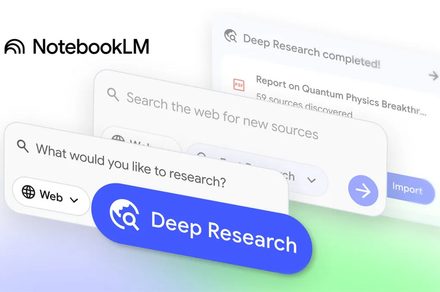
NotebookLM is now inside Gemini, marking a shift in how Google handles personal research in its AI tools. Starting today, users can access existing notebooks directly in the app instead of switching between separate products.
This builds on last year’s step where notebooks could be added as sources. With this update, saved material sits alongside chats and prompts, making it usable in real time rather than just stored.
Past conversations can be pulled into collections and reused, tightening the link between research and chat. Gemini starts to feel more like a system that retains context across tasks.
The rollout begins on the web for Google AI Ultra, Pro, and Plus subscribers, with mobile support and wider access expected soon. Google hasn’t shared timing for free users.
How Gemini uses stored material
The biggest change is how Gemini treats saved material. Instead of static references, collections now act as live context during conversations. Once selected, their contents shape responses automatically, cutting down on repeated inputs.
That builds on what NotebookLM already did well, which is grounding outputs in user-provided content. The capability now lives in the same interface, keeping responses tied to documents or research sets without extra steps.
Google is also expanding how sources behave. Existing chats can be folded into collections, turning past interactions into reusable input. Research and conversations now reinforce each other over time.
Why this changes AI workflows
This move pushes Gemini closer to a full workspace rather than a simple chatbot. Combining NotebookLM with its core experience reduces the friction between saving information and using it.
It also reflects a broader shift toward memory and continuity in AI tools. Instead of starting fresh each time, the system can draw from a growing pool of material, changing how longer projects are handled.
There’s a tradeoff, though. Response quality still depends on how well that material is organized, so messy inputs may limit usefulness.
What to watch next
The rollout is still limited, focused on higher-tier subscribers on web. Mobile support and broader availability are expected, but timing remains unclear.
If Google deepens this integration, Gemini could become a central hub for research-heavy workflows. That would raise pressure on competitors to match persistent context and document-aware responses.
For now, this update signals a clear direction. Gemini is evolving into a tool for ongoing work, not just quick answers, with its next phase tied to wider rollout and feature parity.