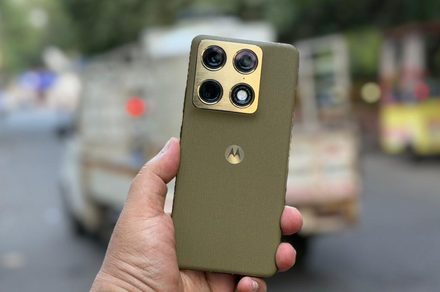
For the longest time, Motorola has existed in a strange space. It wasn’t irrelevant, but it also wasn’t really competing. Its phones were decent, sometimes even likable – but rarely serious contenders. That’s what makes the Motorola Signature feel different. For once, this isn’t a “good for Motorola” phone. It’s just… good.
And that’s both refreshing and slightly frustrating. That being said, this isn’t a revolution. It’s something arguably more important for Motorola: a correction. A correction that will probably define its future smartphones.
Build Quality That Reflects Engineering Discipline
The first thing that stands out about the Motorola Signature is restraint. At 7.0mm thickness and 186 grams, this is a large phone that doesn’t feel unnecessarily bulky. The use of Gorilla Glass Victus 2 on the front, paired with an aluminium frame, gives it structural rigidity without pushing weight into uncomfortable territory.

What makes this more interesting is how Motorola approaches durability as a system rather than a spec checklist. The combination of IP68 and IP69 certification means the device is not only protected against immersion but also against high-pressure water jets – something that requires tighter sealing tolerances across ports, speaker grilles, and seams. Add MIL-STD-810H compliance, and you’re looking at a device designed to survive stress conditions beyond everyday usage.
The display contributes to this engineering-first approach. A 6.8-inch LTPO AMOLED panel with a 165Hz refresh rate and peak brightness of 6200 nits sounds excessive, but the LTPO backplane is doing the real work here. By dynamically adjusting refresh rates based on content, it balances fluidity with power efficiency, which becomes critical when you’re pushing such high brightness levels.

Underneath, the Snapdragon 8 Gen 5, built on a 3nm process, reinforces this theme. Smaller transistors mean better thermal efficiency and sustained performance, which matters in a slim chassis like this. Motorola isn’t chasing numbers here – it’s aligning components in a way that actually works together.
A Camera System Built On Sensor Science, Not Gimmicks
The camera setup is where Motorola has historically struggled to compete. On paper, the Signature’s triple 50MP system appears to follow industry trends, but the execution suggests a deeper understanding of imaging fundamentals.
The main sensor is a 1/1.28-inch unit with an f/1.6 aperture and 1.22µm pixels. Sensor size is crucial because it directly impacts light intake, and larger sensors reduce noise while improving dynamic range. Combine that with optical image stabilisation and multi-directional PDAF, and you get a system designed for consistent, reliable captures rather than occasional standout shots.

The telephoto lens uses a 71mm focal length with 3x optical zoom, supported by dual-pixel PDAF and OIS. This is significant because telephoto performance often collapses in low light, but stabilisation combined with phase detection helps maintain sharpness even when light drops.
The ultra-wide camera, with its 122-degree field of view, avoids the usual trap of being an afterthought. While the sensor is smaller, the inclusion of autofocus allows it to double as a macro shooter, increasing its practical utility.

Where things get particularly interesting is video. Support for 8K at 30fps with Dolby Vision and 10-bit HDR10+ isn’t just about resolution – it’s about colour depth. Moving from 8-bit to 10-bit colour allows for over a billion shades, which significantly improves grading flexibility and reduces banding in high-contrast scenes.
Even the front camera benefits from this philosophy. A 50MP sensor with dual-pixel autofocus suggests Motorola is treating selfies and video calls with the same seriousness as rear-camera output.
A Complete Flagship – Finally, But Not First
Beyond the build and cameras, everything else falls into place as you would expect in 2026. A 5200mAh battery with 90W wired and 50W wireless charging ensures the device can keep up with its hardware demands. Wi-Fi 7, Bluetooth 6.0, and Ultra Wideband support bring it in line with modern connectivity standards, while Android 16 with seven years of updates signals long-term commitment.

But here’s the underlying tension. None of this is groundbreaking. These are features and technologies that competitors have been refining for years. Motorola hasn’t leapt ahead – it has caught up, and done so convincingly.
That doesn’t diminish the achievement. If anything, it highlights how overdue this was. The Motorola Signature is not trying to be the most experimental flagship. It is trying to be a dependable one, built on solid engineering and sensible choices. And for a brand that has spent years circling the flagship space without fully committing, that might be the most meaningful upgrade of all.