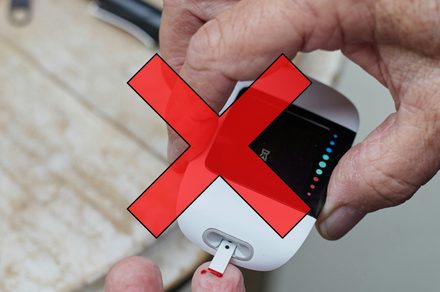
Checking your blood sugar several times a day is one of the most frustrating parts of managing diabetes. You have to prick your finger, draw blood, and repeat the whole process multiple times. MIT researchers might have just found a way to make that a thing of the past.
Researchers at MIT have developed a shoebox-sized device that can measure blood glucose levels without any needles. It uses a light-based technique called Raman spectroscopy, which works by shining near-infrared light on your skin and analyzing how that light interacts with the molecules in your tissue.
The device picks up glucose signals from just below the skin’s surface, no wire insertions or finger pricks required.
So how accurate is it?
Pretty accurate, as it turns out. In tests on a healthy volunteer, the device produced readings that matched those of commercial glucose monitors that require a sensor inserted under the skin.
The measurements were taken every 5 minutes over a 4-hour period, during which the subject consumed 2 glucose drinks to test the device across a range of blood sugar levels.
Each reading takes just over 30 seconds, which is reasonably quick for a noninvasive method.
“If we can make a noninvasive glucose monitor with high accuracy, then almost everyone with diabetes will benefit,” said Jeon Woong Kang, research scientist at MIT and senior author of the study.
The researchers also plan to run a larger study next year involving people with diabetes. They are also working to ensure accurate readings across different skin tones, which is an important step before this can become a mainstream product.
Is a wearable version coming?
Yes, and sooner than you might think. The team has already built a smaller prototype, roughly the size of a cellphone, and is currently testing it in healthy and prediabetic volunteers. The goal is to eventually shrink it down to something watch-sized.
If the tests are successful, we will soon have accurate blood glucose monitoring on your smartwatches, and that will be a life-changing upgrade for diabetic patients.

And MIT is not alone in this fight. Smartwatch makers like Huawei are testing diabetes risk detection on their smartwatches. We hope these new advancements become publicly available sooner rather than later, as they actually improve our lives.
It’s early days, but the finger prick might genuinely be on its way out.