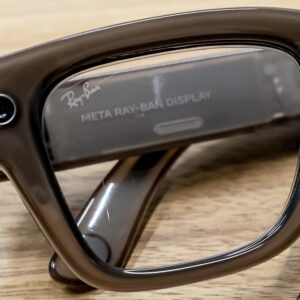
It’s not clear yet whether smart glasses will be the next smartphone, though perhaps they don’t have to be. While there may not come a time when everyone is walking around with high-tech glasses on their faces, these things are undeniably popular. Seeing as Meta sold seven million of its smart glasses in 2025 alone, you certainly can’t discount the category as niche. The next time you head out somewhere particularly busy, there’s a chance you’ll walk past someone wearing a pair.
Meta smart glasses have a complicated relationship with privacy
While the tech has its advantages, it also has its criticisms, especially when it comes to user privacy. We’re all used to the ubiquity of smartphone cameras while out in public, but they’re far from discreet: If someone is taking a photo or recording a video on their iPhone, it’s often pretty obvious. Meta smart glasses, on the other hand, are much more subtle. These devices have cameras embedded in the frames, and since people wear their glasses all the time, it’s not the same as someone overtly taking out their smartphone to capture a shot. Meta is basically equipping people with spy cams and sending them out into the wild.
To be fair, there is a built-in solution here: the “capture LED” indicator light. If you’ve ever used a camcorder, you’re familiar with the concept. Whenever the camera on Meta smart glasses is engaged, the capture LED light turns on, letting everyone know the wearer is currently recording. While there’s not much you can do to avoid being in the video, at least you know that there is a recording in progress. What’s more, Meta will disable the camera if you block the capture LED light, so putting a piece of tape over the indicator will do the creeps no good.
Of course, the creeps figured out a solution here. Rather than cover up the indicator light, users discovered that you can physically disable the capture LED without alerting Meta smart glasses. As such, it became relatively easy to bypass this privacy feature—so easy, in fact, that it set off a cottage industry of techs happy to help you disable your capture LED. Users could pay a fee, and turn their Meta smart glasses into the spy glasses many of us assume they already are.
Meta no longer lets you destroy the capture LED on your smart glasses
Luckily, there’s a silver lining for those of us who would rather not be secretly recorded everywhere we go. On Tuesday, Meta published a post to its newsroom titled “Meta’s AI Glasses: Your Questions Answered.” In it, the company ran through some of what it calls frequently asked questions about Meta smart glasses, including who can see the photos and videos taken on the glasses (“You, and only you — unless you choose to share them”) and “What about playing a loud sound in addition to the light?” (There’s a shutter sound only the wearer can hear.)
In these FAQs, Meta addressed its capture LED recording light, explaining, obviously, that the light is there as an indicator. But, interestingly, it took the time to address questions about what happens if users tamper with the light. According to Meta, the company is now updating its glasses to disable the camera if they detect the LED was “tampered with or destroyed.” Going forward, users should not be able to use their Meta smart glasses’ camera if the light is anything other than fully operational. The company even says it’s going after companies that advertise services to destroy the LED in Meta smart glasses, both by taking down their ads on Meta platforms, and by seeking legal action.
I’m not convinced this will be the end of the conversation. The fact that Meta is patching the flaw with an update implies that glasses that don’t update can still manage to work without the capture LEDs. If so, perhaps some users will keep their devices offline, or will purposely buy out-of-date Meta smart glasses to record incognito. But even if that isn’t the case, I wouldn’t be surprised if users find another way around this feature. Meta has made it possible to literally wear cameras on your face. Some of its users will always seek out ways to disable the capture LED, and, if they do, we’ll continue to have this privacy problem.