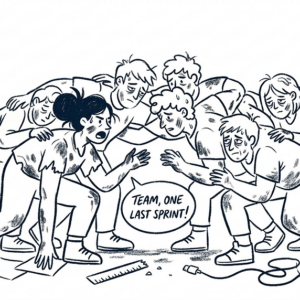
Should product design teams be 100% creative, effective, or a middle ground between both? How do you know a product design is succeeding? What is our actual reality in business? These questions, and many more, are part of a deep reflection on our presence, impact, and issues in tech companies.

Today, many businesses start as a small idea, something agile to put into the market to fulfill a mission or to solve a problem, and in the process, to make money, obviously. Most of these companies start the journey from a functional standpoint, avoiding extralayers that may “divert users’ attention”, such as refined flows, potential edge cases, and, sometimes, proper visual design foundations and user experience. Here, the goal is to ship the product first to validate its value, then address other considerations.
When one of these small companies starts to grow, the time to expand the business and hire new talent arrives. Among the new people coming to the company is the design team, but this time it will be “official,” not just a wholesome designer whose sole function was to make interfaces as quick as possible to get out to market.
No matter how big, traditional, or new the company is, design teams always face challenges that make it hard to execute and make their value visible to the company. Is it a matter of company relevance? A matter of the designers themselves claiming higher strategic positions within the company? new technology and new paradigms?
In my experience leading design teams for almost 20 years, some challenges still create friction between a design team’s core purpose and the company’s expectations.
Far from pretending to be an expert, I’ve identified (as I did when reflecting on creating digital products or the essence of UX) some of the causes that might today make it difficult to achieve (at a company and a team level) the mission of leading design teams towards goals.
At the company level:
Late in the race

As I mentioned above, not every business has a design team as a foundational stone; there are, in fact, companies whose primary value to users is an optimal product experience from moment one, so they start from a solid design standpoint. Still, the truth be told, this is not a constant.
In this race to be first to market, some companies put engineers (or someone else) in charge of creating user experiences, and we all know what happens when an engineer is in charge of design: broken user paths, incomprehensible layouts, or rough interactions. All of these “forbidden mistakes” are allowed under the premise of “functional first, then the looks,” which I agree with, depending on the situation. As you may know, this approach will create an enormous debt that eventually has to be paid.
When design teams finally enter the competition, they need to start making hard decisions, such as creating design foundations or increasing experience debt.
Once the design team joins the company, they find a functional product (maybe for years) with no user experience. Here, the design leader could face scenarios such as: “There is no Design System to build experiences, so we need to create one,” a massive experience issue that clients are pissed about and threaten to stop paying, or a lack of proper talent to serve that purpose.
What to do in these cases? I’m no authority to proclaim a perfect answer, but I’ve been in situations like this, and depending on the company, prioritizing the highest risk can be the smartest move.
If you are in a start-up, as is its nature, keeping the wheels turning will be crucial; if the business fails, the consequences will be catastrophic. The collateral damage of this decision is all the experienced solutions left behind, which will eventually snowball. On the contrary, if you choose to build solid design foundations, you have to move your cards very well, so as not to reduce production and punish the business.
If the situation happens in a large or traditional company, the challenge takes the form of people with years of experience doing the same process over and over, so there’s no surprise factor for them, and accepting new methodologies can be very difficult, so you might be seen as the new guy trying to impress, but no one pays attention.
Increased gap due to AI tools
If we were entering the business competition late, now we can be the latest competitor ever. Today, companies with no more than 4 people (just to say a number) are thriving, launching products without engineers or designers, simply because AI can code and create interfaces in seconds.
We all know that this AI power has its limits so far, and Vibe coding is not mature enough to replace designers and engineers entirely in the product equation.
My humble advice: The way I see this undeniable phenomenon is more about a mindset shift among designers than about creating resistance to this new technology. AI as a process booster and the development of holistic thinking to connect multiple solutions seem to be the new paradigm for designers.
The wrong direction
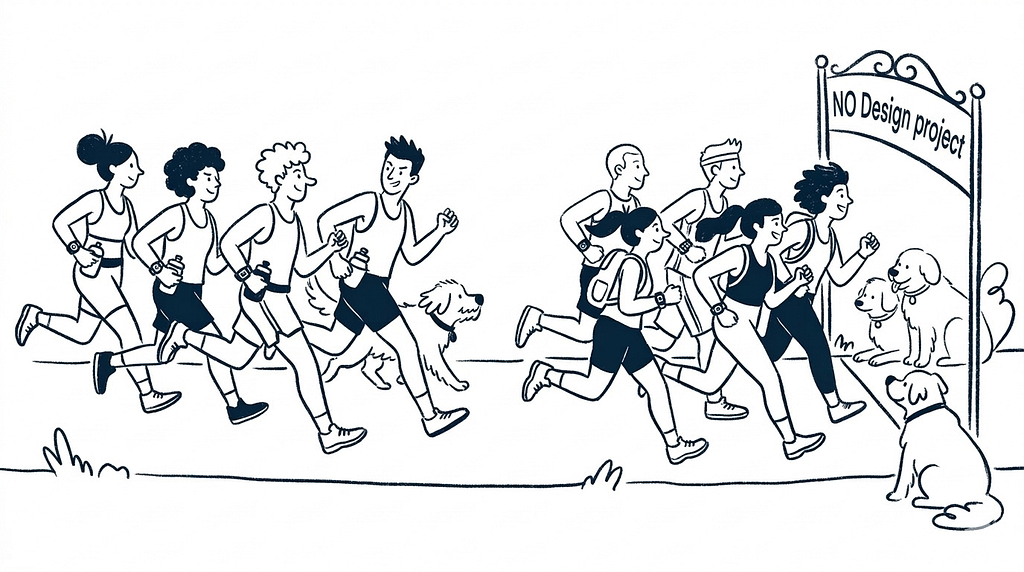
What’s the role of design teams in companies once established? We are in love with the dream of “bringing the user voice to products,” but is it actually happening? I would say yes, but as desired? I’m not so sure about that. There is no standard design command or procedure to follow in companies; each company designs according to its needs, sometimes as a core business and sometimes as the sole interface creator.
The wrong direction is when, with a design team, the only value companies see is translating what someone in sales or CX interprets about users’ needs into visuals; this position leaves all designers at an executional level, with no chance to participate in higher-level discussions.
AI as an absolute.
Another face of the wrong direction is a company posture in which design knowledge is overlooked and reduced to a prompt level, allowing anyone to assume the designer role. Maybe a product can “work” without design expertise, but eventually issues will surface, and it will be hard to operate.
On a team level:
Promoting without having the skills
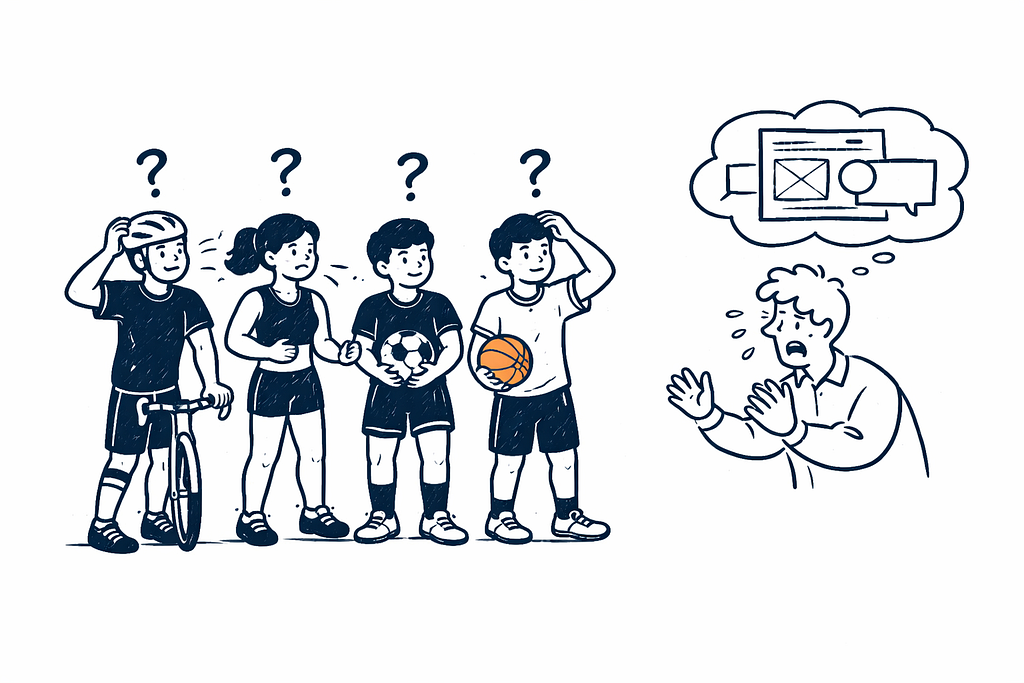
Team challenges are not only visible at the company level; within design teams, friction complicates the design journey. Achieving leadership can sound like career development for some designers, but I wonder whether this journey has been built on solid management foundations. I’ve witnessed how design leadership positions are filled in some companies due to several incorrect reasons. Still, it caught my attention when I was asked to mentor young designers starting a leadership path. Expressions like: “now I’m the leader because I was the only one remaining in the team” or “I’m being promoted because I’m the one who designs faster.”
Even though this promotion sounds good for professional development, the truth is that being a fast designer or the only one on the team isn’t a strong reason to be a leader. This transition from executing well to managing people can be harsh, and most of the time it leads to burnout, poor execution, or resignation.
My humble advice: in situations like this, start self-reflecting on your soft skills and people management if you want to project yourself as a leader. Today, there are tons of useful resources on how to manage a team or become a great leader, rather than waiting for some accompaniment in another area that is sometimes inefficient or never comes.
The visual barrier
One of the most common mistaken perspectives when pursuing a design leadership position is to focus solely on a visual standpoint in making design decisions. This perspective is stronger in creative companies, where the way things look matters, but in product design, although visual design is key, additional factors also affect a product’s success.
Not being aware of external design matters is not a bad thing. Still, it will limit your influence, putting you and your team in a delimited sphere that sometimes prevents you from participating in higher-ranking tables.
Visuals are a strong foundation of design, but they are not the only thing, especially in product design, where effectiveness comes first rather than looks.
My humble advice: I recommend finding a balance between a joyful design and the product’s value adoption; this healthy middle ground is sometimes hard to find, but it will definitely elevate your product to a higher standard.
Apathy for numbers and business
Designers love to design, but, as with love, it evolves as you grow up. The focus of your conversations won’t always be on fonts and colors. When promoting to higher strategic positions, the formula will change: less design and more numbers. When this change in position occurs under the conditions mentioned above, the reality will hit harder because of the lack of prior preparation in the subject.
My humble advice: Numbers can be a bitter pill to swallow, I know that especially if we come from a creative background, but if we want to climb the ladder of power, that information should be in our control (at least the interest in learning). Developing this knowledge from junior positions will increase your influence as you aspire to leadership roles.
The fear of the code
Last but not least (for now) comes the AI and its revolution, which we fear a bit less than before. That skill leap is not easy, since we have a strong trajectory in pixels and images, so transitioning into a code language can be an unknown dimension for us, given the new language and terminology.
Now we see many experts making the transition between design and code easier and smoother than ever by using the same AI tools we fear. Not embracing these new tech skills will decrease our market value and limit our innovative thinking.
My humble advice: This is a technology revolution we need to hop on, even if we don’t fully master all the tools and terms. Being curious about learning will determine your market viability for the next few years.
My conclusion:
The discussion about why design teams don’t achieve the impact they should in companies isn’t solely the companies’ fault. We designers, in part, have built a path and a perception of our work that keeps us at that level. Therefore, change can begin with us by showing interest in discussing more complex, strategic issues in our work.
We must break free from the constraints of the visual to consider other relevant discussions and lose our fear of building products directly. We can do that with AI these days.
Where the design market is headed is precisely towards a more complex view of what can be created in all its dimensions, so that the days of design as just images, color, and text will be left behind.
To write this article, I want to credit all the fantastic information sources and other authors who have written about related topics, each from an exciting, different perspective.
From Code to Context: Lessons on Building Startups, Leading Teams, and Staying Technical
Leading Teams: The Power of Collaboration Over Competition
Autonomy Is Not Anarchy: Leading Teams Along the Continuum
After 20 Years Leading Teams, This Is the One Step I Overlooked
You’re Only as Successful as Your Team: What 20 Years of Leading Teams Has Taught Me
Leading design teams is easy, but we made it complicated was originally published in UX Collective on Medium, where people are continuing the conversation by highlighting and responding to this story.