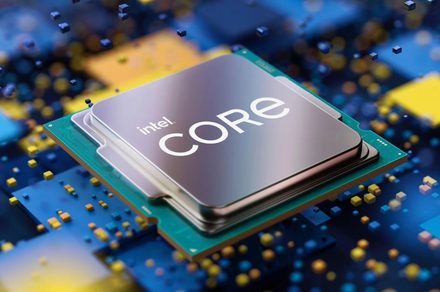
Intel and Nvidia’s growing partnership could reach an exciting turn in a few years. A fresh leak from tipster Jaykihn (via wccftech.com) claims that Intel’s upcoming Serpent Lake chipset could fundamentally change what laptop processors can do by integrating Nvidia’s RTX-class graphics directly onto the chip.
Serpent Lake refers to Intel’s purported hybrid chip that could combine the Tital Lake CPU architecture with Nvidia’s RTX Rubin graphics chiplets (based on TSMC’s 3nm fabrication technology).

What exactly is Intel’s Serpent Lake chip?
On the CPU side, the design reportedly packs eight performance and sixteen efficiency cores, drawn from Intel’s Griffin Cove and Golden Eagle architectures. However, when it comes to GPUs, the company could swap out its own Arc graphics for RTX technology.
This doesn’t mean that Intel is abandoning its Arc graphics entirely; it’s just a product-specific decision that could make the Serpent Lake chip stand out. The memory configuration sounds equally ambitious, as the chip might support 15 channels of LPDDR6 memory, directly improving the bandwidth bottleneck.
The leak also confirms a name for Intel’s next-generation P-core architecture: Copper Shark.
To put everything into perspective, RTX graphics have always lived on separate, power-hungry graphics cards that are quite big and expensive.

The integrated GPU could change the game for Intel
Integrating one directly onto the CPU’s die could result in faster communication between the two crucial components, a significant reduction in power draw, and, more importantly, desktop-class GPU performance from a thin-and-light system-on-chip that runs efficiently in laptops.
Here’s the boring part, though. Serpent Lake won’t arrive immediately. Intel’s roadmap runs through several chip iterations first, including Nova Lake in 2026, followed by Razer Lake and Titan Lake, before Serpent Lake is released in 2028-2029.
By then, the GPU tile could be based on Nvidia’s Rubin or Rubin-Next architecture, making it the first RTX-class GPU to appear on a non-Nvidia chip. Whether the integration of Nvidia’s GPU tile on Intel’s Serpent Lake chip would result in a price hike isn’t immediately clear.
What’s clear, however, is that it would offer discrete-GPU-level gaming and AI performance on premium laptops, without the bulk of carrying a dedicated graphics card.