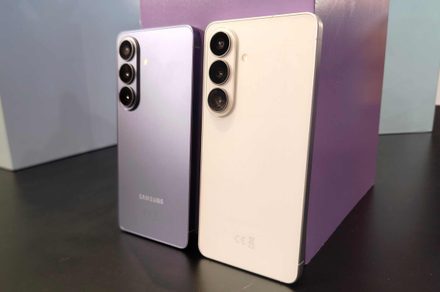
Back when I started testing tech, it felt like the big draw of each new premium phone was its new feature set – eventually that gave way to higher-res cameras, then faster charging, then other hardware specs being the main draw, but the Samsung Galaxy S26 series feels a return to the old way of doing things.
Consisting of the Samsung Galaxy S26, S26 Plus and S26 Ultra, the new trio of mobiles feels incredibly familiar – and that’s because they are. The S26 has mostly the same specs as the Galaxy S25, the S26 Plus is barely different to the Galaxy S25 Plus and the Ultra model only has a few changes over the Galaxy S25 Ultra.
What’s really new is the myriad new features and tools that Samsung has loaded into its new phones; some of them are AI-labelled ones, following on from the company’s insistence that these be named “AI phones” instead of “smart phones”, but there are plenty of lovely other little tweaks under the hood too.
Ahead of their official launch, I got to spend some time with all three members of the Samsung Galaxy S26 line, and was reassured that spec stagnation doesn’t mean these are the deja vu phones I’d been expecting.
Samsung Galaxy S26 series design looks familiar, but with some tweaks

Okay, I’ll admit: to look at them, the Samsung Galaxy S26 members don’t look overly different from their predecessors. The sizes are almost the same, the buttons and cameras are in the same configuration, and there are no brand-new colors, from what I can tell.
But there are a few tweaks. The Galaxy S26 Ultra is thinner than before, measuring just 8.3mm – it’s no S25 Edge, but it loses some heft. Similarly the base Galaxy S26 is now slightly bigger, with its screen bumped up to 6.3 inches diagonally.
For the most part, the display specs are the same too, with Samsung rocking out its good-looking displays once again. But a headline feature of the Galaxy S26 Ultra does come to the display and, in a twist, it intentionally makes the screen look worse. Or, ‘worse’.

This is Privacy Display, only available in the top-end model. It’s a built-in tool which reduces the viewing angles of the screen, so if you rotate it vertically or horizontally, it’s almost impossible to see what’s on the display – perfect to stop nosy people seeing what’s on your screen, and protecting your privacy if you’re online banking or seeing sensitive information in public.
It can be enabled via the swipe-down menu, and there’s customization too: you can choose for it to only work on certain apps, on specific parts of the display, or just for notifications.
This is more effective in real life than the pictures betray, and could be a gamechanger for business users (or really private people).
Samsung Galaxy S26 software is where the upgrades shine

It’s in the software and feature department, that Samsung is hoping its killer sales pitch lies. I’ve got to say, I’ve been impressed by what I’ve seen, enough that these tools are what first came to mind when I began writing this hands-on review.
My favorite tool is the upgraded Audio Eraser, which now works in third-party apps (and not just Samsung’s ones) to remove noises like wind, crowds or traffic. Useful for watching sports games, live streams or poorly-mixed videos, so you don’t get distracted by the noise.

But what else? AI is, of course, the name of the game, but for the most part it’s not auto-writing or generative slop, but organizational tools. Now Nudge can suggest actions based on context (if someone asks for another person’s phone number, it can summon it for you), Circle to Search now works for multiple circled items at once (an entire outfit, for example), Search with Finder can now scan your notifications too (great for condensing multiple group chats to find what you need) and Now Brief now takes relevant information from a range of apps (it can find dates from across your apps, not just calendar ones).
Another big tool is call screening, which builds on past iterations by getting an AI chatbot to answer your calls for you and demand responses. It seems quite cold, all things considered, but I suppose there’s no use extending courtesy to spam callers.
Samsung Galaxy S26 cameras enjoy one hardware and one software improvement

It’s time to repeat the chorus of this song: the Samsung Galaxy S26 specs are pretty similar in the camera department, just like everywhere else. The standard and Plus models enjoy a 50MP main, 10MP telephoto and 12MP ultra-wide camera while the Ultra gets a 200MP main, 10MP and 50MP zoom cameras and 50MP ultrawide.
The apertures have seen a reshuffle, though, most notably with the main cameras now coming in at f/1.4. So they should pick up a little more light, with which to spit out brighter and more vibrant images.
There are relatively new features too, but the ones that exist have seen some upgrades. Nightography uses the bigger apertures to capture more data, thus improving its noise reduction, and Pro can now shoot in APV 8K 30fps. Auto-framing now works better to capture moving 4K images, while the steady video mode uses the accelerometer and gyrosphere to record even steadier snaps. ProScaler will upscale grubby pictures to become even clearer, and mDNIe 10-bit data processing apparently allows you to capture four times the colors.

These are all features I’ll need to test out in the wild to see if they’re any good, but my most intriguing is improvements to the selfie camera. I’ve long maligned how brands have prioritized rear cameras, packing them with better ISPs and engines, and not offering this to the front camera even if the hardware is identical, but no longer. Now, the front camera will use the same enhanced AI ISP and object aware engine that the rear ones do.
Generative Edit has seen a big enhancement, and I spent quite some time playing around with this. Now, you can write prompts to the phone to edit pictures you’ve taken, from the small things (change the color of the background) to the big, which you can see in the pictures accompanying this review (add a cat to the image). It’s neat if you’re using it to make small edits and adjustments, although if you fly too close to the sun, you risk turning your own photos into AI slop.
Samsung Galaxy S26 performance enhancements are to be expected
It wouldn’t be a new generation of smartphone, if it didn’t come with a faster chipset, right?

In the UK, where I was briefed, the Samsung Galaxy S26 and S26 Plus will get the company’s own Exynos 2600 chipset, while the S26 Ultra will get the Snapdragon 8 Elite Gen 5. That’s right, after missing the S25 generation, the Exynos and Snapdragon split is back! Based on precedent, I’d expect buyers of the base and Plus model in the US, Canada and China to also get the Elite Gen 5.
When describing this new chip for the Ultra, Samsung said it should offer neural processing up 39%, GPU performance up 24% and CPU enhancements of 19%. How these boosts will manifest themselves in day-to-day use, or under intensive testing, is something I’ll need to check.
Tech fans might recognize Snapdragon chipsets for their ongoing overheating problems; apparently Samsung knows this, because it’s redesigned the thermal architecture for the S26 Ultra. It has a bigger vapor cooling chamber now, which the company says is 21% more efficient than before. I didn’t put it through its paces, or play any games, but none of the Ultra models I tested got particularly hot.
Samsung Galaxy S26 charging will be faster… and slower

The familiar roster of specs from the S25 phones returns, and given that I only had an hour with the new mobiles, I didn’t get to test out their battery lives or charging speeds. I’m particularly interested in how Privacy Display impacts the Ultra’s lasting power. But there are a few little tweaks.
For example, the Samsung Galaxy S26 and S26 Ultra retain the 25W wired charging of their predecessors, as well as 15W wireless. However thanks to a 300mAh power pack size increase, the base model will likely charge even slower.
Samsung has upgraded the S26 Ultra’s charging speed to 60W, which is a nice solid bump that should see its 5,000mAh battery power even quicker. I’m a firm believer that premium phones need fast charging, so you can power them up quickly and start using them again, and 60W is a step in the right direction.