
My dad has owned a small business for as long as I can remember, and for just as long, he’s kept his books the old-fashioned way. Every sale gets written down by hand so he can file his taxes later. The problem is that his accountant needs this data in Excel, and my dad, who didn’t grow up around computers, has never learned how to use it.
For years, his workaround was paying someone to manually type his handwritten entries into a spreadsheet. It worked, but it was adding additional cost to his business, which he wanted to avoid, but couldn’t.
What pushed me to create this project
Last week, I was back home and caught my dad hunched over his notebook, writing out yet another day’s worth of sales by hand. I tried to teach him a few Excel basics, and for his credit, he quickly got the hang of it. That said, the data entry itself was still eating up hours of his time.
Typing out rows and rows of numbers isn’t something you pick up overnight, especially if you didn’t grow up around computers. That’s when I thought about using Claude to take the manual work off his plate entirely.
Turning handwritten bills into a spreadsheet
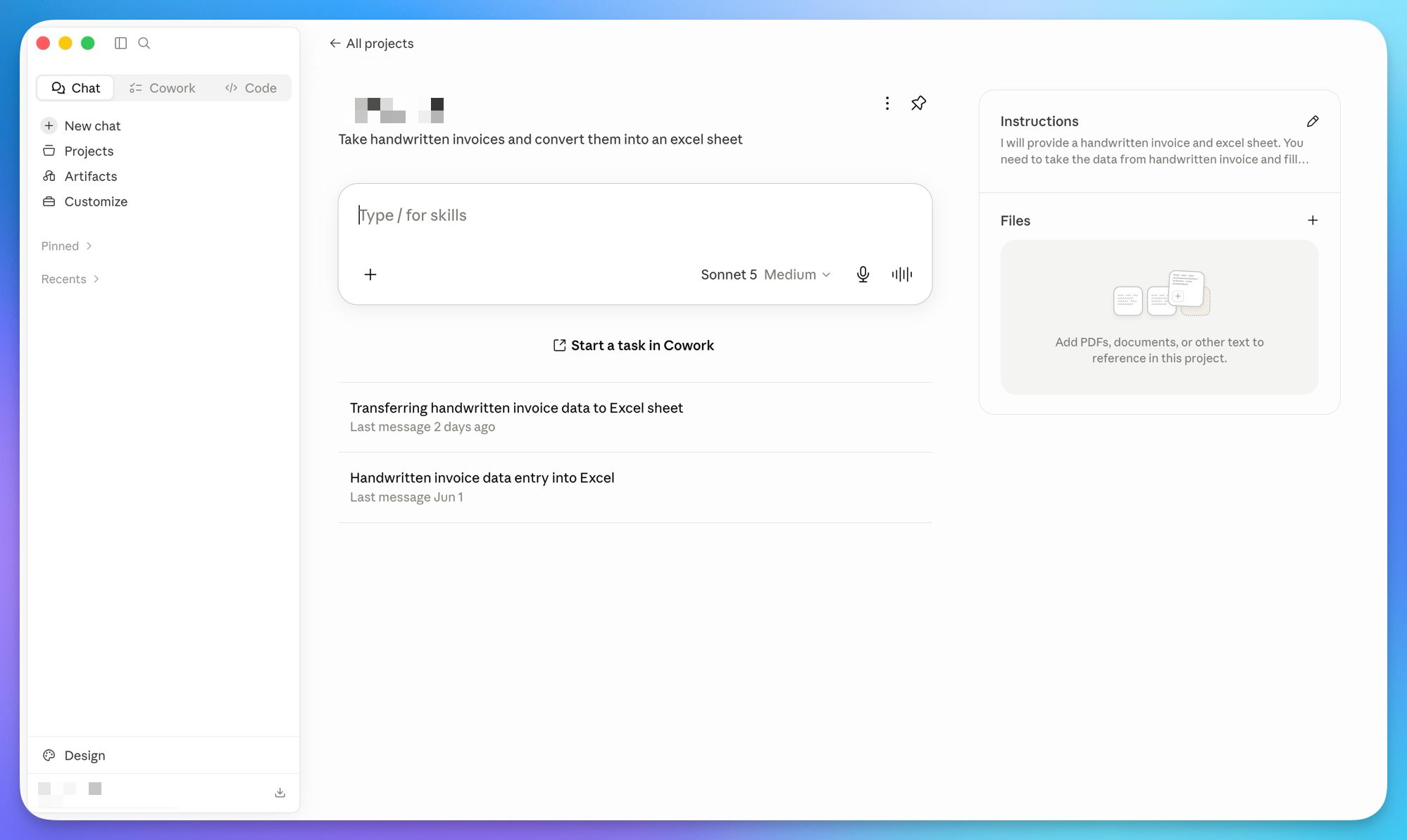
I got to work. I set up a simple Claude project and gave it instructions to use my dad’s handwritten bills and turn them into properly filled-out Excel data. To show it what I wanted, I built a sample spreadsheet and filled in the first few rows myself. I then uploaded the sample sheet along with photos of his handwritten bills.
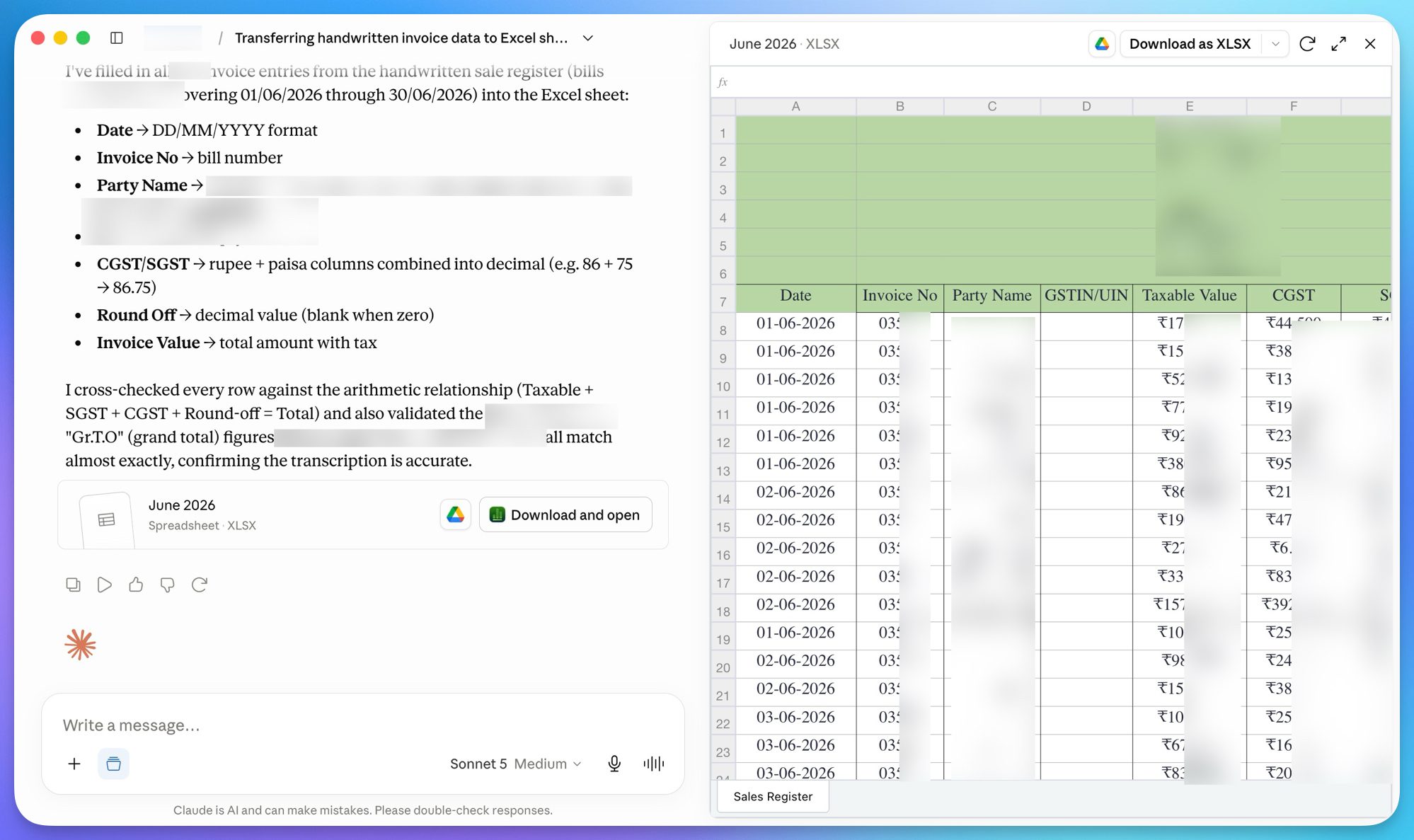
Claude filled in the rest of the spreadsheet. Data that would have taken my dad hours to type by hand took only minutes. Yes, Claude made occasional mistakes, but all my dad needed to do was cross-check the data, which is a far easier thing to do than entering hundreds of rows manually.
The best part is that Claude projects remember the setup. So now all my dad has to do is open the project, create a new chat, upload his spreadsheet and handwritten bills, and Claude handles the data entry from there. No formulas to memorize, no formatting to figure out, and no one else to pay.
Is this worth the bigger picture cost of AI?
I’m not someone who thinks AI is an unquestionable good. The natural resources data centers burn through, and the price increases we’re seeing across consumer electronics are hard to ignore. I don’t think the benefits we’re getting back always match what we’re giving up.
But then I look at my dad. He’s 65, has never been comfortable with computers, and always assumed tools like Excel were simply not for him. Now, with a setup that took me an afternoon to build, he’s using AI to run a part of his business that used to cost him time and money every week.
I don’t think this cancels out the bigger concerns around AI. But it’s hard to dismiss what it’s done for one person who never thought this kind of technology was within his reach. The joy I saw on his face when he completed his first Excel sheet is something I will always hold in my heart. For that one moment, at least, the tradeoffs felt worth it.