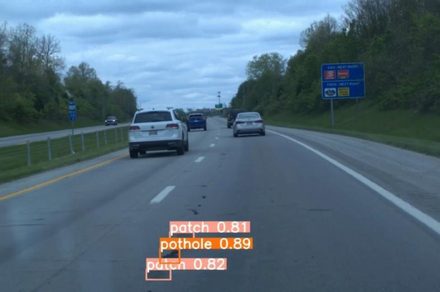
If you’ve driven the same route long enough, you probably know exactly where a sign has faded away or where a pothole keeps getting “fixed” but never really goes away. Road problems like these are easy to spot from behind the wheel, but getting them onto a maintenance schedule often takes far longer. To address this, Honda has joined hands with DriveOhio on a new AI-powered road safety initiative that aims to spot and report issues proactively, using data gathered directly from vehicles as they move through everyday traffic.
In its official announcement, Honda says it has completed what it’s calling a nation-first test in Ohio that uses advanced vision and LiDAR sensors to identify issues like potholes, deteriorating pavements, damaged guardrails, and missing or obstructed road signs. During the pilot, a small fleet of Honda vehicles covered around 3,000 miles across a mix of urban and rural routes, operating in varying weather conditions and at different times of day, to identify these issues with impressive accuracy.
According to the results, the Proactive Roadway Maintenance System was particularly effective at spotting signage and guardrail problems, with an accuracy of 99 percent and 93 percent, respectively. It also identified issues such as potholes and rough road surfaces with close to 90 percent accuracy.
Real-time reporting could speed up road maintenance
The system shared the collected data with the Ohio Department of Transportation, where it can be reviewed and converted into maintenance tasks without waiting for manual inspections or public reports. Honda says this approach could significantly reduce the time it takes for road issues to be flagged and addressed, while also lowering the costs associated with traditional inspection methods.
While the project was limited in scope, Honda sees potential to scale the system further by leveraging anonymized data from connected vehicles already on the road. If adopted more widely, Honda estimates the system could save the Ohio Department of Transportation over $4.5 million annually by reducing the need for manual inspections.