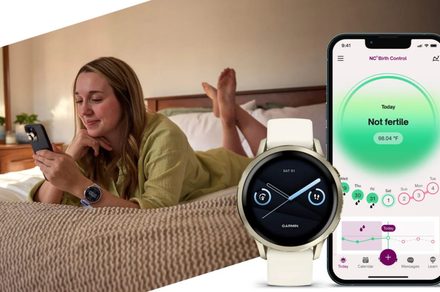
Every day in tech seems to outdo the last. Just when you think you’ve seen it all, something shifts the conversation completely. I stumbled across news about Garmin teaming up with Natural Cycles, and I had to pause for a second. Birth control, powered by your smartwatch? That’s not something you expect to read in the middle of an ordinary day.
But the more I sat with it, the more it made sense. Technology isn’t just about faster chips or better cameras anymore; it’s slowly finding its way into deeply personal spaces, including women’s health. And honestly, that feels like a step in the right direction. For something that has often been overlooked or simplified for years, seeing innovation land here feels both overdue and genuinely exciting.
It all starts while you’re asleep
At this point, you’re probably wondering how this even works. Fair question, because it does sound a little unreal at first. So, your body temperature isn’t constant. It subtly rises and falls throughout your menstrual cycle. Those tiny changes can actually signal key phases, like when you’re ovulating, which is the window when pregnancy is most likely. This is where the Garmin smartwatch steps in. While you’re asleep, it monitors your skin temperature throughout the night. You don’t have to do anything. By morning, that data is synced to the Natural Cycles app, which analyzes these patterns over time and maps out where you are in your cycle. This way, you get a clearer, data-backed picture of what your body is doing.
Now, traditional hormonal birth control also helps prevent pregnancy, but it works very differently. It alters your hormones, which, for many women, can come with side effects like mood swings, fatigue, or just feeling unlike yourself. That trade-off doesn’t work for everyone. What Garmin and Natural Cycles are offering is a non-hormonal route. It doesn’t interfere with your body; it simply helps you understand it better. The app gives you insights, trends, and daily guidance, but you still need to stay involved, check in regularly, and follow the recommendations carefully. In a way, it shifts the control back to you.
There’s a catch (for now)
As exciting as all of this sounds, there’s still a small catch. It isn’t widely available just yet.
But once it does roll out more broadly, it has the potential to reshape how birth control is viewed. Instead of relying on external factors that alter your body, this approach leans into understanding what your body is already telling you. It feels like being aware of your body. For many women, birth control has long been about adjusting to side effects. This, on the other hand, introduces a more informed, more personal way of doing things. If it delivers on its promise, it could change the conversation entirely.