We may earn a commission from links on this page.
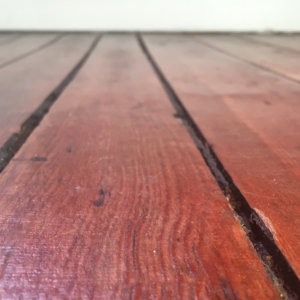
Recently, a few spots on the hardwood floors in my house have become mysteriously slippery—so slippery that they’re kind of dangerous. I really feel like my feet might go out from under me when I walk there, and there were a few close calls before I started avoiding them (or at least bracing myself to walk over them more carefully).
This is no way to live, so I started looking into solutions, starting with the root cause.
Why your wood floors are suddenly slippery
Turns out it’s not uncommon for hardwood floors to become spontaneously slippery, and it can happen for a variety of reasons.
-
Wax or polish: If you apply any kind of coating to give your floor extra shine, it can build up over time and turn the floor into an ice rink.
-
Oil and silicone cleaning products: Some cleaning products that promise a shiny finish contain silicone or oil, which can also build up and turn your floors into a slip-n-slide.
-
Dirt and humidity: Dirt, even the stuff you can’t see, can act as a dry lubricant, and high humidity can result in a moisture slick on the surface of the floors.
-
Time: Finally, over time, all those feet walking over the floor can polish the finish, removing the microscopic imperfections that previously gave it some grip.
I don’t polish or wax my floors or use oil- or silicone-based cleaners, and I clean pretty regularly, so I discounted the first few causes and assumed that we’ve just polished the seal on our floors with regular foot traffic. This can happen to any sealed wood floor, but there are some pretty straightforward ways to deal with it.
Start with a thorough cleaning
The first step I took was a thorough cleaning. I clean my floors regularly, but it’s always possible that something spilled without being noticed—the spots where the slipperiness occurred are in the path from the kitchen to the dining room, and from my tool closet to everywhere else in the house. Cooking oils, WD40—there are a lot of things that could have dripped without being noticed. If you’re not sure about substance buildup on a slippery floor, a thorough cleaning might be the easy solution.
Always use a pH-neutral cleaner designed specifically for wood floors—and never use vinegar, even heavily diluted in water. Vinegar can eat away at the finish of your floor; while it might help with the slipperiness, it can also do some permanent damage. I used Bona Hardwood Floor Cleaner and cleaned the areas a few times, but my floors remained slippery.
Add some rugs
A simple solution, especially if you’re dealing with one or two isolated slippery spots, is to just throw down a rug or a runner with a non-slip backing. Your floors will still be slippery, but won’t pose any threat. If the slippery area is quite large (or encompasses your entire floor), this might not work because the rugs might just slide around with nothing to grip onto. But for a small slippery area, it might be a quick, easy solution.
Apply a temporary (or permanent) treatment
If cleaning and covering up your slippery floors won’t work, there are some more involved solutions to try:
-
Anti-slip sprays. There are a variety of temporary anti-slip coating sprays you can apply to your floors, like Rustoleum AntiSlip or Slip Doctors Safety Spray. Although the Rustoleum spray is okay for indoor use and wood, it doesn’t specify hardwood floors, and in a quick test it looked slightly cloudy on a remnant plank I had lying around. The Safety Spray, on the other hand, dried very clear, and reduced the slip factor significantly, so I’d recommend it. It does change the sheen of the floor slightly (noticeable in the right light), but it’s also temporary and will need to be re-applied every year or so.
-
Slip NoMor. This stuff is actually designed for stages and dance floors, but you can use it on any wood floor. I didn’t test this, but the procedure is pretty straightforward: Clean thoroughly first, and dilute it with one part Slip NoMor and 20 parts water. Then mop it on and let dry. The coating will only last a week or so (and you can remove it with hot water at any time), so it’s not a permanent solution unless you’re okay with re-applying every week or so.
-
Coatings. A longer-lasting and more involved solution is to coat your floors with a clear anti-slip product like Floor Grip, Bona Anti-Slip, or Loba 2K Invisible. These are essentially new finish seals on your floors, and all require you to sand the floor before application and allow them to cure for several days. It’s a DIY solution if you’re comfortable doing the prep work, but it’s not a quick fix.
-
Paint. If your wood floors are in good condition, this might not be a great idea—but if your floors are a bit worn down, painting them with an anti-slip additive can be a cheap, easy way to eliminate the problem.
As a last resort, refinish
If cleaning and temporary sprays don’t work and you’re considering a coating to fix your slippery floor, you might think about going all-in and having your floors professionally refinished with an anti-slip finish. This will ensure a consistent finish and refresh your floors in the process. It’s the most expensive and disruptive solution, but also the most permanent. Most professional refinishers can suggest an appropriate seal for your floors that will increase traction.