We may earn a commission from links on this page.
2025 was a great year for handheld gaming, with the Nintendo Switch finally getting a sequel and older handhelds like the Nintendo DS getting unofficial successors from companies like AYN and Ayaneo. Steam Deck fans did take a bit of a hit towards the end of the year, when Valve announced it was discontinuing the $400 Steam Deck LCD, but for gamers on the other side of the price spectrum, Lenovo just announced the most powerful SteamOS handheld yet.
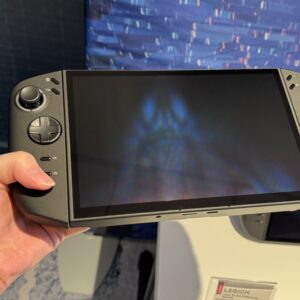
It’s technically not a new device, but instead, a reissue of a handheld from last year. Called the Lenovo Legion Go 2, it packs up to an AMD Ryzen Z2 Extreme chip, up to 32GB of RAM, and up to 2TB of storage. It’s also got detachable controllers like the Nintendo Switch, and uniquely, an 8.8-inch OLED display. And now, you can buy it with SteamOS officially installed out of the box (last year’s release only came with Windows).
If it’s anything like the Legion Go S with SteamOS preinstalled, that means booting it up and navigating through your games will feel just like using a Steam Deck, which is great news for anyone who’s a fan of Valve’s lightweight and simple-to-use operating system, but is starting to feel like it might be showing its age. Not only should it prove easier to use than last year’s Legion Go 2 with Windows installed on it, but the more powerful chip means the handheld will be able to play games much more smoothly and at higher resolutions than any other official SteamOS device yet. The hardware isn’t made by Valve, but effectively, this is now a new, ultra-powerful Steam Deck sequel, and should be able to bump up your fps by up to dozens of frames in the right circumstances. For a measure of how transformative this can be, when the Legion Go S got SteamOS, it went from one of my least favorite handheld gaming PCs to my best pick for most people.
Even those who already have the Windows version could see a performance increase, since SteamOS typically takes fewer resources to run than Windows, which can translate to smoother gameplay. You can see my review of the Legion Go 2 with Windows for more there, where I compare it to SteamOS devices. With this hardware combined with this operating system, this might be the most powerful handheld gaming PC you can buy right now, period.
The only catch? This is still a bulky device, and while the SteamOS version of the Legion Go S saw a price cut over the Windows version (likely due to Valve not charging a licensing fee like Microsoft), the SteamOS version of the Legion Go 2 actually starts off more expensive than the Windows version, at $1,199 rather than $1,099. That could be due to shortages on key components like RAM, but it is disappointing to see an already high price tag get higher when the precedent for SteamOS versions of these devices is for prices to come down.
Still, the cheapest Windows model for the Legion Go 2 is actually a bit hard to find anywhere other than Lenovo’s official store right now anyway, so it’s possible that model could face its own price bumps in the near future as supply dwindles. And above four figures, one could argue that quality matters more than an extra $100 on the price tag.
Granted, you could get a Windows version and install SteamOS on it yourself, but doing so is a bit arduous, and can result in some unintuitive button mapping. The version with SteamOS installed out of the box, meanwhile, has a dedicated Steam button set-up from the get go. You’ll have fewer headaches and a more intuitive setup by going for it.
Aside from that button and the operating system, everything else about the device is the same as the Windows version, but that’s not a bad thing. I called it “overkill” in my review, but that large OLED screen is gorgeous, and perfect for gamers who want the best looking graphics possible on the go. The original Legion Go 2 was my favorite premium gaming handheld of last year, and the model with SteamOS installed on it is only set to make it better.
Valve gamers who think the Steam Deck OLED or Legion Go S aren’t quite ritzy enough for them should stay tuned for the official release date, currently expected for June. This could be the premium handheld gaming PC they’ve been waiting for, marrying SteamOS convenience with modern specs that even the similarly priced Xbox handheld can’t match. Finally, there’s a “Steam Deck” for the 1%.