Human-centred design changed everything. But optimising for the individual while ignoring the planet may be the field’s most expensive blind spot.
There’s a thought experiment doing the rounds in design circles that goes something like this. Imagine you’re designing a car. A human-centred approach asks: how comfortable is the driver? Is the seat ergonomic? Is the dashboard intuitive? It’s all perfectly sensible. Now zoom out.
How comfortable is the planet with this car riding on its surface?
That’s the jump humanity-centred design is asking us to make. And it turns out the distance between those two questions is quite considerable.
The problem with “good enough for the user”
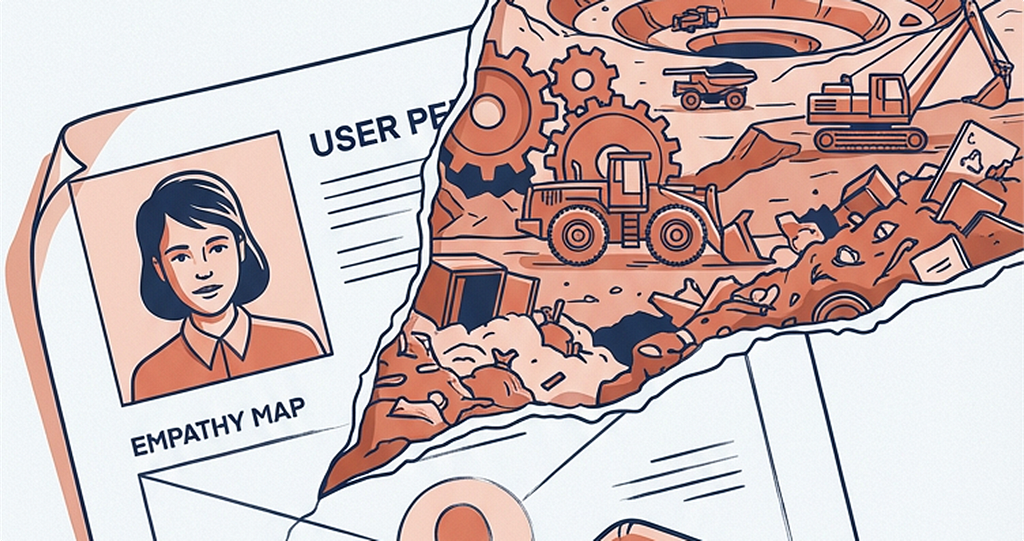
Human-centred design (HCD) has been the field’s gold standard since the 1980s, and for good reason. Its emphasis on real people’s needs, behaviours and capabilities transformed how products and services are built. It gave us more intuitive interfaces, more accessible services, and a much-needed counterweight to the technology-for-technology’s-sake era that preceded it.
But there is mounting evidence suggesting that optimising for the individual user, in isolation, creates unintended consequences, damaging global systems that are essential to human well-being.
Don Norman, one of the most influential figures in modern design who essentially co-invented HCD and coined the term “user experience”, has become its most prominent internal critic. In his 2023 book Design for a Better World, he put the case plainly:
“For the last 20 or 30 years, I’ve been advocating human-centered design. And it’s wrong. Now, why is it wrong? Well, none of the principles are wrong. I still believe firmly in how I teach it and what it is talking about. What is wrong is what it does not talk about.”
Specifically, it doesn’t account for how products are manufactured, what they’re made from, or where they end up when we’re done with them.
This is not a minor omission.
The ecosystem nobody designed for
The unconstrained production and consumption of new products is contributing to many of the ecological crises we currently face. Pollution of air and water, climate change, mass species loss, the degradation of habitats: the list is not short. Human-centred design, for all its virtues, has rarely been the thing to pump the brakes on that.
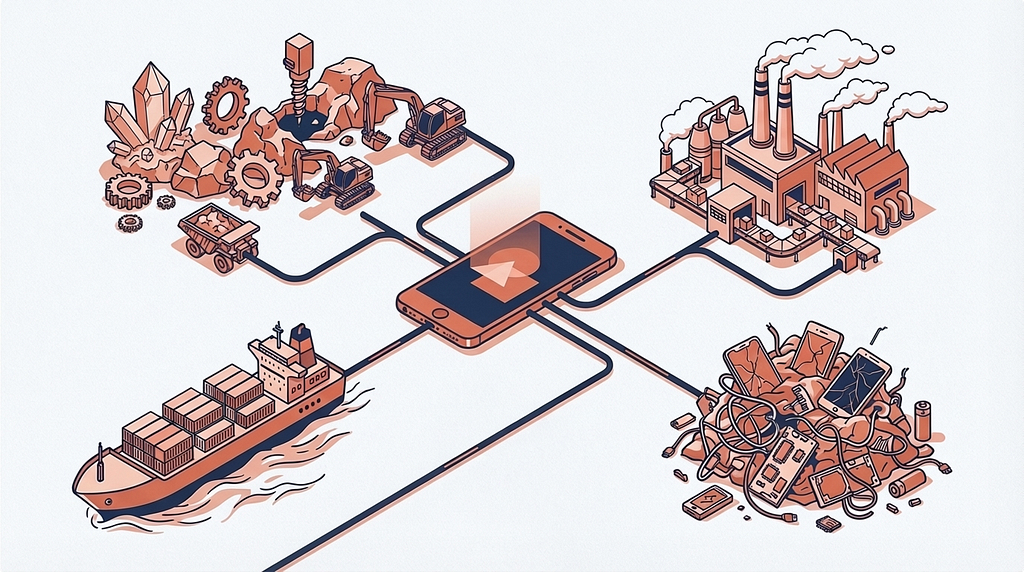
Digital products can feel almost weightless, but their footprint is anything but. The information and communications technology sector accounted for an estimated 1.5–3.2% of global greenhouse gas emissions in 2020, a share projected to grow as the digital economy expands. The hardware picture is starker still: producing a two-kilogram laptop requires around 800 kilograms of raw materials. A smartphone, from manufacture to disposal, demands roughly one tenth of that.
The figures around waste are no less sobering. Waste from screens and small IT equipment rose 30% between 2010 and 2022, reaching 10.5 million tons. Much of it ends up in developing nations, where formal recycling infrastructure is scarce, and the health consequences fall on communities that never benefited from the devices in the first place. And the mineral supply chains feeding our device habits carry their own costs: the average phone now contains 63 distinct materials, compared to just 10 in 1960. Demand for cobalt, graphite, and lithium is expected to increase by nearly 500% by 2050.
Meanwhile, the decisions that drive this consumption are often invisible to the people making them. Apps not optimised for older hardware quietly nudge users towards upgrades. Frequent updates and redesigns often lead users to replace their devices just to keep up. Heavier interfaces and resource-intensive animations increase energy usage on both mobile and desktop devices. These are design choices. They just weren’t framed that way at the time.
Beyond the persona
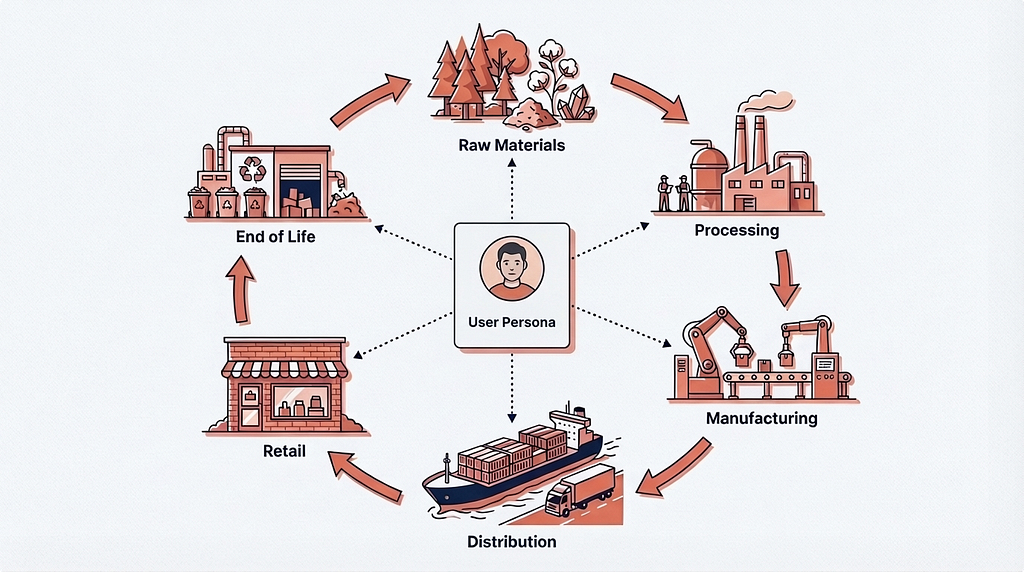
Humanity-centred design is, broadly, the proposal that we widen who and what gets considered a stakeholder in the design process. The phrase emphasises the rights of all of humanity and addresses the entire ecosystem. That means all living creatures, not just people, plus the health of the land, water and air they depend on.
Norman’s framework positions it as an extension of HCD rather than its replacement.
“If human-centred design is ‘HCD’, humanity-centred design is H plus CD; it is human-centred plus more, stressing the interconnectedness of individuals within larger social, cultural, and environmental contexts.”
The framework itself relies on five principles. Three address the scope of the problem: solving root causes rather than symptoms, focusing on the whole ecosystem, and taking a long-term systems view. The other two concern how you work: embracing continuous testing and refinement, and treating sustainability and ethical responsibility as firm requirements rather than nice-to-haves.
Other movements in the space have pushed this further still. Life-centred design, more-than-human design, planet-centred design: the names vary, but the underlying premise is consistent. Designers are increasingly tasked with new challenges, ethical considerations, and tensions as we attempt to balance human and non-human needs and interdependencies.
The supply chain nobody talks about
One of the sharper points in this conversation is that the person using a product is only one node in its lifecycle. We tend to consider how our product affects humanity, yet we don’t always focus on the creators. You can have a sustainability-forward product brief and still build it in conditions that fall well short of that aspiration. That gap between intention and impact is exactly what humanity-centred design is trying to close.
In 2022, only 7.5% of digital waste in developing countries was formally collected, compared to 47% in developed countries. In other words, those least responsible for generating that waste are most exposed to its consequences. This is the kind of systemic effect that individual user research, however rigorous, simply won’t catch.
Agbogbloshie, a scrapyard on the outskirts of Accra in Ghana, became one of the most documented examples of where that burden lands. For years it processed thousands of tonnes of e-waste annually, much of it originating in Europe and North America, with workers burning cables and circuit boards to recover metals, releasing lead, mercury and other toxins into the surrounding soil and water. The site was demolished by the Ghanaian government in 2021, but researchers noted that the practices just moved underground, into homes and less visible corners of the city. The problem did not leave with the bulldozers.
The business objection (and what to say to it)
The obvious pushback is commercial. Sustainability costs money. Long time horizons are hard to justify in sprint cycles. Designing for communities and ecosystems that don’t sit in your target persona is a difficult sell in a product review meeting.
Norman acknowledges this tension directly.
“When you come to your company and say ‘you ought to be doing a circular economy’, everybody will say, ‘but that’s going to cost us a lot of money.’ You have to have a good answer for that.”
His suggestion is that designers get more literate in business models, particularly service design and circular economy thinking, in order to make the case in terms that land. That might mean learning to frame sustainability as risk reduction rather than added cost, or presenting environmental impact alongside standard success metrics from the outset of a project.
The challenge runs deeper than values alone. He observes that it is often easier to get funding for large projects than small ones, as institutional structures favour providing large sums at once rather than small, incremental ones. Yet incremental steps are often preferable to revolutionary ones. They allow a clearer signal in testing and refinement, and they give people and cultures time to adapt to new systems rather than being overwhelmed by them. The implication being that the problem isn’t only cultural: it’s the way organisations are set up to make decisions.
Fairphone, a Dutch smartphone manufacturer founded in 2013, offers one of the more convincing proofs that a different approach is commercially viable. Its phones are designed to be modular and user-repairable, with spare parts available and software support guaranteed for eight years, compared to an industry average of two to three.

In 2024 the company reported a 70% repair rate and cut its greenhouse gas emissions by 48% compared to 2022. It has now surpassed one million devices sold since its founding. The model is not without its constraints, and Fairphone operates at a fraction of the scale of the major manufacturers. But it demonstrates that designing for longevity rather than replacement is not simply an ethical position. It is a profitable one.
A more-than-human practice
What does this actually look like in reality? In practical terms, it means adding environmental impact to design criteria alongside usability and accessibility, extending user research to affected communities further down the supply chain, and choosing not to design for planned obsolescence. At the more experimental end, new methods in participatory design are attempting to give voice to non-human actors, such as using AI models to simulate the needs of animals and designing for ecosystems as stakeholders.
Some of this is already happening within the industry, with less fanfare than you might expect. Sustainable web design, for instance, has moved from niche concern to emerging discipline, with tools now available to measure the carbon footprint of individual websites and design systems. The principle that a lighter, faster, better-optimised interface is also a greener one is gaining traction, reframing performance as an ethical consideration rather than a purely technical one.
Service design is another area where humanity-centred thinking is finding practical expression. Designing for the full lifecycle of a service, including how it ends, who maintains it, and what happens when it scales, naturally raises the kinds of systemic questions that a narrower user-focused brief tends to skip over. None of this requires dismantling existing practice from the ground up. It requires expanding the brief.
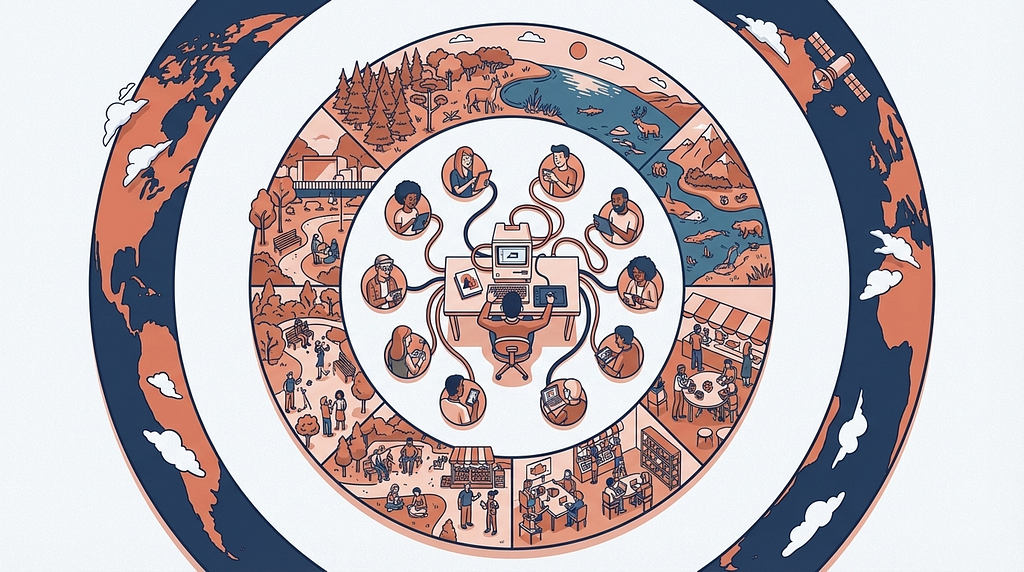
By placing the planet itself as a stakeholder in the design process, planet-centred design calls on designers to ensure that products and services create long-term value for the environment, not just for users. That’s a significant reorientation, but the evidence for why it matters is, at this point, hard to argue with.
The good news is that this isn’t a binary choice between user empathy and ecological responsibility. It’s a question of scope. HCD taught us to zoom in on the person in front of us. Humanity-centred design is asking us to zoom back out, without losing what we learnt along the way.
That seems like a reasonable ask.
Thanks for reading! 📖
If you enjoyed this, follow me on Medium for more on design, psychology and technology.
References & Credits
- Norman, D. (2023). Design for a Better World: Meaningful, Sustainable, Humanity Centered. MIT Press.
- Norman, D. (2023). Humanity-Centered versus Human-Centered Design. jnd.org. https://jnd.org/humanity-centered-versus-human-centered-design/
- Royal College of Art. (2024). Designing for humanity: Five things we learnt watching Don Norman and Sean Carney in conversation. https://www.rca.ac.uk/news-and-events/news/designing-for-humanity-don-norman-and-sean-carney-in-conversation/
- Poikolainen Rosén, A. et al. (2025). Introducing More-Than-Human Design in Practice. Interactions, ACM. https://interactions.acm.org/archive/view/march-april-2025/introducing-more-than-human-design-in-practice
- Toward Humanity-Centered Design without Hubris. (2024). CHI Conference on Human Factors in Computing Systems. https://dl.acm.org/doi/10.1145/3613905.3644060
- Nesta. (2022). For people and planet: moving beyond human-centred design. https://www.nesta.org.uk/blog/for-people-and-planet-moving-beyond-human-centred-design/
- ScienceDirect. (2022). From human-centred to life-centred design. https://www.sciencedirect.com/science/article/pii/S2666659622000099
- UX & Beyond. (2023). From human-centered to ecosystem-centered design. https://uxandbeyondbook.com/blog/from-human-centered-to-ecosystem-centered-design
- UNCTAD. (2024). Digital Economy Report 2024: Shaping an environmentally sustainable and inclusive digital future. https://unctad.org/publication/digital-economy-report-2024
- World Bank. (2020). Minerals for Climate Action: The Mineral Intensity of the Clean Energy Transition. https://www.worldbank.org/en/topic/extractiveindustries/brief/climate-smart-mining-minerals-for-climate-action
- Roland Berger. (2024). Don Norman on humanity-centered design. https://www.rolandberger.com/en/Insights/Publications/Don-Norman-on-humanity-centered-design.html
- PMC / National Institutes of Health. (2024). Environmental Injustice and Electronic Waste in Ghana. https://pmc.ncbi.nlm.nih.gov/articles/PMC10815197/
- Fairphone. (2025). Our 2024 Impact Report. https://www.fairphone.com/stories/our-2024-impact-report-is-out-here-are-the-highlights
Beyond the user: why design needs to widen its circle was originally published in UX Collective on Medium, where people are continuing the conversation by highlighting and responding to this story.