AI hasn’t just arrived — it has quietly become part of the default experience online.
What started as a curiosity has quickly turned into a habit. In classrooms, students now draft essays with LLM tools beside them, replacing the familiar rhythm of notes, revisions, and late-night writing sessions.
Even dating apps — long seen as one of the most human corners of the internet — are increasingly powered by AI, from generating profile prompts to optimizing matches. In subtle ways, AI is beginning to shape not just what people do online, but how they interact with others.
AI isn’t just useful anymore; it’s becoming fun to interact with
What began as a tool for getting answers is gradually becoming something more participatory, where users aren’t just asking questions, but creating, experimenting, and engaging with the AI.
Not just in isolated moments, but continuously. What was once a system you opened, used, and closed is beginning to take on a more persistent role — something that responds, evolves, and stays present as you move through different contexts.
What’s changing is not just what AI can produce, but how people engage with it.
Instead of one-off exchanges, interaction is becoming something that unfolds over time. Rather than asking a question and moving on, users are returning, adjusting, and building on previous inputs — creating a sense of continuity that wasn’t there before.
This shift becomes more visible when you look at how digital content itself is starting to change.
For years, most online experiences have been built around passive consumption. People scroll, watch, listen, and move on. Even when interaction exists, it’s often limited — tapping a button, leaving a comment, or consuming from a set of predefined options.
That model is starting to expand.
Instead of watching a piece of content from start to finish, users can step into it and interact with it in more direct ways. Where interaction once meant simply watching or listening, it can now involve speaking, moving, or using the camera to respond.
Imagine blowing out a digital candle through your phone’s speaker, or pointing your camera at a sunset and having the system identify and react to the shifting colors in real time. The experience becomes less about viewing and more about participation — not just consuming what others have made, but actively shaping how it unfolds.
Former GitHub CEO Thomas Dohmke said in aTED talk that creating software is becoming as simple as building with LEGO. The line between creator and consumer can become less defined. Creation may look less like a separate task and more like a natural extension of interaction.
In this environment, interaction and participation become the core experience.
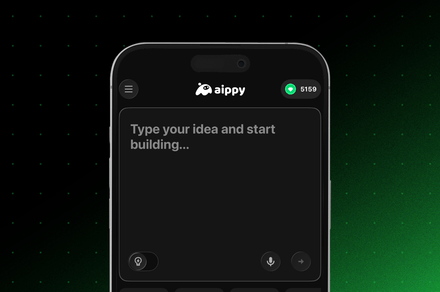
One example is Aippy, where users move through a feed of playable mini-games rather than videos. Instead of watching a clip and moving on, each post invites a response — tapping in to play, reacting to the mechanics, or trying a different variation of the same idea.
Photo by Aippy
Rather than relying on traditional coding, users describe what they want in natural language, and the system turns it into something interactive. A simple idea, a game, a mechanic, or a prompt can quickly become something others can play with, modify, and reinterpret.
Over time, this creates a loop. One person’s idea becomes another person’s starting point. Interaction leads to creation, and creation feeds back into interaction.
Platforms like this point to a broader shift. AI is not just helping to enable conversation, but lowering the barrier to participation, allowing more people to take part in shaping digital experiences, not just consuming them.
It’s still early, and these experiences are far from fully consistent. But the direction is becoming clearer.
If the first phase of AI made information easier to access, this next phase may be about making interaction more fluid, continuous, and responsive.
As people spend more time engaging with AI — not just asking questions, but playing, experimenting, and responding — the experience begins to change.
What emerges may not look like a better chatbot, but something closer to a new layer of the internet. A space where content is not simply delivered, but continuously shaped by the people interacting with it.
Digital Trends partners with external contributors. All contributor content is reviewed by the Digital Trends editorial staff.