We may earn a commission from links on this page.
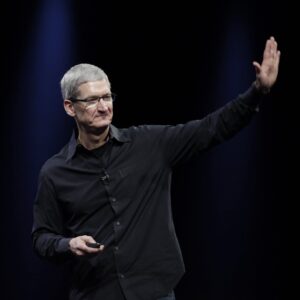
It’s the end of an era: On Monday, Tim Cook announced his plans to step down as Apple CEO. By September, the company’s senior vice president of hardware engineering John Ternus will succeed Cook in the role, and Apple will have its second CEO since Steve Jobs’ departure in 2011. A lot has happened over at Apple Inc. since Tim Cook took over nearly 15 years ago, but there are some moments that stand out more than others. I’ve highlighted 11 products and decisions the company has announced or made during Cook’s tenure that I think defined this chapter.
Apple introduced Siri in 2011
Tim Cook’s first major product announcement actually occurred while Steve Jobs was still alive. On Oct. 4, 2011, Apple announced the iPhone 4s, and while the phone was quite similar to the iPhone 4, it introduced one feature that still defines the company to this day: Siri. It was a novel concept for iPhone users; rather than check the Weather app, you could ask Siri what the temperature outside was like; instead of setting your own alarms, you could ask Siri to do it for you; if you were driving, you could ask Siri to read your messages, or check your calendar for upcoming events.
Of course, Siri went from being an iPhone-exclusive to being the smart assistant across all of Apple’s products—even if it isn’t the most capable option on the market. The company announced an AI overhaul for Siri back at WWDC 2024, but the upgrades have been delayed again and again.
Apple Maps dropped for the first time in 2012 (and it didn’t go well)
The default navigation app on iPhones hasn’t always been Apple Maps. In fact, for the smartphone’s first five years, Apple relied on a built-in version of Google Maps to power directions. But in 2012, the company decided to break away from Google, and roll out its own maps app.
While you may or may not prefer Apple Maps today, it was a much different app back in 2012—and by that, I mean it was a bit of a disaster. Apple Maps was missing cities, landmarks, and its app icon even depicted a driver turning off an overpass. The PR nightmare was so bad, Apple’s former vice president of iOS, Scott Forstall, left the company after refusing to sign an apology for the app. While many of us who lived through this experience still don’t really trust Apple Maps, many iPhone users now choose it over other options.
Apple acquired Beats by Dre in 2014 in the pre-AirPods days
Before Apple disrupted the wireless headphone market with AirPods, it sold two types of wired earbuds: the standard EarPods, and the premium “In-Ear Headphones,” which strongly resemble wired AirPods Pro. But the company didn’t make the leap from these earbuds options to AirPods directly: Before it did, the company decided to buy Beats by Dre. The acquisition was huge: Apple paid $3 billion for Beats, and decided to keep the branding to boot. It’d be a couple of years before the company would start offering its own premium Apple-branded headphones, so from 2014 to 2016, Beats were the “Apple headphones” of choice.
The company introduced the first Apple Watch in 2014
When Apple first announced the Apple Watch back in 2014, its premium “Edition” line really stole the show. (Apple is selling a $10,000 watch made of gold? Who’s going to buy this thing?) But while you could have easily mistaken this for a luxury-only product at the time, it ended up having mass-market appeal, thanks to more budget-friendly options that ditched the premium materials for aluminum. Apple still offers higher-quality Apple Watch models, but it quickly ditched the gold (and the five-figure price tags).
That first watch is in many ways similar to the watches we have today: It pairs with your iPhone, and supports messaging, heart rate tracking, and interchangeable bands. But the Apple Watch has also evolved in many ways. It is, of course, much faster today, but also comes with way more features, including cellular capabilities, sleep tracking, blood oxygen monitoring, and Emergency SOS if you’re ever in need of assistance. Tim Cook seems especially invested in this particular product, frequently highlighting stories from customers who have changed their lives with the watch, or had their lives saved by it.
Apple became the first U.S. company to hit $1 trillion in 2018
On Aug. 3, 2018, Apple became the first publicly-traded company in U.S. to be valued at $1 trillion. It was a remarkable moment, especially considering how close Apple came to financial ruin back in the 90s, and how some doubted the company’s future following the passing of Steve Jobs. The company continued to hit financial milestones over the years, and today, Tim Cook steps down from a $4 trillion company.
Apple introduced the first wireless AirPods in 2016
Apple famously launched the iPhone 7 without a headphone jack. While you could use an adapter to connect your existing wired headphones to the phone, the company had a solution: Buy its wireless earbuds instead. Apple Fellow Phil Schiller saying the decision resulted from “courage” is still mocked to this day, but Apple has clearly had the last laugh. AirPods have gone on to become wildly popular, and likely had a huge role to play in popularizing wireless headphones in general. The initial product was relatively expensive—$169 for what seemed like a wireless version of the free EarPods that came with every previous iPhone—but the product has blown up. Apple now offers “entry-level” AirPods, a version with noise cancellation, “Pro” AirPods with interchangeable ear tips, and over-the-ear headphones that cost way too much. Like the Apple Watch, this is one product you can’t go out in public without seeing.

The Apple TV streaming service was first announced in 2017
I remember when Apple first announced Apple TV—the streaming service, not the existing streaming device. At the time, it was just one more streaming service to keep up with, and I had subscription fatigue. Sure, Apple was a huge company, but trying to break into a market with the likes of Netflix, Hulu, and HBO seemed ill-advised. That’s probably why I’m not running a trillion-dollar company: Now called Apple TV+, Apple’s streaming service is home to some of the most popular and critically acclaimed shows currently on the air, including Ted Lasso, Severance, Shrinking, and For All Mankind.
The iPhone X was released for Apple’s 10th anniversary in 2017 with major design changes
The iPhone has gone through many design changes and shake-ups over its near 20-year history, but perhaps none is as monumental as the iPhone X. For the product’s 10th anniversary, Apple totally overhauled its look and function. Gone was the Home button, the large top and bottom bezels, and the LCD screen; in its place, Face ID and an edge-to-edge OLED display (minus the “notch” for the camera, of course). It’s a design that still looks pretty fresh nearly 10 years later: nobody would bat an eye if you were rocking an iPhone X today—though it sadly doesn’t support the latest version of iOS.
Apple began building its own in-house chips in 2020
If I could pick one moment of the bunch here to highlight as the most important, it’d be Apple silicon. In 2020, Apple officially ditched Intel, opting instead to build its own in-house chips for the Mac. The company already did this for the iPhone, and that same winning formula translated to a product lineup that desperately needed a leg-up. Ever since, Apple has had complete end-to-end control of the Mac: It makes both the hardware and the software, and can optimize the experience to its liking. The current Mac lineup is perhaps the best it has ever been, but, at the same time, many people who bought one of those first M-series Macs five years ago are still using them. I’m writing this on an M1 iMac I have no intentions of upgrading anytime soon.
Apple announced its mixed reality Vision Pro headset in 2024
After years of speculation, Apple finally entered the headset market in 2024 with the Apple Vision Pro. Its mixed reality headset combined some impressive hardware with a unique operating system (visionOS) to pull off an ideal experience for Apple users interested in XR. You can link your MacBook to the headset to pull up a virtual ultra-wide monitor; take FaceTime calls using a virtual persona; and watch videos you shot on your iPhone in spatial reality.
And yet, the Vision Pro is a tough sell for most people. The high starting price tag ($3,499) costs more than most of the company’s professional Macs, and doesn’t do nearly as much. It might be technically superior to other products on the market, but when you can pick up a Meta Quest for nearly a 10th the price (with much more software support), there’s little reason for most to pay the money. As such, the Vision Pro is a rare miss for modern Apple, but it’s a monumental moment nonetheless.
The new MacBook Neo, released this year, cut the price of a basic MacBook Air in half
Apple silicon may be the most important thing to happen to the Mac lineup under Tim Cook, but the MacBook Neo might be the most important Mac. Apple took an iPhone chip, put it inside a simple MacBook design, and set the price at $599 ($499 with an education discount). Despite 8GB of RAM, and macOS running on an “A-series” chip rather than M-series, most people can probably get what they need to get done using a Neo, at half the price of Apple’s previous entry-level MacBook Air. It’s too early to tell just how impactful this device will be on the personal computing market, but my guess is colossal.
