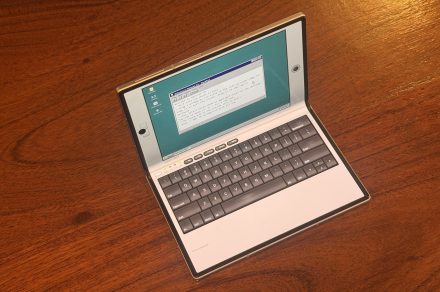
Apple’s first foldable phone is now on shelves, in short supply, but with an unreal amount of buzz around it. After all, it’s the first foldable iPhone, and there’s plenty that this phone gets right. But there’s also a lot that is either broken or underwhelming. What’s peculiar is the dialogue around this phone, and how it has completely overshadowed every other attempt at making a phone with a similar form factor.
I’ve spent some time with the iPhone Duo, and I’ve used the Galaxy Z Fold 8 for almost three months now. In my opinion, Samsung deserves more credit. When the Galaxy Z Fold 8 arrived earlier this year, it was celebrated in some circles and ridiculed in others for supposedly copying what Apple would eventually deliver with the iPhone Duo. The dialogue was pretty odd, for multiple reasons. Samsung has been making foldable phones for years, so claiming that it copied a product Apple hadn’t even launched was simply absurd.

The reality, especially after using both products, paints an entirely different picture. Apple’s iPhone Duo is already at the center of what many are calling “Crackgate.” The display is breaking, and some are pointing fingers at the underlying hinge engineering. Broadly, the issue is being wrapped up as a “first-generation foldable problem” for Apple. Samsung wasn’t immune to it either.
I remember getting my hands on the first-generation Samsung Galaxy Fold seven years ago and seeing a similar problem with its display breaking randomly. But Samsung fixed it quickly, and over the next half-dozen iterations on its foldable phones, the display and hinge problems were ironed out. Apple has been working on its foldable iPhone for years, so seeing it flub the fundamentals of flexible display and hinge engineering, especially when far smaller competitors have nearly mastered them, is quite intriguing.
Foldable iPhone Duo devices are reportedly breaking in large numbers, with displays failing along the hinge crease.
— Play4Index (@Play4Index)
Buyers in Japan, China, Australia, and other countries have reported the same issue. In some cases, the display reportedly fails while the phone is still on… pic.twitter.com/Y7284TRX3s
Now, let’s focus on the Samsung Galaxy Z Fold 8, its unique form factor, the software, and where it actually surpasses the iPhone Duo in meaningful ways. Apple went with a matte finish on the iPhone Duo’s foldable screen. In doing so, it has created a panel without any visible crease, but one that looks rather drab due to the low contrast. Samsung hasn’t quite solved the crease problem, but the flexible OLED screen on its phone is dramatically better for anything you want to view on it, except long hours of reading a book.
The most interesting part is the software. If you overlook the rounded corners on the foldable iPhone, the aspect ratios of these two phones are pretty similar, and so is the appeal of one-handed use. And yet, I haven’t faced any mind-bending problems with the software breaking or glitching on the Galaxy Z Fold 8, even though it’s also the first compact foldable of its kind for Samsung. Nearly every app I used on my regular slab phone, or any other foldable phone, works just fine on the Galaxy Z Fold 8 without any fundamental issues. That applies to the cover display as well as the inner tablet-like screen.
iPhone Duo screen vs Galaxy Z Fold8: do you guys prefer clear glossy or matte frosted ⁉️⁉️
— Sensoop (@Sensoopp)
Comparing the screen indoors and outdoors. pic.twitter.com/1TNPu5KiXO
On the iPhone Duo, Apple tried to reimagine UI interactions by putting the controls along the right edge of the screen. Not everyone is happy about it, and plenty of early adopters are complaining about how this feature has been executed. Meanwhile, Apple, developers, and brands are working at a rapid pace to fix the app scaling problems on the iPhone Duo’s cover and inner displays.
The situation is bad enough that Instagram boss, Adam Mosseri, commented on how the Threads app is poorly optimized for the iPhone Duo weeks after launch. This, again, is pretty odd. Technically, Apple should not have had a problem with scaling app UIs, at least on the inner panel of the iPhone Duo. iPadOS has done an incredible job with app layouts, even though Apple’s tablets come in a variety of sizes and aspect ratios. Just take a look at the iPad mini and the iPhone Duo’s inner screen, and you’ll realize the similarity.
As a tech reviewer and part-time designer, I find Apple’s latest UI surprisingly confusing. 🫤
— EMKWAN (@emkwan)
Buttons feel randomly placed, elements lack consistent alignment, spacing is uneven, and the oversized status bar wastes valuable screen space. There’s little visual hierarchy or… pic.twitter.com/elt40XlWVC
Apart from the thick bezels, they are not too different. Yes, iPadOS is not exactly the same thing as iOS, but Apple has had the foundations ready for years. I often hear that the iPad’s UI is so far ahead of what Android tablets can deliver that it’s not even a competition. After all, the iPad is often pushed as the default pick for anyone who wants a reliable tablet. And yet, here we have the iPhone Duo, with apps loading in a weird letterboxed format that changes into another oddity as you switch between landscape and portrait orientations on the inner screen.
A few developers are blaming Apple for not giving them more time to adapt their apps to the unique aspect ratio of the iPhone Duo’s cover screen and the tablet-like layout of its inner panel. The criticism is valid, but we also have to give some credit to Google and its Android team. When I first set up the Galaxy Z Fold 8, I was expecting a whole bunch of apps to simply break, crash, or show a weirdly skewed UI on its cover display, as well as on the inner foldable panel. To my utter surprise, I didn’t run into any such issues that would make me want to throw the phone at a wall.
The same website, on the Samsung fold 8 and iphone duo. pic.twitter.com/puKI4h8Cpi
— ben sin (@bencsin) October 22, 2026
Even the notoriously fiddly banking apps work just fine. Google has been working on making Android apps adapt to different screen sizes and aspect ratios for years, laying the foundations all the way back with Android 12L, which focused on tablets. Samsung’s approach to multitasking is also a lot better than what Apple currently offers, despite Apple already having a system as potent as Stage Manager on iPadOS and macOS. Yes, I can run three apps side by side on the Samsung phone (not a huge fan of it, though), while Apple only allows two.

It’s just ironic that Apple skipped Stage Manager for the iPhone Duo, while an Android brand like Vivo has essentially borrowed the same multitasking design formula for its X Fold series. Yes, it’s early days for Apple. And yes, given the pace of iOS app development, the app scaling problems will be solved sooner rather than later. What can’t be fixed with an update, however, are the hardware problems that are breaking the displays on the iPhone Duo. And if the hinge is to blame, there may be no recourse other than a recall.
I can’t remember Apple recalling a product in recent years, let alone something as ambitious as the iPhone Duo. But as we wait and speculate over the iPhone Duo’s strengths and weaknesses, let’s take a moment to appreciate what Samsung pulled off with the Galaxy Z Fold 8: a device with an entirely new form factor that doesn’t break anything, on the software side or the hardware side. On the contrary, it’s just a joy to use. The situation with the Xiaomi 18 Fold — another alleged iPhone Duo copycat that launched before the iPhone Duo — is not different, either.