We may earn a commission from links on this page.
In theory, you can use your FSA or HSA funds to get yourself a shiny new fitness tracker or smartwatch (even the latest Fitbit Air)—but is the process really as straightforward as the marketing suggests? Right off the bat, your HSA/FSA dollars won’t be able to cover the entire purchase; instead, you’ll save an average of 30% on eligible health purchases.
There is some more fine print, although it’s not as tricky as you might think. For the most part, if a device is necessary for treating or monitoring a specific medical condition—and not just “general wellness”—it could be eligible to purchase with those pre-tax health dollars.
With that in mind, the main “catch” here (as I’ve previously explained) is proving that device is in fact necessary, which requires you to obtain a Letter of Medical Necessity (LMN). Your LMN is basically a doctor’s note required to classify certain purchases as qualified medical expenses under IRS guidelines, proving that the device will be used to treat a legitimate medical condition, such as obesity or a heart condition. Let’s take a look at what you can actually expect if you want to get a fitness wearable approved as a medical necessity.
$99.00
at Amazon

$99.00
at Amazon
$499.00
at Amazon

$499.00
at Amazon
$359.00
at Amazon

$359.00
at Amazon
$99.00
at Amazon

$99.00
at Amazon
$89.99
at Amazon
Save $60.00

$89.99
at Amazon
Save $60.00
$199.00
at Amazon
Save $30.00

$199.00
at Amazon
Save $30.00
$369.99
at Amazon

$369.99
at Amazon
How to use your HSA/FSA funds on a fitness tracker
When it comes to securing your LMN, you might not even need to make a doctor’s appointment, thanks to third-party players like Truemed. When you browse sites like Coros, Amazfit, and more, you’ll see the option to “Pay With Truemed” at checkout. From there, you’ll be asked a few questions about your health circumstances, and you’ll be matched with a provider to determine your eligibility. If you qualify, you’ll get an LMN that will allow you to use your HSA or FSA funds to complete your purchase—all without ever having to meet with your primary doctor.
Truemed is one of the most popular payment platforms in this space, with the company claiming on its site that “90% of LMNs are issued within 7 hours.” I spoke with Truemed’s co-founder and CEO Justin Mares to find out how it works behind the scenes. After you take that short survey about your health, an independent licensed provider reviews your answers before deciding whether the purchase looks medically necessary. If it doesn’t, Truemed won’t bother forwarding the request at all. Because Truemed screens your case before it has a chance of getting denied, those approval numbers get to stay mighty high. And the reality is, most Americans will have at least one health marker—like weight or cholesterol levels—that they can self-report to prove that, say, a Fitbit Air is necessary tool for prevention and maintenance.
For the purchases that do go through to a medical professional, approval turns out to be surprisingly straightforward. It comes down to the idea of “standard of care” in general. “If you go into a doctor’s office and say your family has a history of high blood pressure,” Mares says, “your doctor probably is not going to ask for lab work before they’ll talk to you about it. They simply take you at your word and help you manage the risk.” Proving HSA/FSA eligibility works on that same standard fairly often, according to Mares. You’re not submitting a stack of medical records; you’re answering a simple intake form about your health history, and a licensed clinician uses that, plus their own judgment, to decide whether a given product is appropriate for you.
Before you get your hopes up too high, FSA/HSA eligibility for wearables is still far from a free-for-all. An LMN only covers you, personally, for a specific product from a specific merchant, and it’s usually tied to a specific condition, like cardiovascular risk, pre-diabetes, sleep issues, chronic pain, and so on. Some employers’ FSA administrators scrutinize wearable purchases more closely than others, and even a fully compliant LMN doesn’t guarantee your plan will approve the claim. Some companies (like Coros, for one) are more transparent about walking customers through the required medical consultation at checkout, while other brands market “HSA/FSA eligible” prominently without explaining that the LMN step is what actually makes that true. Luckily, I’ve saved you some time and rounded up some of the major wearables—and other unexpected items—that you might be able to prove as FSA/HSA eligible.
Recovery-focused wearables
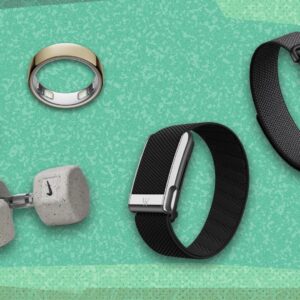
Screenless recovery trackers like Whoop, Amazfit Helio Strap, and the Oura Ring can usually be justified as HSA/FSA eligible around sleep quality, HRV-based stress monitoring, or recovery tracking tied to a chronic condition. These tend to draw more scrutiny from plan administrators simply because they’re marketed as lifestyle products first, so the strength of your intake answers matters more here than it does for something obviously medical, like a blood pressure cuff.
Smartwatches and heart rate monitors
If cardiovascular monitoring, training load tracking, or heart rate accuracy is relevant to a documented health concern, these watches can qualify the same way a basic tracker does. For instance, Coros offers FSA/HSA eligibility for all its watches and heart rate monitors through its partnership with Truemed. Amazfit similarly lets you filter by HSA/FSA eligibility for its smartwatches. Sadly, no Garmin watches are HSA/FSA-eligible. Still, the following Garmin-brand products are eligible for an HSA/FSA purchase:
-
Index BPM smart blood pressure monitor
-
Index S2 smart scale
-
HRM-Fit heart rate monitor for women
-
HRM-Pro Plus heart rate monitor
-
HRM-Dual real-time heart rate monitor
You can filter by HSA/FSA eligibility and browse all eligible Garmin items here.
Home fitness equipment
Think adjustable dumbbells, rowing machines, and connected bikes. It’s the same logic doctors use when they tell a patient with prediabetes or high cholesterol to start exercising regularly; if a clinician is willing to attest that structured exercise is part of your treatment plan, equipment that enables that can qualify. For instance, here are some HSA/FSA eligible products from Nike Strength:
The common thread across all of these is that the product itself doesn’t determine eligibility—your health history does. A Whoop band might be an easy approval for someone managing a cardiac condition, but it’ll get more pushback for someone with no relevant health history at all. If you’re curious whether something on your wish list might qualify, it’s worth filling out the intake process just to see how creatively you can spend those pre-tax health dollars.