I remember Chrome quietly downloading a 4GB AI model onto PCs. It raised plenty of eyebrows in May 2026. The next day, a Chrome executive clarified how on-device AI is core to its “developer & security strategy,” and that the model processes data locally.
Now, Chrome has updated its support documents to explain the download and, more importantly, include an option to stop it.
So what exactly changed in Chrome’s documentation?
Google has quietly updated Chrome’s On-device AI support page between July 29 and August 1 (via WindowsReport). As part of the update, it added four entirely new sections about eligibility requirements, download conditions, guidance for multiple users and devices, and enterprise-specific rules.
As mentioned in the eligibility section, Chrome won’t even attempt to download any AI models unless your device has the right hardware to run them. In simpler words, unsupported or incompatible machines get skipped entirely.
For devices that do qualify, however, Chrome now says it checks for an unmetered internet connection, along with roughly 20GB of free disk space (including the 4GB AI model). It also analyzes whether the device has enough processing power before downloading anything.
How are you actually supposed to manage this stuff?
Google’s also being clearer about control now.
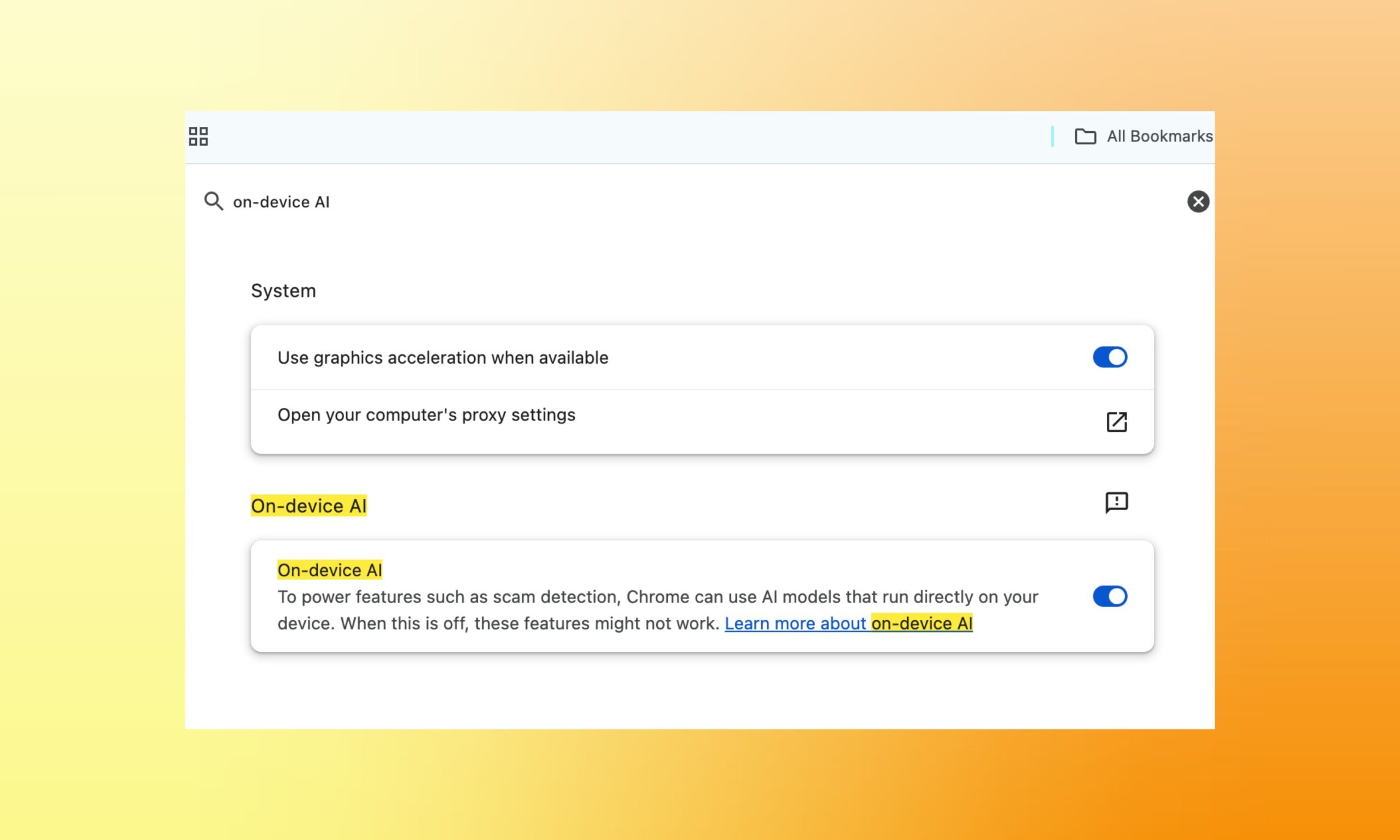
The documentation states the “On-device AI” toggle in Chrome’s settings is the only supported way to manage these downloads. It also warns against manually hunting down and deleting model files yourself. Doing that won’t stop Chrome from redownloading them.
When you switch the toggle off, Chrome removes the downloaded files and disables everything that’s based on them. It only checks eligibility again and redownloads if you flip it back on, but not otherwise. All of this is on a per-user and per-device basis, with IT admins getting separate control through Chrome Enterprise Policy.
This update lands months after people first noticed Chrome silently downloading Gemini Nano, its roughly 4GB on-device AI model, without clearly asking first. Google hasn’t directly connected the dots, but the timing here doesn’t feel coincidental, at least to me.