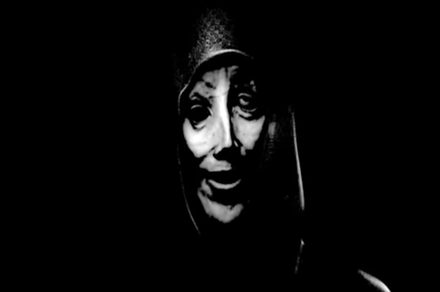
Following the box-office success of A24’s Backrooms, Hollywood has turned its attention to another analog horror phenomenon. On July 2, Deadline announced that producers Aaron B. Koontz (Shelby Oaks) and Steven Spielberg are developing a film adaptation of the viral YouTube horror series, The Mandela Catalogue.
Series creator Alex Kister will direct the film with a screenplay written by Tyler Clifton. According to Kister, the film follows a group of high school graduates “struggling to maintain their grip on reality after the disappearance of a local student sparks a chain of unexplainable, unsettling events.”
Like Backrooms, the movie will blend traditional live-action with found-footage elements. Koontz and Spielberg are also working on this project with United Artists and Amazon MGM Studios, signaling Hollywood’s growing confidence in YouTube horror creators after the mainstream breakthrough of Backrooms and Curry Barker’s Obsession.
In an interview with Digital Trends, Koontz discussed how he got involved in the production and what fans can expect from this upcoming horror series.
This transcript has been edited for length and clarity.
Digital Trends: Now, what exactly got you interested in producing this film?
Koontz: I really started on Shelby Oaks. For that movie, we created an ARG. Although we didn’t even know what an ARG was.
Me and Chris Stuckmann, we just wanted to do Blair Witch marketing…and that led me down this rabbit hole of ARGs and immersive horror, [I] really was taken by the storytelling. By the restraint. By the dread, the atmosphere, the tone.
It was just pretty, pretty fantastic, and I wrote down a bunch of series that I thought were really cool and reached out. Turns out that Alex and Tyler…they had already reached out to me, and so it was like this weird thing. They were already curious, trying to find a producer.
And then we developed a script for a few months. But it was already in a pretty good place. Alex and Tyler really did a great job there. And then we took it out to the market, and it became a bidding war, and…what’s public is public now.
Digital Trends: You said you were going through a lot of other horror series. Tell me what [was it] about The Mandela Catalogue that stood out to you? Why did you specifically pick this one?
Koontz: It just got under my skin. That’s the first thing. It just was unnerving. Immediately unnerving.
I don’t get scared by much, and I do the “girlfriend test.” I show her, we make a ton of movies, and I show her stuff, and she’s like, “Oh, that’s cool.”
And she likes them. But then I put on The Mandela Catalogue and she’s like, “Turn this off!” I’m like, “Okay, this is definitely different.”
Digital Trends: Could you elaborate on how the film’s gonna be different from the YouTube series?
Koontz: I don’t think, at this time, I’m going to go too much into detail there. But…you’re gonna recognize The Mandela Catalogue of it. It’s not going to feel very different in that regard. But there are ways in which we are bringing this to play in theaters.
There’s a different experience to that. And I think if you look at how Kane [Parsons] adopted Backrooms, there’s some smart decisions that were made there that I think parallel some smart decisions we’ve made here.
Digital Trends: It’s funny you mentioned Kane Parsons with Backrooms because the news about The Mandela Catalogue comes after the massive box office success of Backrooms and Obsession. They were both horror movies directed by filmmakers who started out on YouTube. Did those films influence your decision to work on this film in any way?
Koontz: No. Not at all. I was already working on this film before any of that stuff had happened. I saw Obsession at TIFF. I saw Milk and Serial, so I knew who Curry [Barker] was as a filmmaker, and that’s why I wanted to see Obsession. But didn’t think of it as a YouTuber thing.
To me, they just happened to both come from YouTube. But it’s no different than anyone taking [a] camera, going in their backyard, and shooting stuff like I did as a kid. This is just their version of the backyard where people can see it.
It’s just a very exciting time, and I love that I get to be in the middle of this: what I really believe is going to be a revolution, is a revolution.
Digital Trends: When can we expect to see The Mandela Catalogue? Will [it] be in theaters or streaming, or have you not figured that out yet?
Koontz: I think more of that will come in the upcoming months. I often defer to my partners. You can ask Spielberg. That’s so weird to even say out loud.
I think it’s a movie made for theaters. When we were making our deal and everybody was bidding, we outlined very clearly that this is a theatrical film. Our partners, Scott Stubert, Nick Nesbitt, and everybody at United Artists and Amazon, all of them are just so wonderful and really get it.
Digital Trends: Anything else you want to say to the fans?
Koontz: I think if anyone’s worried about, “oh, is Alex’s vision going to get diluted?” That was so important to us. There was never a discussion of anyone else directing this.
When Alex and I first talked, I was like, “No, it has to be you.” And the reason is [that] I’m a director myself. He has a very specific vision of this, and he needs to be the person to realize it.
And I think the success of Backrooms shows that you can do that and that younger directors can have these opportunities. And I think that’s very exciting. Spielberg knows that. He was directing movies in his 20s.
This is not some crazy thing. People treat it like it’s crazy. It’s not. This is happening…this is Alex’s movie, and you’ll see it. And if you’re a fan of Mandela, you will seek it out, for sure.