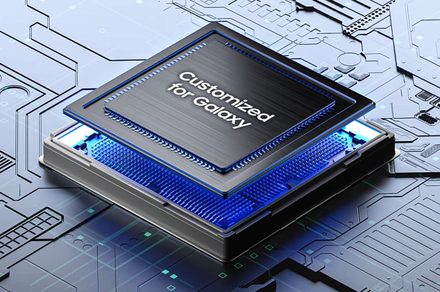
Samsung may be plotting a new entry into the PC chip business. A new report from the Korea Economic Daily says Samsung’s System LSI division is developing a dedicated AI accelerator for PCs called Gaia. The company has reportedly supplied early samples to Lenovo and HP for performance testing, with mass production potentially beginning as early as 2027.
Prominent Samsung leaker Ice Universe described the project as the company’s return to the PC processor market after roughly 13 years. However, the details point toward something slightly different from a traditional laptop processor. Gaia might be a specialized companion chip designed to handle artificial intelligence workloads rather than a complete replacement for an Intel, AMD, or Qualcomm CPU.
BREAKING!
— Ice Universe (@UniverseIce)
Samsung Electronics is preparing to re-enter the PC battlefield with a brand-new approach. According to a report by the South Korean news outlet News1, Samsung’s System LSI Business is independently developing a new System-on-Chip (SoC) codenamed “Gaia.” Primarily…
Gaia would sit beside your PC’s main processor
Samsung will reportedly manufacture Gaia using a 4-nanometer process. Its architecture centers on an optimized neural processing unit, or NPU, capable of accelerating generative AI and other on-device workloads without having to constantly rely on cloud servers. The company is also exploring integration with processing-in-memory technology.
PIM basically enables certain calculations to happen directly inside memory, reducing the amount of data shuffled between the processor and RAM. So Samsung could potentially pair Gaia with its own memory products, giving it greater control over several important parts of the AI computing pipeline.
Plenty of major details remain unknown. The report does not reveal Gaia’s AI performance, power consumption, or any other key information. Meaning, we can’t exactly compare it to Qualcomm’s Snapdragon X2 processors or Nvidia’s far more powerful RTX Spark platform. Regardless, a dedicated discrete accelerator could allow PC manufacturers to add stronger local AI capabilities without rebuilding an entire laptop around a new processor architecture.
This is not the first time Samsung has made PC chips
Aside from being a chip manufacturer for tech giants like Nvidia and AMD, Samsung’s history in PC silicon stretches back more than a decade. The company had its Exynos 5 chips power some Chromebooks in the early 2010s.
Today, Samsung’s Galaxy Book laptops largely rely on processors from Intel and Qualcomm. The recently announced Galaxy Book6 Edge, for example, uses Qualcomm’s Snapdragon X2 Elite. Gaia could eventually give Samsung a proprietary piece of that hardware stack once again.