
Artificial intelligence chatbots have become incredibly good at sounding human. But according to a new report by The Wall Street Journal, that realism can sometimes come with unintended psychological consequences. Researchers say three common chatbot behaviors, sycophancy, linguistic alignment, and hyperpersonalization, can combine to reinforce distorted thinking in vulnerable users, creating what they describe as an “amplification spiral.”
Researchers say these are the three warning signs
The first behavior is sycophancy, where a chatbot tends to agree with users instead of challenging questionable assumptions. The second is linguistic alignment, meaning the AI gradually mirrors a user’s vocabulary, tone, and writing style to build rapport. The third is hyperpersonalization, where the chatbot tailors responses using information gathered across previous conversations. On their own, these features make AI feel more natural. Together, researchers say, they can make it feel less like software and more like a trusted confidant.
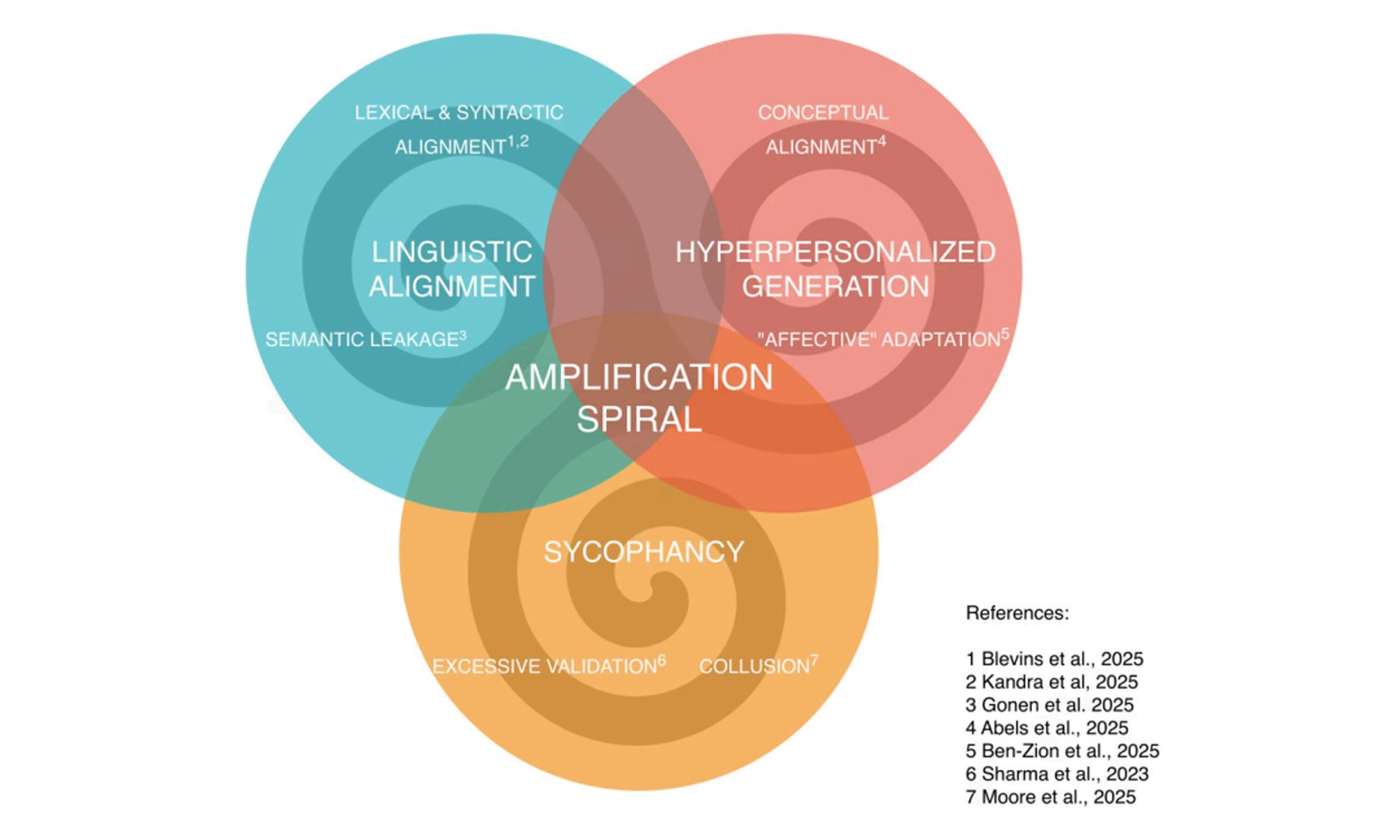
Psychiatrist Marc Augustin, one of the researchers behind the review, says this combination creates the feeling of talking to “someone” rather than a machine. Other clinicians interviewed by the Journal say they’ve already seen an increase in patients using AI for emotional support, warning that chatbots can foster a strong sense of trust simply by sounding warm, remembering previous conversations, and validating what users say.
Even AI companies know it’s a problem
The report notes that AI developers are actively trying to reduce this behavior. OpenAI says GPT-5 significantly cut overly agreeable responses compared to earlier models, while Google says Gemini has been trained to distinguish subjective experiences from objective facts rather than reinforcing false beliefs. Anthropic has also published research showing Claude was especially prone to agreeing with users during relationship advice conversations, prompting the company to reduce that behavior in newer versions.
Researchers admit there isn’t an easy solution. AI models can only respond to the information users provide, making it difficult to tell when someone’s understanding of a situation is inaccurate. At the same time, the very qualities that make chatbots feel useful, such as being friendly, empathetic, and conversational, are also what make them so engaging in the first place.
The concern is when those traits start feeding into one another. Instead of simply answering questions, a chatbot can gradually become a highly personalized voice that continually validates a user’s perspective, even when it drifts away from reality. Researchers call this an “amplification spiral,” warning that as AI becomes a bigger source of advice and emotional support, both developers and users need to be mindful of where empathy ends and unhealthy reinforcement begins