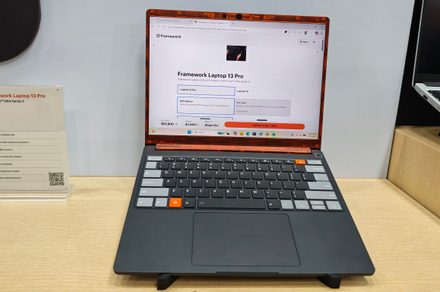
With RAM and SSD prices rising across the tech industry, Framework has delivered a rare bit of good news for people waiting on the Framework Laptop 13 Pro. The company says it has found a new PCIe Gen 5 SSD from ADATA, the XPG MARS 970, that offers better performance, efficiency, and long-term reliability than the SSD option it had previously qualified.
Framework says the new ADATA SSDs cost substantially less than the earlier Gen 5 SSD option, and the savings are being passed on to buyers. Since Framework has not started shipping Laptop 13 Pro pre-orders yet, existing orders that included the previous Gen 5 SSDs will be switched to the new ADATA drives, with reduced pricing applied to those orders.
The SSD switch is the good news
The biggest winners are the people who had already placed a pre-order with the old 500GB SSD option. Framework says the new 1TB ADATA drive costs less than the previously available 500GB SSD, so those customers will be upgraded to 1TB while also seeing the price of their order come down.

New Framework Laptop 13 Pro buyers will also see the ADATA SSD options in 1TB and 2TB sizes while Framework has inventory available. That makes this a rare case where a laptop buyer gets a better storage option for less money in the current market.
The warning is that this may not last. Framework says it has received signals that CPU pricing could increase soon, which may force it to raise the overall price of the Laptop 13 Pro for new orders in the coming weeks. Pre-orders are refundable before shipping, so anyone already considering one may have a short window to lock in the current price.
What is up with the price hikes across the industry?
Framework’s warning about CPU prices lines up with reports that Intel and AMD processors are also getting caught in the supply crunch. According to Nikkei Asia, PC and server makers are facing tighter CPU availability as chipmakers prioritize server and AI-related demand, where margins are higher, and demand is stronger. That has already pushed processor prices up by around 10% to 15% in some cases.
CPUs are now adding another layer of pressure to a market that was already dealing with expensive RAM and storage. Apple recently raised prices across Macs, iPads, Vision Pro, and other products, while Microsoft is raising Xbox console prices by up to $150 in the U.S.
All of this points in the same direction. Electronics that rely on RAM, storage, or advanced CPUs are likely to keep getting more expensive for the foreseeable future. If you are already planning a major purchase, whether it is a laptop, tablet, gaming console, or PC, buying sooner may be safer than waiting for the next round of price hikes.