Stanford’s AI Report 2026: AI isn’t going anywhere. Neither are you — if you pay attention.
The work we do will look different in five years, and the people who shape that difference will be the ones who wrestled with the tools instead of waiting for someone to hand them a verdict.
AI is here to stay, and pretending otherwise is a career strategy with a short shelf life.
That was the takeaway I had from Stanford University’s 2026 Artificial Intelligence Report published a few weeks ago — it’s a good read we should all review, even at 425 pages — and this stood out: 53% global population adoption of generative AI within three years. Singapore (61%) and UAE (54%) lead; the U.S. ranks 24th at 28.3%. The insights are important enough that I’ve included them in the sections.
We’re almost there.

Geoffrey Moore’s Crossing the Chasm is useful here, because AI is sitting right in the gap between the early adopters who love it and the early majority who are still suspicious. The innovators have already shipped their demos, but most professionals haven’t crossed over yet.
That chasm is where careers will quietly bend.
People who treat AI as a serious instrument — not a toy, not a threat — will be the ones writing the playbook everyone else eventually copies.
The opportunity isn’t the tool. The opportunity is being early enough to define what good use of it looks like for everyone else.
Understand AI Is a Tool
Report: AI adoption is spreading at historic speed, and consumers are deriving substantial value from tools they often access for free.
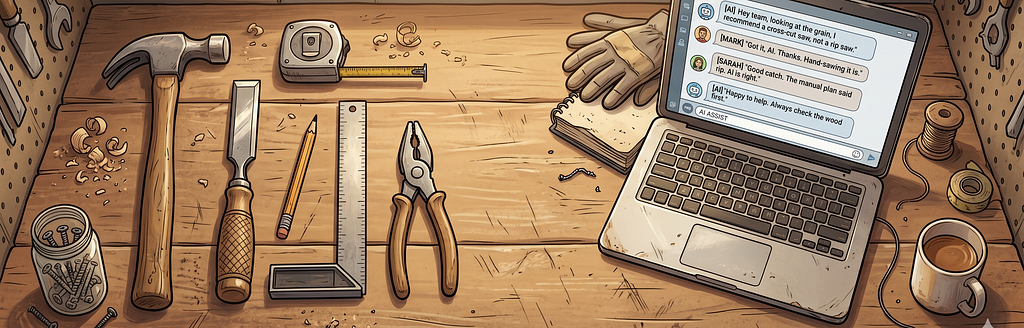
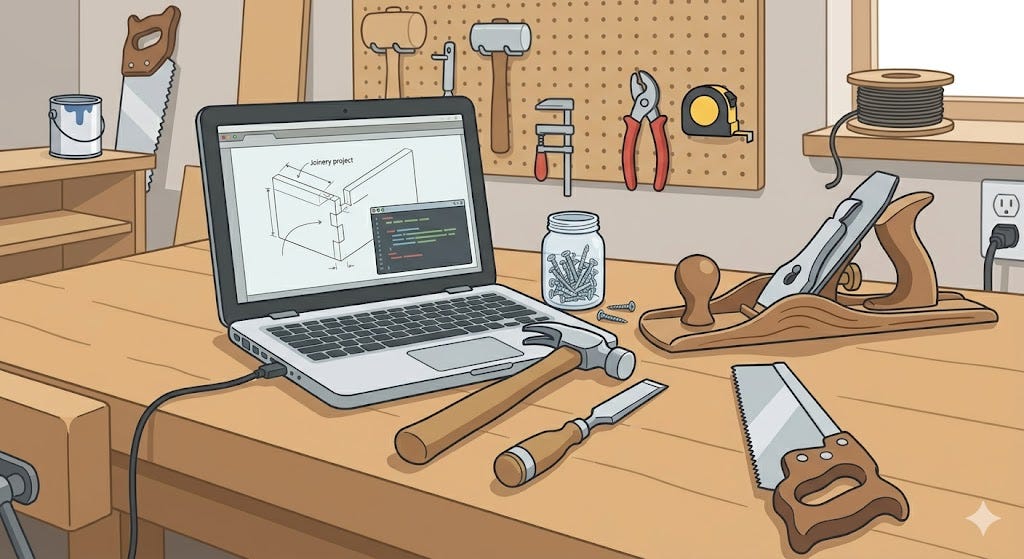
AI is a tool, not a colleague, and the sooner we drop the mythology, the more useful it becomes. A hammer doesn’t have opinions about your house, and a language model doesn’t have opinions about your strategy — it’s running probability experiments against a corpus and giving you something that looks like an answer with polite language.
The mistake isn’t using AI. The mistake is treating its output like a verdict.
When you frame it as a tool, the right questions show up automatically. What is it good at? Where does it break? What’s the cost of being wrong?
Those are the same questions a carpenter asks about a saw, and a surgeon asks about a scalpel, and a writer should be asking about an LLM. The framing keeps you in charge.
Become an Expert and Frame It
Report: Formal education is lagging behind AI, but people are learning AI skills at every stage of life.
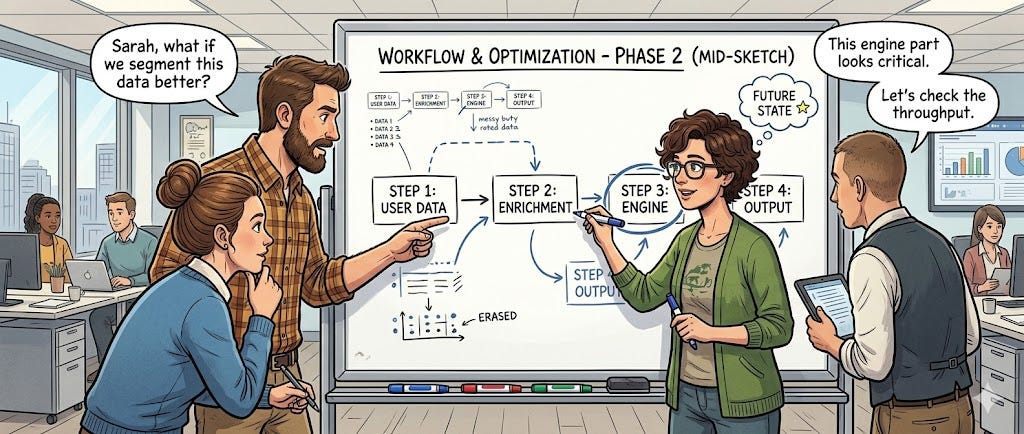
Whoever frames the narrative wins, and right now the narrative is up for grabs. Most leaders in most organizations are still figuring out what AI even means for their function much less their org chart, which means a thoughtful practitioner with real hours on the tools can shape the entire conversation.
Expertise and wisdom doesn’t require a PhD. It requires showing up, trying things, and being honest about what worked.
AI Fluency is the new black.
When you can demo something useful in fifteen minutes, you stop being a person who has opinions about AI and become a person whose opinions about AI matter. That shift changes which meetings you’re invited to.
It also changes who gets to define the standards your team will be measured against next year.

Don’t Use Everything It Gives You
Report: AI models can win a gold medal at the International Mathematical Olympiad but cannot reliably tell time — an example of what researchers call the jagged frontier of AI.
The output is a draft, not a deliverable, and treating it otherwise is how teams ship work that nobody actually reviewed. Human-in-the-loop isn’t a buzzword — it’s the entire reason the discipline exists.
The model produces; you decide. That’s the contract.
If you ship everything the model gives you, you’ve outsourced your judgment, not your typing.
The best practitioners I’ve seen use AI like a junior collaborator who’s fast but produces work that needs review. They take the structure, throw out the cliches, fix the factual drift, and add the context the model couldn’t possibly know.
The final piece looks nothing like the first draft, and that’s the point. The loop is where the value lives.

Define Good With Your Collaborators To Learn Together
Report: Formal education is lagging behind AI, but people are learning AI skills at every stage of life.
“Good” is a moving target, and if you don’t define it explicitly, the model will define it for you by default. What counts as a strong output for a marketing email is different from what counts as strong for a technical spec, and different again for a customer support reply.
Treating these the same is how teams end up with output that’s technically correct and contextually wrong.
Quality is contextual. Pretending it isn’t is how mediocrity scales.
Sit down with the people you actually work with and define what good looks like for each use case. Write it down. Revisit it.
The conversation itself is where the alignment happens, and the artifact you produce becomes the rubric the team uses when the next tool shows up.
Be an Apologist for the Rough Edges
Report: Robots still fail at most household tasks, even as they excel in controlled environments.
Religious apologists don’t pretend their faith is without difficulty — they engage the hard questions head-on, because dodging them is how you lose the argument. AI needs that same posture from the people who use it. The tools are rough. The output is uneven. Pretending otherwise makes you sound like a vendor. Defend the tool by being honest about it.
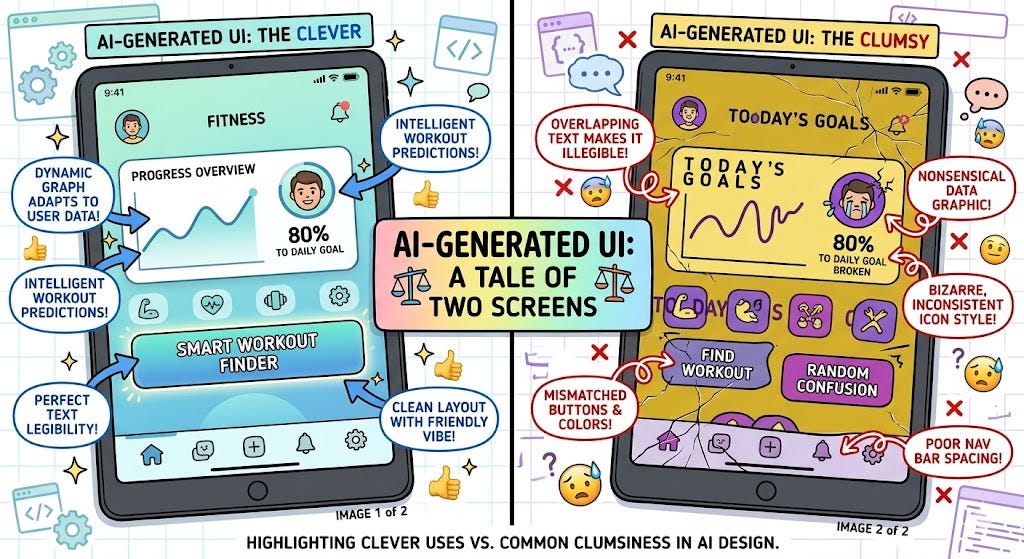
Take Claude Design’s work — the output is genuinely impressive in places and genuinely awkward in others, and the honest version of that story is more persuasive than any marketing deck.
When you can name what’s broken, people trust what you say is working.
The apologist’s strength is that they’ve already heard the objection and have a thoughtful answer for it.

Write Your Own Job Description First
Define your role with AI before someone above you defines it for you and it’s something I’ve done several times, which helped frame my value.
And you can do it too now in the world of AI. This is something I cover extensively in my article The basketball playbook for AI builder teams — the positions are going to be redefined, and your system will depend on your context.
Org charts get redrawn every few years, and the people who get redrawn out of them are usually the ones who let other people decide what their work was for.
Don’t be that person.
Get specific about what you do, how AI changes it, and where your judgment is irreplaceable.
The person who writes the job description has a lot of influence over the role.
This isn’t about self-promotion — it’s about literacy. If you can articulate what shifts when AI enters your workflow, and what doesn’t, you’ve already done the thinking your manager hasn’t gotten to yet.
That clarity becomes the version of the role that sticks. Everyone else is reacting; you’re authoring.
Conclusion
Report: 73% of experts expect AI to positively impact how people do their jobs; only 23% of the public agrees. Trust in governments to regulate AI is fragmented globally — the U.S. has the lowest trust in its own government to regulate AI (31%) of countries surveyed. The EU is trusted more than the U.S. or China.
AI is good if you use it right, and that “if” is doing a lot of work in the sentence. The organizations that win the next decade won’t be the ones with the biggest models — they’ll be the ones whose people built real fluency, kept their judgment intact, and were willing to be honest about what was working and what wasn’t.
The tools don’t grade themselves. We have to grade it for them.
That’s the actual job now. Not adopting AI. Not resisting it. Using it well, defining what well means, and being the person in the room who can explain the difference.
The people who do this won’t feel disrupted. They’ll feel busy, useful, and a little ahead of the curve — which is, historically, a pretty good place to be when the ground is shifting.
Stanford’s AI Report 2026: AI isn’t going anywhere. Neither are you — if you pay attention. was originally published in UX Collective on Medium, where people are continuing the conversation by highlighting and responding to this story.