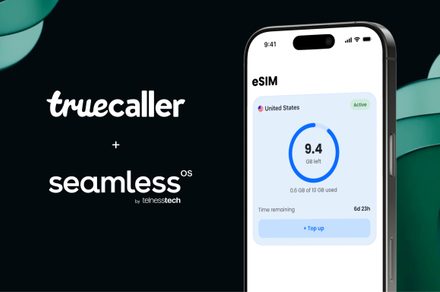
Stockholm-based Truecaller started in 2009 as an app for caller ID and spam blocking. Now, it is moving into travel data. The company has launched Travel eSIM across 29 markets, giving users a way to buy mobile data for international trips through Truecaller.
The product may be useful for travellers, but for a company with Truecaller’s privacy history, moving into mobile data is bound to raise questions.
What do you get with Truecaller’s Travel eSIM?
Travel eSIM is a fully digital mobile data service. Users can buy and activate it through the Truecaller iPhone app or the web channel. The plans range from 1GB for 7 days to 20GB for 30 days. Since this is a data-focused service, calls and messages continue through apps like WhatsApp, FaceTime, and Signal using the same eSIM connection.

Telness Tech is handling the telecom side of the service through its Seamless OS platform. Truecaller is selling Travel eSIM in 29 markets at launch, including the U.S., U.K., Australia, Canada, New Zealand, Nigeria, Egypt, South Africa, Indonesia, Malaysia, and parts of Europe. The company’s eSIM page also says users can get high-speed data coverage in more than 150 countries.
Android support inside the Truecaller app is planned for later. For now, compatible Android users can still access the service through the web channel.
Why is Truecaller selling travel data now?
In its Q1 2026 report, Truecaller said net sales fell 27% to SEK 361.6 million, while ad revenue declined 34%. Travel eSIM gives the company another product to sell beyond ads and subscriptions, at a time when its core business is under pressure. The challenge is that Truecaller is entering an already crowded market. Airalo, Holafly, Nomad, Ubigi, GigSky, and Saily already sell travel eSIM plans. Truecaller’s advantage is scale, since the app already sits on the phones of more than 500 million users.
India is not part of the first rollout, despite being Truecaller’s biggest market. The company has not explained why, but India has been stricter about travel eSIM services, and Truecaller may need more regulatory clearances before bringing the service to the subcontinent.
There is also Truecaller’s privacy history to consider. In 2019, reports claimed that data linked to nearly 30 million Truecaller users had appeared for sale on the dark web. The exposed details included phone numbers, names, email addresses, gender, city, mobile carrier details, and in some cases, Facebook IDs and profile photos. Truecaller denied any breach of its own database, but the reports may still make some users think twice before buying mobile data through the app.