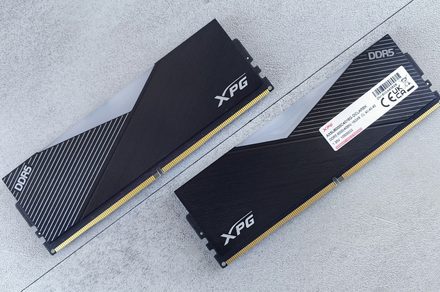
The commercial adoption of DDR5 started in 2021 as it slowly became the new standard, and now the industry is already working on what comes next. According to TheElec, Samsung Electronics, SK Hynix, and Micron have quietly kicked off early development of DDR6, the next generation of memory protocol.
The three companies have shared their designs with substrate manufacturers, who are now building initial prototypes and running verification tests.
“Memory companies and substrate manufacturers typically proceed with joint development more than two years before product launch,” an industry official told TheElec. “Initial development of DDR6 has recently begun.” It is still very early days, but the process has started.
Why does DDR6 matter?
DDR6 is expected to more than double the data transfer speeds of DDR5, which currently tops out at 8.4Gbps. That is a significant leap, which will vastly improve the performance.
However, it comes with its own set of challenges. At higher speeds, maintaining signal integrity and power efficiency gets a lot harder, which is why substrate manufacturers are brought in right at the start, instead of later in the process.
When can we expect it?
Not anytime soon. The JEDEC standards body has not finalized the DDR6 specification yet. A draft was released in late 2024, but key details like thickness, I/O port count, and signal standards are still being worked out. Mass production is not expected until 2028 or 2029, and only once end-customer demand becomes clearer.
The push to develop DDR6 comes partly from the AI boom. AI servers are hungry for faster memory and higher bandwidth, and DDR4, which has been around since 2014, is already on its way out. DDR5 now accounts for over 80% of server DRAM shipments, with DDR4 falling below 20% and possibly heading toward discontinuation.

While DDR6 development news is good for the industry, its adoption will depend on the pricing. AI has already driven up RAM prices exponentially, and DDR6 will absolutely command a premium price.
Research suggests that RAM and storage costs should begin to decline by 2027, offering hope that prices will stabilize before DDR6 reaches the market.