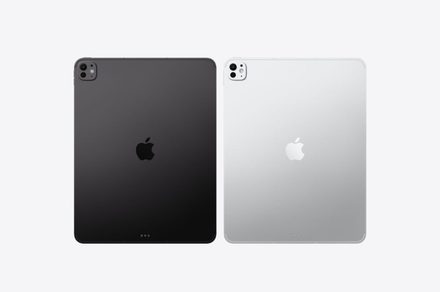
Some product ideas sound brilliant on a whiteboard but fall apart the moment reality sets in. Apple’s rumored iPad Ultra appears to be one of them.
According to prominent Weibo leaker Instant Digital, Apple has no plans to release an iPad Ultra — and when you look at the reasons why, it’s hard to argue with the decision. The iPad Pro, which was supposed to be the premium, aspirational face of Apple’s tablet lineup, has been bleeding sales for years. Three consecutive years of declining iPad revenue. Shipment forecasts were slashed in half. A 13-inch model that barely moved units in the back half of 2024. When your existing high-end iPad can’t find enough buyers at $1,299, the business case for something even more expensive and extreme starts to look very shaky indeed. And yet, somewhere deep in Apple’s labs, engineers apparently tried anyway.
A foldable iPad that nobody asked for — at a price nobody wanted
The foldable iPad that’s been floating around in leaks sounds ambitious on paper — a 20-inch display that folds in half, but early prototypes reportedly weighed enough to make a 14-inch MacBook Pro feel surprisingly light. And then there’s the expected price, hovering close to $3,900, which is a lot to ask for something still figuring out what it wants to be.

To be fair, the ambition is hard not to admire on some level. Apple is working with Samsung on a large OLED panel, obsessing over minimizing the crease and trying to reinvent what a tablet even is — that’s classic Apple, swinging for the fences. But there’s a fine line between bold and baffling, and a nearly four-kilogram foldable slab priced higher than a loaded MacBook Pro was sprinting toward the wrong side of it. Even Bloomberg’s Mark Gurman, who has been tracking this project closely, described it as something that “may end up being a wacky experiment that doesn’t see the light of day.” That’s not a ringing endorsement.
The iPad’s identity crisis is the real problem
Strip away the specs and the leaks, and what you’re really looking at is a deeper question Apple hasn’t fully answered: what is the iPad supposed to be in 2026? The Pro models keep getting more powerful, more expensive, and more laptop-like — and yet they still run iPadOS, which remains a frustrating halfway house between mobile and desktop. Buyers who want a serious productivity machine buy a MacBook. Buyers who want a casual, portable screen buy a standard iPad. The Pro gets squeezed from both sides.

An iPad Ultra — especially one that internally couldn’t even decide whether it was a tablet or an all-display MacBook — was only going to deepen that identity crisis. At $3,900, you’d be asking people to spend more than a top-spec MacBook Pro on a device whose software still can’t run Xcode properly.
The Ultra branding is clearly having a moment at Apple — a foldable iPhone Ultra, AirPods Ultra, and MacBook Ultra are all reportedly in the pipeline. But slapping “Ultra” on a product that already struggles to justify its price tag isn’t a strategy. And for once, it seems Apple has recognized that, rather than making an expensive mistake after the fact.