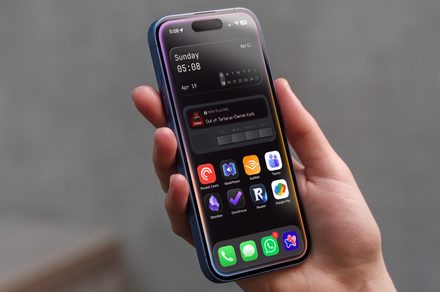
Apple doesn’t do anniversaries quietly, and we’ve seen that with the iPhone X in 2017. As 2027 approaches, marking 20 years since the first iPhone launched, fresh supply chain rumors suggest the company is planning something that isn’t just a spec bump.
The 20th anniversary iPhone, as it seems, may be accompanied by the most radical design overhaul ever.

What kind of display is Apple actually planning?
According to information from Chinese tipster Digital Chat Station (via Weibo), the Cupertino giant is working with Samsung on a custom “micro-curved” OLED panel, one that curves around all four edges of the device.
Unlike the traditional “waterfall” edges we’ve seen on Samsung phones (on the popular S Edge series), Apple wants something that’s deliberately more subtle, just enough to soften the feel in the hand but make the device look like no other iPhone ever launched.
While the subtler edges would make the design feel more natural, it would also prevent on-screen content from distorting at the sides. The display could also drop the polarizer layer entirely and instead use a Samsung technology called Color Filter on Encapsulation (COE), which, as the name suggests, applies the color filter directly onto the encapsulation layer.

This technique reduces the overall display thickness while allowing more light to pass through, improving brightness and reducing power draw. At the same time, Apple has also incorporated a crated-shaped light diffusion layer to keep the brightness uniform across the entire panel.
Will the front camera and Face ID finally go under the display?
They could, possibly, but it’s complicated. While display analyst Ross Young has previously said that an under-display Face ID won’t be ready for a 2027 iPhone, other leakers claim that the engineering achievement remains pretty much on the table for the next year.
The company is still actively testing an under-display front camera module, implying that the 20th anniversary iPhone could feature a bezel and hole-punch-free screen, or something that is just short of it. Either way, the company wants an all-glass iPhone without any visible cutouts on the display.
While I’m not doubting Apple and Samsung’s collective design and engineering prowess — the companies can surely achieve an all-display smartphone — I’m more concerned about its durability and how it would handle every wear-and-tear.