There’s a fundamental problem with how we communicate today, and most people don’t even realize it. It’s not a lack of ideas, but the friction between having a thought and turning it into something you can actually send.
By the time you unlock your phone, open an app, type, and edit, the clarity of that idea often fades. The result is communication that feels slower, less precise, and sometimes less impactful than intended.
One thing worth clarifying upfront: SpeakON is not a note-taking app with a button attached. It doesn’t exist to archive your thoughts for later review. It exists to get them out — clearly, immediately, and in the right tone — the moment you have something to say.
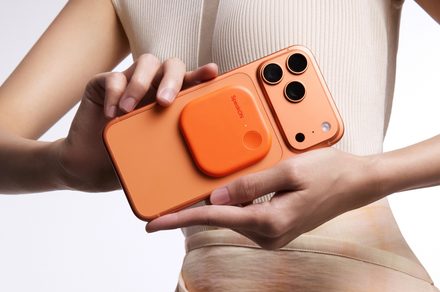
At its core, SpeakON is a MagSafe AI Button — a dedicated hardware accessory that snaps magnetically to the back of your iPhone (compatible with iPhone 12 and above) and pairs with an intelligent AI app to bridge the gap between thinking and communicating.

It launches on April 21, 2026, exclusively in the United States, and is available directly at speakon.app. The hardware device is priced at $129, with a hardware + 1-year Pro software bundle at $199 — and every new user gets a 14-day free trial of SpeakON Pro to start.
On the privacy side, no audio files are ever stored: voice is processed and discarded, and only the finished text output is retained. The system is SOC 2 Type 2, HIPAA-compliant, and GDPR-compliant.
This hardware-first approach makes a practical difference that pure software alternatives can’t replicate.
Compared to most app-based AI voice assistants, which require continuous background microphone access, our solution reduces battery drain by approximately 10–15% over a full workday.
With SpeakON, audio capture is handled by the device itself, which significantly reduces the background processing load on your iPhone. It also means your microphone stays free for everything else: calls, Siri, and FaceTime. Nothing is competing for that resource.
After a few days of use, I found myself reaching for that button without thinking — it had quietly become part of my workflow in a way no standalone app ever managed.
A New Interaction Model: From Thought to Execution Without Interruption

Most digital workflows are built around a sequence of actions. You unlock your device, open an app, switch context, type, edit, and then send. Each step may feel small, but together they create a delay that disrupts the original clarity of thought.
SpeakON removes that sequence almost entirely.
With a single press of a physical button, you can begin speaking immediately. There is no need to navigate interfaces or prepare an input field. The system captures your voice and converts it into structured, ready-to-send text across apps like email, messaging platforms, and productivity tools.
This is where the hardware component becomes critical. The presence of a dedicated device changes behavior in a way that software alone cannot.
Instead of hesitating or postponing communication, users can act instantly. Ideas are no longer delayed until there is time to type them out — they are executed in the moment.
Over time, this creates a noticeable shift in how people work. Communication becomes more immediate, more consistent, and more aligned with how thoughts actually occur.
Understanding Intent, Not Just Words

Traditional voice input systems are built around transcription. They aim to capture every word exactly as spoken, including filler phrases, pauses, and corrections. While this approach preserves accuracy, it often produces output that still requires significant editing.
SpeakON operates on a different principle. It focuses on intent.
When you speak, your thoughts are rarely structured in perfect sentences. They include hesitations, repetitions, and fragments that reflect how ideas form in real time. SpeakON processes these patterns and reconstructs them into clear, coherent communication.
This Smart Polish system worked extremely well while transcribing my daily project notes, and fared just as well when organizing more casual plans.
At a technical level, it removes filler words and refines phrasing into concise, readable text. One of the standout features here is Smart List, which detects sequences in speech and automatically organizes them into structured lists or steps.
From grocery lists to office to-dos, it worked reliably during the test phase.
The result is not a transcript that needs correction, but a finished message that is ready to send — or drop directly into your daily workflow. It eliminates the need for a second editing pass, reducing both time and cognitive load.

In a nutshell, SpeakON is not trying to replicate what you said word for word. It delivers what you really meant.
Attune: Context and Tone as a Built-In Layer of Communication
Among all of SpeakON’s features, Attune is the one that most clearly defines its position as a leader in the segment.
At its core, Attune is a formatting tool. But once it kicks into action, it works as a context-aware system that adapts both tone and style based on two factors: the mode selected by the user and the platform where the message will be used.
Users can choose between four modes — Off, Casual, Cordial, and Formal — depending on how they want their communication to sound. At the same time, SpeakON adjusts output based on app context. An email becomes more professional, while a message feels more relaxed.
This dual-layer adaptation is what sets Attune apart. It does not just clean up language — it ensures that communication is appropriate for both the audience and the situation.

In practical terms, this removes one of the most common sources of friction in professional communication. Users no longer need to stop and think about tone, phrasing, or formality. The system handles those adjustments automatically.
Attune also reinforces SpeakON’s core philosophy: it is not about capturing speech, but shaping communication around intent, context, and outcome.
Built for Real-World Workflows and Continuous Movement
Most productivity tools assume a static environment. They are designed for moments when users are seated, focused, and able to interact with a screen.
SpeakON is built for a different reality.
Modern work happens in motion — while walking, commuting, or multitasking. In these moments, typing is either inconvenient or impossible, often leading to missed opportunities or forgotten thoughts.
SpeakON turns these scenarios into productive windows.
With its hardware-based interaction model, users can capture and send communication without interrupting their activity. The system functions even when offline, recording input and syncing automatically once reconnected.

This ensures continuity regardless of the environment, and reinforces the idea that productivity should adapt to the user, not the other way around.
SpeakON is built for people who feel this friction most acutely: founders and executives drafting decisions between meetings, remote professionals juggling Slack and email on the commute, and creators who need polished output without slowing down.
If you communicate at high volume and high stakes — and your phone is your primary work surface — SpeakON was built for you.
Redefining What a Productivity Tool Can Be
SpeakON represents a shift in how productivity tools are conceptualized.
It moves away from tools as passive systems that require user input, and toward systems that actively participate in shaping communication.
By integrating hardware and software, it removes layers of interaction that traditionally separate thought from execution. The result is something that feels less like a tool, and more like an interface between human intent and digital output.

As AI continues to evolve, the way people interact with technology is likely to become more natural and less dependent on typing. SpeakON offers a glimpse into that future — where voice becomes a primary interface, not a secondary feature.
The Bottom Line
SpeakON is the first system of its kind to combine dedicated MagSafe hardware with an AI intent layer that removes friction from communication itself.
By processing voice into polished, context-appropriate text—adapting tone through Attune, structuring content with Smart List, and handling translation on the fly—it enables users to communicate at the speed of thought, without stopping to type.
To support its U.S. debut, SpeakON has partnered with Sandwich—the creative studio behind some of the industry’s most iconic brand campaigns—to produce its first commercial.
It launches April 21, 2026 at speakon.app, starting at $129, and is compatible with any iPhone 12 or later.
For anyone whose best ideas arrive in motion, this is the tool that ensures they arrive intact.