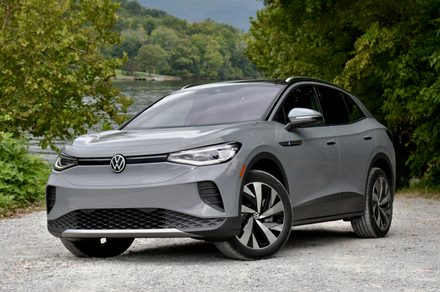
Volkswagen is about to close the ID.4’s American chapter soon, and a gas-guzzling Atlas will step in to fill the void.
The automaker has confirmed that it will cease production of all the all-electric ID.4s at its facility in Chattanooga, Tennessee. The factory is being redirected toward the second-generation Atlas SUV, which is a petrol-powered model scheduled to hit dealerships by fall 2026.

What went wrong for the ID.4 in America?
Existing ID.4 inventory will remain available for U.S. buyers until the stocks last, which, per the company, could stretch into 2027. The ID.4’s American journey was no less than a rollercoaster. Launched around 2020 at roughly $45,000, the EV initially earned solid reviews.
However, in due course, software glitches (read headaches) bruised its reputation. Volkswagen released a 2023 refresh to solidify its reputation, pushing the car’s annual sales above the 37,000 units milestone, but that was the absolute peak.
Sales collapsed by 55% in the following year. While they recovered partially in the coming years, especially in 2025 when the brand sold about 22,000 units, the number was much less than the previous high. The removal of the $7,500 federal EV tax credit didn’t help the automaker at all (nor the buyers).
In search of cheaper alternatives, buyers either purchased used EVs, new but affordable options, or hybrids.

Is this the end of Volkswagen’s EV ambitions in the region?
Not exactly. The automaker still insists that a future ID.4 iteration will eventually return to the American market. However, it hasn’t announced any official timeline or details about it (yet). If the company wants a meaningful comeback in the market, it must price its EV at around $35,000.
The silver lining, amid all this, is Volkswagen’s global EV sales, which stood around 382,000 in 2025, only a slight decline compared to the previous year, suggesting that what’s happening in the U.S. is a market-specific development.
What’s happening with Volkswagen is an example of a broader recalibration happening across legacy automakers. The EV ambition, as it seems, is colliding with the U.S. market realities. Removal of the tax credit is triggering price sensitivity, which, in turn, is decreasing the demand for EVs. This is true for Ford, General Motors, Stellantis, and even Tesla.