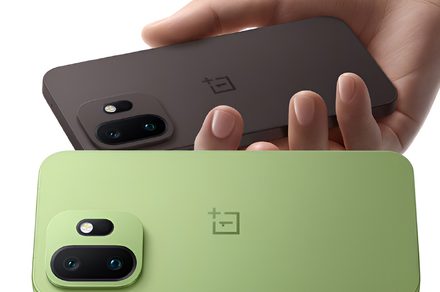
Compact phones in the past came with an asterisk. You get the easier one-handed size, but you also have to accept a smaller battery, tighter thermals, and some other cutbacks that remind you why typical flagships keep getting bigger.
That’s where the OnePlus 15T differentiates itself by packing a massive tablet-sized battery in a phone with a 6.32-inch display. It stands out from similarly sized phones like Samsung’s Galaxy S26 prioritize slimness over sheer battery capacity.
But there’s a catch, and it has less to do with OnePlus and more to do with where the industry is heading.
Small on the outside, flagship on the inside

The OnePlus 15T sports a palm-friendly 6.32-inch AMOLED display with a 1.5K resolution, a refresh rate option that goes all the way up to 165Hz, and an ultrasonic in-display fingerprint scanner for security. OnePlus is also using Oppo’s Crystal Shield Glass on the front, while the phone itself measures 8.35mm thick and weighs 194 grams. So despite a much larger battery pack, it is thinner and lighter than the Google Pixel 10.
Under the hood, it runs on the Snapdragon 8 Elite Gen 5 SoC, which is paired with up to 16GB of LPDDR5X Ultra Pro RAM and up to 1TB of UFS 4.1 storage. For a better gaming experience, OnePlus offers a large 5150mm² vapor chamber and a G2 gaming network chip.
One of the headline features is the 7,500mAh Glacier Battery, which supports 100W wired fast charging, 50W wireless charging, and bypass charging support. Its predecessor skipped wireless charging altogether, so this is a welcome addition. The company claims up to 10.3 hours of MOBA gameplay or 40.5 hours of video streaming on a single full charge.

The camera setup includes a 50MP Sony main camera and a 50MP periscope telephoto shooter with a longer 3.5x optical zoom with OIS and support for up to 8K recording and 4K120fps Dolby Vision videos. Meanwhile, the front houses a 16MP selfie camera.
Another notable upgrade is to the durability overall, with the OnePlus 15T offering an IP66, IP68, IP69, and IP69K rating.
So what’s the catch?
With all of these improvements, OnePlus is also masking the less fun bits. The OnePlus 15T just debuted in China with a 4,299 yuan starting price, or roughly $624. By comparison, the OnePlus 13T started at 3,399 yuan, or about $490 (~$446 back in 2025). This is quite a big bump (especially considering it’s in China). So it doesn’t exactly inspire confidence for the rest of the year’s phone launches.
That is where the 15T stops being just a OnePlus story and starts looking like a 2026 pricing story. The market has been getting uglier across categories, and phones are not escaping that pressure either.
A great phone can still land at the wrong time.
The company isn’t simply getting greedy or ambitious. The broad smartphone market is under real cost pressure with the surging memory costs. Gartner says surging memory costs could push smartphone prices up 13% in 2026, while TrendForce says brands are already raising prices and cutting specs as DRAM and NAND become much more expensive. Reports have even pointed to high-end RAM and storage configurations costing more than advanced chips that power flagship devices.
On one hand, it is the kind of compact flagship people have actually been asking for: smaller body, huge battery, proper flagship hardware. On the other hand, its pricing feels like a warning shot for the rest of 2026.
Last year’s OnePlus 13T was a value flagship at launch, but the 15T doesn’t seem as attractive. The Pixel 10, for example, has already dipped below $600 with major discounts. So, OnePlus competing with base flagships suddenly looks like a very awkward comparison point.