
An entire generation of designers climbed the ladder. A third say it got better. A third say it got worse. A third aren’t sure.

Someone asked me what I do at a dinner last month. Normal question. I’ve answered it a thousand times. But this time I paused. Not because I didn’t know the answer — I manage seven designers at a European bank — but because the answer didn’t feel like mine anymore.
I said it anyway. “I’m a designer.” And the word sat in my mouth like a coin from a country I no longer live in.
I thought it was just me. A bad quarter, maybe. Too many meetings, not enough making. But then I started paying attention. The designer friends I came up with — the ones who were mid-career, mid-thirties to mid-forties, the ones who’d done the work and climbed the ladder — they had the same look. Not burned out. Not angry. Something quieter. Like they’d arrived somewhere they’d been walking toward for fifteen years and realized nobody had mentioned there was a ceiling here, and the ceiling was low, and the room was smaller than the brochure suggested.
The average age of a senior UX designer is 38. The average age people switch careers is 39. I don’t think that’s a coincidence. And I don’t think it’s just about design. But design is the language I have, so that’s where I’ll start.
The career we were promised
When I started in design, the path was clear. You could almost see it printed on a laminated poster in a career counselor’s office. Junior. Senior. Lead. Director. VP. Each rung meant more impact, more money, more respect. You’d make beautiful things, then important things, then you’d lead people who made important things. The view from each rung was supposed to be better than the last.
I followed the script with genuine belief. Started as a 3D artist, fell into web design because it paid better and Photoshop was easier than 3ds Max. Built an agency from scratch — just me, then two people, then eight. Sold work to clients across Europe. Won design awards. Got headhunted into product companies. Led teams. Shipped dashboards that were presented at investor meetings. Each step felt like progress because each step was progress, by every measure the industry taught me to use.
Nobody told us about the switch.
At some point — and it happens so gradually you don’t notice until it’s done — you stop designing. The thing you were good at, the thing that got you promoted, becomes the thing you no longer do. Instead you’re in alignment meetings, writing justifications for decisions that should be obvious, navigating stakeholder politics, and coaching people through problems you used to solve with your hands.
You became a designer because you loved making things. The reward for being good at it was to stop doing it.
That’s not a design industry problem. That’s the architecture of most knowledge-work careers. But in design, it stings differently. Because we didn’t just study a profession — we built an identity around craft. “I’m a designer” isn’t a job description. It’s a statement about how you see the world, how you solve problems, how you think. And when the job no longer matches the identity, something fractures quietly, in a place you can’t quite point to.
For years this was a slow, private reckoning. You’d feel it, talk about it over drinks with other leads, maybe write a Medium post about burnout, and then go back to work on Monday. But two things accelerated the timeline.
First: AI. Not in the “robots are coming for your job” sense — though over 100,000 design-adjacent layoffs in 2025 made that fear concrete enough, with 30,000 more in the first six weeks of 2026. More in the sense that AI compressed the future. Things that were supposed to take ten years started taking three. The junior designer who was going to gradually learn craft over five years? AI closed that gap in months. The senior designer whose value was execution speed? Suddenly less differentiated. The design manager whose job was translating between business and craft? Watching both sides learn to talk directly to machines.
The Nielsen Norman Group’s State of UX report put it plainly: UI is no longer a differentiator. The execution layer — the thing most of us were trained to do — is becoming commoditized. Senior roles are recovering faster than junior ones, but “recovering” is doing a lot of heavy lifting in that sentence.
Second: someone finally measured it.
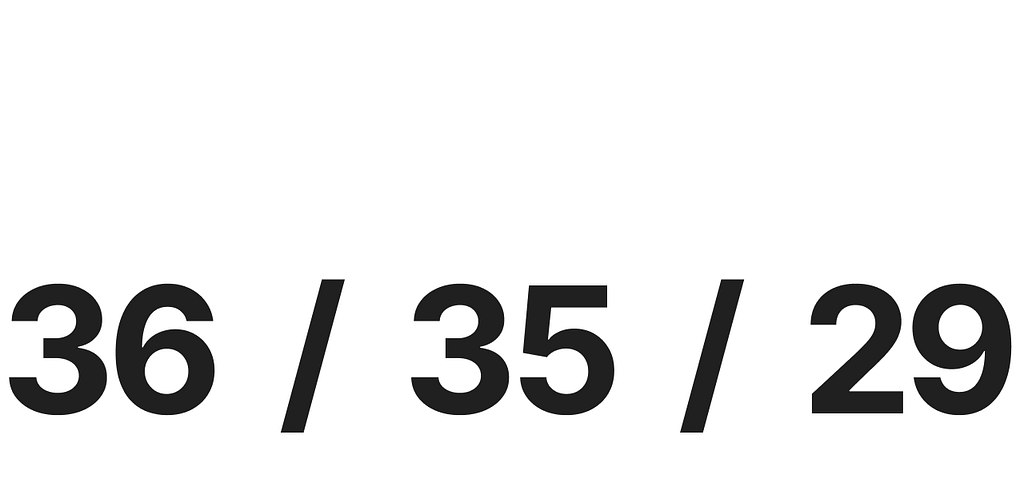
In 2026, Figma published their State of the Designer report. Among the findings was a number that stopped me: when asked whether design had gotten better or worse, the profession split almost perfectly into thirds. 36% said it got better. 35% said it got worse. 29% said it stayed the same.
In a healthy profession, you’d expect a strong majority leaning one direction. 60–70% agreement would signal a shared narrative — “things are tough but improving,” or “we’ve lost our way but we know it.” An even three-way split signals something else entirely. It means there is no shared story. No consensus on whether the thing we all do is going well or falling apart.
That’s not a downturn. That’s an identity crisis at the scale of an entire discipline.
I spent a long time sitting with each third. Not to judge them or rank them. To understand what it feels like to stand in each group — and to be honest about where I stand myself.
The first third: “It got better”
The 36% are having a genuinely good time. They work at design-mature companies with real creative autonomy. They’ve leaned into AI tools and found that the new capabilities expanded what they could do rather than replacing what they already did. Figma’s data backs this up: designers who adopted AI tools were 25% more likely to report satisfaction with their work. Creative freedom was the single strongest driver of job satisfaction — above salary, above title, above team size. And 87% said that having real decision-making power directly boosted their performance.
I don’t doubt their experience. I know people in this group. They’re not delusional and they’re not bragging. They found the right intersection of company culture, leadership, and personal temperament, and it’s working.
But here’s what keeps me from envying them cleanly: their satisfaction is contextual, not structural. It depends on having the right leader who protects their creative space. The right company that values design beyond lip service. The right culture that hasn’t yet been disrupted by a cost-cutting mandate from a new board.
Remove any one leg and the stool collapses. One reorg. One acquisition. One leadership change where the new VP decides AI can handle 60% of the design team’s output. And overnight, with no preparation, they’re somewhere else entirely.
Figma’s own report hints at this fragility. A strong designer in a company that doesn’t value craft will burn out no matter how skilled they are. Satisfaction tracks with environment more than ability. Which means Group 1’s position isn’t earned in the way we usually mean that word — it’s matched. Right person, right place, right moment. Change any variable and the equation breaks.
They’re not wrong about their experience. But they’re standing on a platform that isn’t bolted to the floor. And most of them don’t know it yet, because when things are good, you don’t test the foundations.
The second third: “It got worse”
The 35% are the squeezed middle. Design managers watching their teams shrink. Senior ICs whose deep craft expertise is suddenly less rare thanks to AI-generated alternatives. People whose job titles still say “designer” but whose actual days involve none of the things that word used to mean.
The research confirms what they feel. Experienced UX professionals reported being tired of constantly justifying their value — tired of having to prove, again and again, that design isn’t decoration. When companies looked for roles that were hardest to defend financially, UX often made the list. The role boundaries are dissolving — 64% of product builders now identify with two or more roles, which sounds like “versatility” in a job posting and feels like “nobody knows what I actually do anymore” in a team standup.
Forrester found that 55% of employers who made AI-driven layoffs in 2025 now regret the decision. That’s cold comfort when you were in the 45% they don’t regret, or when your position was eliminated before they had time to learn the lesson.
This is my group. I should be honest about that.
I manage seven designers at a European bank. I have fifteen years of experience across agencies, startups, product companies, and enterprise. I’ve founded a company and ran it for eight years, serving over forty international clients. I’ve built products from scratch, shipped dashboards that were presented at investor meetings, created prototypes that helped secure major funding rounds. On paper, this is a successful design career. By most external measures, it still is.
And I haven’t opened Figma to actually design something in months.
My days are stakeholder alignment, team coaching, roadmap negotiations, and writing documents that justify why design matters to people who should already know. I’m good at these things. Some days I even find them deeply meaningful — watching a junior designer grow, or seeing a product decision land because you fought for it in three separate meetings over two weeks. There’s real craft in that, even if it doesn’t look like craft.
But it’s not why I became a designer. And pretending otherwise has a half-life. You can run on purpose and meaning for a while, but eventually the gap between what you are and what you do becomes the thing you think about on Sunday nights.
The particular cruelty of Group 2 is that you can see exactly what happened. You traded the thing you loved for the thing that paid better and carried more responsibility, and you did it so gradually that there was never a single moment to object. Each step made sense. The destination doesn’t.
The third third: “It’s the same”
The 29% are the quietest group, and I think the most important.
They’re not thriving and they’re not suffering. They’re showing up. Doing competent work. Collecting a paycheck. Not questioning the trajectory because the trajectory doesn’t feel urgent enough to question. Workforce research suggests roughly a quarter of the broader working population falls into a similar pattern — not disengaged in any dramatic way, just… present. Doing the job. Getting by.
I want to be careful here, because I don’t think this is a character flaw. Coasting is a rational response to a profession that stopped sending clear signals. When the industry can’t agree on whether things are getting better or worse — when the three thirds exist — the reasonable move is to stay put and wait for clarity. It’s not apathy. It’s pattern-matching in an environment that’s stopped producing reliable patterns.
But that rationality comes with a cost, and the cost is preparation.
The other two groups — the satisfied and the struggling — at least have a narrative. Group 1 knows what’s working and can fight to protect it. Group 2 knows something is wrong and is already, consciously or not, building alternatives and testing escape routes. Group 3 has no narrative. No alarm bells. No community of people processing the same realization, because there’s been no realization to process.
When the next round of layoffs hits, or when AI capability takes another jump, or when their company decides to “restructure the design function,” Group 3 will be the least prepared. Not because they’re less talented — some of the most skilled designers I know are in this group. But because they never had a reason to build a parachute. The weather looked fine from where they were standing.
If you read those three numbers — 36, 35, 29 — and genuinely couldn’t tell which group you belong to, sit with that for a moment. That uncertainty might be the most important signal you get this year.
It’s not burnout. It’s identity.
The easy diagnosis for everything I’ve described is burnout. It’s the word we reach for now the way we used to reach for “stress” in the 2000s — a catch-all that sounds clinical enough to be taken seriously but vague enough to cover anything. Tired? Burnout. Disillusioned? Burnout. Can’t remember why you chose this career? Burnout.
But burnout has a specific shape. It’s when you care deeply and give too much and your resources run out. Burnout has a cure: rest, boundaries, a better job, a sabbatical, a manager who actually shields you from the noise. You can recover from burnout and return to the same career with fresh energy. People do it all the time.
What I’m describing doesn’t have a cure. It has a passage.
This is an identity crisis. The professional self you built over ten or fifteen years — “I’m a designer, I make things, I solve problems visually, I have craft” — is shifting underneath you. Not disappearing. The word “designer” still exists, the jobs still exist, the Figma files still exist. But the relationship between you and that word has changed, and no amount of rest will change it back.
Bill Burnett and Dave Evans wrote about this kind of transition in Designing Your Life — the idea that you can apply design thinking to your own career. It’s a good framework. But I think the challenge for our generation is more specific than “design a better life.” It’s: what do you do when the identity you designed your life around is the thing that’s shifting?
At 25, that kind of shift is exciting. You’re fluid, portable, unencumbered. You haven’t built anything heavy yet. Reinvention is a weekend project and a new portfolio.
At 38, you have a mortgage. Kids. A team that depends on you showing up on Monday with clarity and direction even when you have neither. A salary that your family has organized its life around. The stakes of “figuring it out” are fundamentally different when other people are standing on your platform.
A friend of mine recently published a book. I won’t name it, but the title — four words about life after a design career — hit me harder than any UX framework I’ve read in the last five years. Not because it was provocative. Because it named something I hadn’t said out loud. The fact that someone had written an entire book about it meant the feeling had a shape, a population, a reality beyond my own Sunday-night anxiety.
David Brooks explores something adjacent in The Second Mountain — the idea that the first mountain of career achievement eventually gives way to a search for deeper meaning. He’s writing about a broader human pattern, not specifically about designers. But the timing maps uncomfortably well: you summit the first mountain somewhere in your late thirties, look around, and realize the view isn’t what the brochure promised.
There is research that makes this feel less lonely. 82% of people who switch careers after 45 report being pleased with the change. That’s a genuinely encouraging number. But the same studies show 58% of them took a pay cut to get there. Both numbers are true at once. The door is open and the toll is real.
There’s no shortage of people online telling you to keep going. To protect your energy, believe in your skills, remember that design thinking is transferable and you are more than your job title. And they’re not wrong — those things are true.
But the harder question isn’t whether to keep going. It’s: keep going toward what?
Four directions
I don’t have an answer. I don’t trust anyone who says they do, at least not for anyone other than themselves. But I’ve been watching — in my own career, in my peers’ choices, in the research — and I see four directions people are already walking. Not prescriptions. Observations. Not a framework with arrows and boxes. Just honest notes from the middle of it.
Some are redesigning the role. Moving upstream from execution to strategy. Dropping “designer” from their title and becoming someone who applies design thinking to business problems, organizational challenges, service transformation. It works for people who still believe in the impact of design but have made peace with never touching a pixel again. It doesn’t work if the problem isn’t the seniority level — if it’s screen-based knowledge work itself that you’ve grown out of. Some people do this and find a second wind. Some do it and feel like they’re performing a role they no longer believe in, just at a higher altitude.
Some are building portfolio careers. Multiple small things instead of one big thing. Teaching a course, advising a startup, writing, mentoring — none of it full-time, all of it theirs. Research shows nine million Americans between 44 and 70 are already working this way, in what researchers call “encore careers” — combining income with meaning and flexibility. The appeal is obvious: variety, autonomy, no single boss who can restructure your life with one email. The cost is that you become your own safety net, your own sales team, your own HR department, permanently. Freedom and precarity share a border.
Some are leaving entirely. The full pivot. It sounds dramatic until you meet someone who’s done it and is calmer and more present than anyone still in the industry. The data says most people who make this jump are glad they did — but more than half take a financial hit to get there. It requires a specific destination and real financial runway. Not “I hate screens” but “I want to build that instead.” The people who do it well don’t run from design. They walk toward something else.
And some are staying — but renegotiating the terms internally. The job stays, but it stops being the center of gravity. It becomes a funding mechanism, not an identity. The energy, the sense of self, the thing you think about when you’re not working — those get redirected. Toward family. Toward something physical. Toward a hobby that doesn’t scale, a community that isn’t online, a pace that isn’t optimized. This might be the most honest option on the list. It’s also the least discussed, because it doesn’t make for a compelling keynote or a viral LinkedIn post. Nobody gets a standing ovation for saying “I stayed and redirected my energy toward my garden.”
None of these are right or wrong. They’re directions people are already walking. Some people are walking two of them at once without fully realizing it. I might be one of them.
The middle
I want to end this with something clean. A resolution, a direction, a sentence that makes you nod and feel like I figured it out so maybe you can too. That’s what a good article is supposed to do. Land the plane.
But I haven’t landed. I’m still in the air.
I show up on Monday morning. I care about my team — genuinely, not per formatively. I’m good at what I do, even the parts that aren’t “design” anymore. I also feel something pulling — toward a life with more daylight, more physical work, more conversations that happen face-to-face instead of in comment threads. I don’t know yet if that’s a signal or just fatigue wearing a better costume.
What I do know is that this isn’t just my story. The three thirds exist. A generation of designers climbed the ladder, looked around, and is quietly asking the same question in different time zones: is this the room I wanted to be in?
Some of us will redesign the room. Some will find a different building. Some will realize the room was fine all along and the problem was something else entirely.
And some of us — maybe most of us — will sit with the question for a while longer. Not because we’re stuck. Because the question deserves more than a quick answer.
I don’t know which third I’ll be in next year. But I know which one I’m in now. And for the first time, I think that’s enough to say out loud.
Resources cited in the article:
- Figma State of the Designer 2026
- NN/g State of UX 2026
- Zippia UX Designer Demographics
- Layoffs.fyi
- Forrester AI Layoff Regret (via Computerworld)
- Forrester Coasters Data (via HR Executive)
- Career Change After 45 (AIER via Interview Guys)
- Encore Careers Research
- Designing Your Life — Burnett & Evans
- The Second Mountain — David BrooksFigma Shifting Roles Report — the 64% two-or-more-roles stat comes from this companion piece
- Figma Hiring Report — counterpoint showing 82% of orgs still need designers
The three thirds was originally published in UX Collective on Medium, where people are continuing the conversation by highlighting and responding to this story.