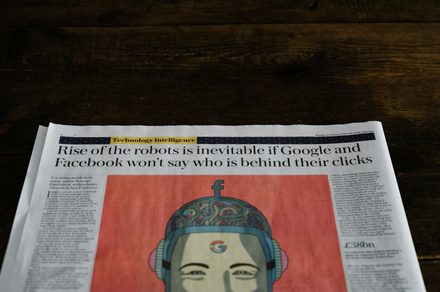
Google is once again testing how artificial intelligence can reshape the way users interact with information online – this time by altering one of the most fundamental elements of search: headlines. The company has begun experimenting with replacing original news headlines in Search with AI-generated alternatives, sparking concerns among publishers and raising questions about accuracy and editorial control.
AI starts rewriting the web’s “10 Blue Links”
In a recent experiment, Google has started displaying AI-generated headlines instead of the original titles written by publishers in its traditional search results. This marks a significant shift from earlier practices where Google might truncate or slightly modify headlines for clarity.
Reports indicate that these rewritten headlines can sometimes change the meaning or tone of the original article. In some cases, nuanced or critical headlines were shortened into generic or misleading phrases, potentially giving users an incorrect impression of the content before they even click.
Google describes the feature as a “small and narrow experiment”, aimed at improving how well search results match user queries and increasing engagement. However, the company has not disclosed how widely the feature is being tested.
Why this raises concerns for publishers
Headlines are a critical part of journalism – they are carefully crafted to accurately represent a story while attracting readers. By replacing them with AI-generated versions, Google effectively takes control of how articles are presented to users.

Publishers worry this could undermine their editorial voice and credibility. If an AI-generated headline misrepresents a story, readers may blame the publication rather than Google, potentially damaging trust.
There are also concerns about transparency
Currently, there is little to no indication when a headline has been altered by AI, making it difficult for users to distinguish between original and machine-generated content.
This development follows similar experiments in Google Discover, where AI-generated summaries and headlines have already been criticized for inaccuracies and misleading phrasing. For everyday users, the change could subtly alter how information is consumed. Headlines play a major role in shaping first impressions, and even small changes in wording can influence how a story is interpreted.

If AI-generated headlines prioritize engagement over accuracy, users may be more likely to click on content that doesn’t fully match their expectations. In some cases, they may also miss important context or nuance that was present in the original headline.
At the same time, Google argues that AI can help make headlines more relevant to search queries, potentially improving discoverability and making it easier for users to find what they are looking for.
What comes next
While the current rollout is limited, the experiment could signal a broader shift in how Google integrates AI into Search. The company has a history of introducing features as small tests before expanding them into full-scale products.
Publishers and industry observers are likely to push for clearer labeling, greater transparency, and possibly opt-out mechanisms if the feature expands. Meanwhile, regulators may also take a closer look at how AI-generated content is presented, especially when it affects news distribution and public information.
For now, the experiment remains a “canary in the coal mine” – a sign of how AI could increasingly shape not just what users see online, but how that information is framed and understood.