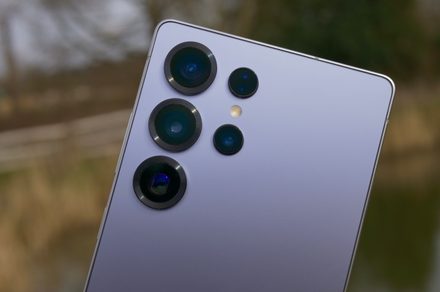
The latest generation of Android flagships from Vivo, Oppo, and even Samsung include one 200MP sensor, used as the primary camera or the telephoto camera. However, the next generation of Android flagships could include three 100MP sensors.
You heard that right. According to Chinese tipster Digital Chat Station, “some” (that could be more than one) smartphone makers are “testing three 100-megapixel lenses” or cameras.

Three 100MP cameras? That’s the rumor
Although the tipster doesn’t specify the nature of these cameras, they could very well be the primary, telephoto, and ultrawide shooters. This is one of the most interesting approaches I’ve heard of lately. Here’s why.
It might sound like a 100MP primary sensor and a 100MP telephoto sensor is a downgrade from the current 200MP standard at first. But only the Oppo Find X9 Ultra has been confirmed to feature two 200MP cameras on the back.
The others, including the Vivo X300 Pro, the Find X9 Pro, and the Galaxy S25 Ultra (or even the upcoming Galaxy S26 Ultra, for that matter), include only one 200MP primary sensor, which, by the way, uses pixel binning to default to a lower resolution for increased low-light performance, saving space and capture time.
Having 100MP primary and telephoto sensors would still allow brands to capture at a lower default resolution, upscale significantly when needed, and take less storage or capture time than a 200MP sensor would.

The ultrawide camera could finally get a serious update
So far, I haven’t talked about the ultrawide sensor, because it maxes out at 50MP on the flagships. Hence, a 100MP ultrawide camera (if our interpretation of the tweet is right) would be a dramatic upgrade.
It could enable more detailed macro shots (if the sensor doubles as a macro shooter) or greater post-capture reframing potential. In addition to the rear-facing cameras, the leaker also claims that a “100-megapixel front-facing camera,” with a “small-pixel sensor,” is in the works.
Given that the Galaxy S26 series seems to be stuck with a 12MP front camera, and Chinese flagships use a 50MP sensor on their most expensive variants, a 100MP selfie shooter could deliver a noticeable upgrade.
Since it’s a small-pixel sensor, low-light photography might be an issue, but I guess smartphone makers should be able to fix it with computational trickery.