Exploration of the essence of what we do and how we do it
It might be a sign of changing of the times and of our industry, it might be a marketing push from the companies betting big on AI. I don’t know. But there seems to be a sort of a urgency for something new. For speed. For freedom. For paving a new path. For simplicity. For flexibility. A push for something else rather than Design Thinking as the standard design process.
I am talking about the new wave of intuitive design and not trusting the design process, of taste and craft as the only ways to do exceptional design, of jumping straight into code / material. While some parts of those ideas resonate, not all of us are positioned or experienced to do that. Also, processes exist for a reason — usually to make sure we take our users into account, to avoid blindspots, to be sure we are solving the right problem and to meet high bars of quality.
Before coming across as a big saviour / defender of Design Thinking, I need to come clean: I think we often fall into the trap of wrapping design in bloated processes, frameworks, and mystical terminology, producing unnecessary artefacts and wasting time along the way. And I think that design doing is equally important as the design thinking part.
So what is my thesis here?
We need to go back to what’s essential and what’s natural.
In pursuit of the essence
In my first attempt to shape my perspective, I wrote a think piece on the 1000 Questions and Answers of design. It’s basically a snapshot of design as I know it and practice, outside of methodologies and tools.
Even though I believe the article still makes sense, I started questioning my thinking. Can it be simpler? Can it be shorter? Can it be more natural and stripped down to the essence?
If you strip it down, I started to see the design process as two simple steps:
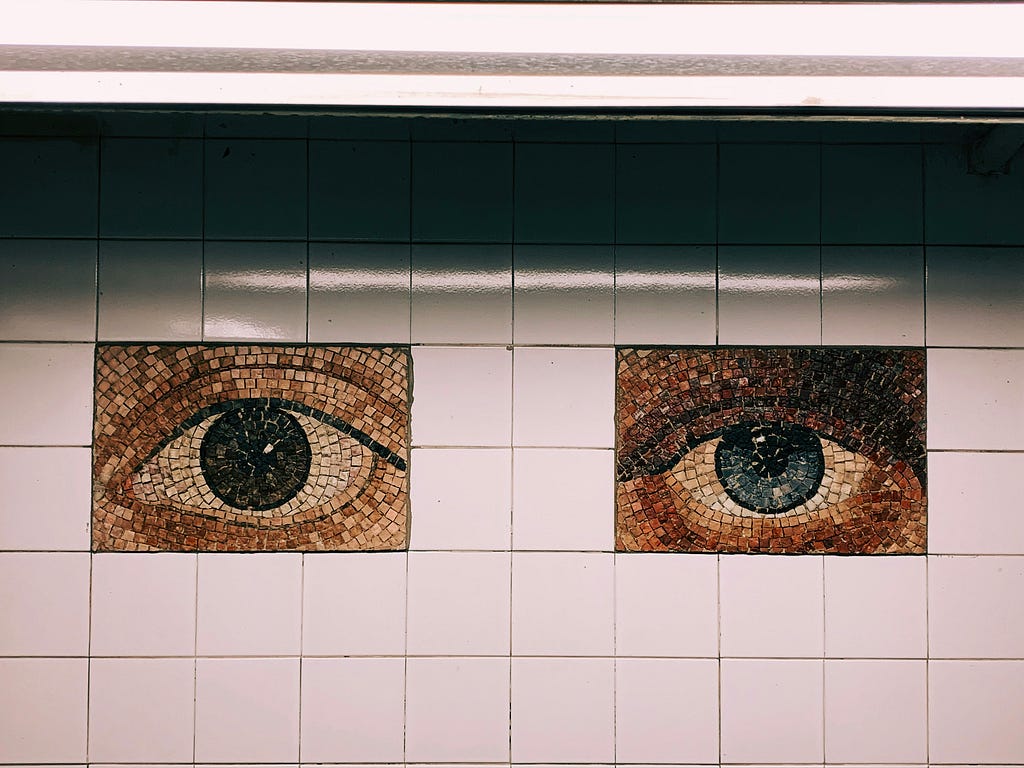
<> <> Open your eyes.
— — Squint your eyes.
We all do these steps already, with or without realising it. With or without Design Thinking.
Huh?
Maybe I simplified it way too much. Sometimes I can err in the other direction — making things too abstract.
This is what I mean:
Open your eyes to get information. Squint your eyes for focus.
When your eyes are open, you observe. You look around. You absorb. You listen. You think. You notice things you’d otherwise miss — the way people use a product, the frustrations in their tone, something beautiful that inspires a new direction, a design pattern that solves your problem. You are in consuming mode and in a pursuit for new information and perspectives. You are in search for inspiration, references, sparks for your ideas. Along the way, you might become an expert in something and you will start to empathise with your users.
When you squint your eyes, you focus. You tune out the noise and work with what you’ve gathered. You sketch, you build, you make decisions. You bring something into being. You roll up your sleeves and produce with this newfound focus, clarity and intention. The background gets blurry and you just create. Time also gets blurry, you are in the flow and designs materialise.
That’s how the eyes work. That’s how the mind works — expanding and present when immersed into something new, focused on execution and on auto pilot once having all information. Even cameras work this way — wide open to take in light and to focus all the way up to the horizon in the distance, then tightened up to sharpen focus and capture the detail in front of the lens. It’s the natural way of seeing, thinking, and doing.
In practice
You can open and squint your eyes as many times as you like to or need to. Just don’t do it at the same time. That’s call winking. Or multitasking. Both are quite useless while designing.
Here’s an example of how this “process” might work:
- Open your eyes → absorb, get inspired, ask questions, explore.
- Squint your eyes → focus, design, make, refine.
- Open again → test, show, share, watch reactions.
- Squint your eyes → polish, detail, finalise.
Repeat until something good emerges. Add activities that you need at the moment.
At the end, or in between: fully close your eyes → rest, let ideas simmer, gain distance. Also a natural and essential part of the process.
Zoom out
Zooming out (or while squinting your eyes) you might see double diamonds in the eye picture above. You might also see the concepts of diverge & converge. Your eyes might be seeing right.
We might be back to square (or diamond) one. But we are free and back to our nature. We know why we do what we do and do it with confidence. We block out the noise.
We don’t need to kill the Double Diamond, but we can admit it’s just a dressed-up version of something our brains already know how to do. The danger with process-heavy design thinking is that it can become an end in itself. Design becomes the artefacts about design, rather than the design itself. We need to be careful about that, while respecting and following a natural process, with the necessary steps and activities for our problem and users.
The next time you’re overthinking your process, just remember: open your eyes, squint your eyes. The rest is abstraction and decoration.
And don’t forget to fully close your eyes from time to time. The best ideas come after some good rest and distance. Practice it now… closing in 3, 2, 1.
References and extra resources
- 1000 Questions, 1000 Answers
- Design Thinking is dead… again
- Design thinking is not dead, but are we extracting its full potential?
- Design Thinking Is Dead. Or Not.
- The return of the intuitive designer in the age of AI
https://medium.com/media/3df61fc6f744d5cfddcd2da4ac62907e/href
Rest: why it is important for designers
The natural design process was originally published in UX Collective on Medium, where people are continuing the conversation by highlighting and responding to this story.