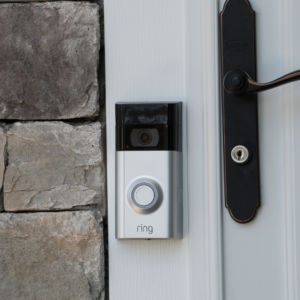
If you tuned into Super Bowl LX on Sunday, you may have caught Ring’s big ad of the night: The company tried to tap into us dog owners’ collective fear of losing our pets, demonstrating how its new “Search Party” feature could reunite missing dogs with its owners. Ring probably thought audiences would love the feature, with existing users happy to know Search Party exists, and new customers looking to buy one of their doorbells to help find lost dogs in the neighborhood.
Of course, that’s not what happened at all. Rather than evoke heartwarming feelings, the ad scared the shit out of many of us who caught it. That’s due to how the feature itself works: Search Party uses AI to identify pets that run in its field of vision. But it’s not just your camera doing this: The feature pools together all of the Ring cameras that have Search Party enabled to look for your lost dog. In effect, it turns all these individual devices into a Ring network, or, perhaps in harsher terms, a surveillance state. It does so in pursuit of a noble goal, sure, but at what cost?
The reactions I saw online ranged from shock to anger. Some were surprised to learn that Ring cameras could even do this, seeing as you might assume your Ring doorbell is, well, yours. Others were furious, lashing out at anyone who thinks Search Party is a good idea, or that the feature isn’t the beginning of a very slippery slope. My favorite take was one comparing Search Party to Batman’s cellphone network surveillance system from The Dark Knight, which famously compromised morals and ethics in the name of catching the bad guy.
This Tweet is currently unavailable. It might be loading or has been removed.
According to Ring, Search Party is a perfectly safe and wholesome way to look for lost dogs in the area. The company’s FAQs explain that users can opt-out of the feature at any time, and only Ring doorbells in the area around the home that started the current Search Party will look for the dog. In addition, Ring says the feature works based on saved videos, so Ring doorbells without a subscription and a saved video history won’t be able to participate. (Though I’m not sure the fact that the feature works with saved videos assuages any fears on my end.)
I am not pro-missing dogs. But I am pro-privacy. At the risk of sounding alarmist, Search Party really does seem like a slippery slope. Today, the neighborhood is banding together to find Mrs. Smith’s missing goldendoodle; tomorrow, they’re looking for a “suspicious person.” Innocent until proven guilty, unless caught on your neighbor’s Ring camera.
Can law enforcement request Search Party data?
Here’s the big question regarding Search Party and its slippery slope: Can law enforcement—including local police, FBI, or ICE—request saved videos from Ring cameras participating in Search Party in order to track down people, not pets?
You won’t be surprised to learn that that wasn’t answered by Ring’s Super Bowl ad, nor is it part of the official Search Party FAQs. However, we do know that, as of October 2025, Ring partnered with both Flock Safety as well as Axon. Axon makes and sells equipment for law enforcement, like tasers and body cameras, while Flock Safety is a security company that offers services like license plate recognition and video surveillance. These partnerships allow law enforcement to post requests for Ring footage directly to the Ring app. Ring users in the vicinity of the request have the choice to either share that footage or ignore the petition. Flock Safety says that users who do choose to share footage remain private.
Of course, law enforcement isn’t always going to ask for volunteers. According to Ring’s law enforcement guidelines, the company will comply with “valid and binding search warrants.” That’s not surprising, of course. But the company does note an important distinction in what it will share: Ring will share “non-content” data in response to both subpoenas and warrants, including a user’s name, home address, email address, billing info, date they made the account, purchase history, and service usage data. The company says it will not share “content,” meaning the data you store in your account, like videos and recordings of service calls, for subpoenas, only warrants.
Ring also says it will tell you if it shares your data with law enforcement, unless it is barred from doing so, or it’s clear your Ring data breaks the law. This applies for both standard data requests, as well as “emergency” requests.
Based on its current language, it seems that Ring would give up the footage used in Search Party to law enforcement, assuming they present a valid warrant. The thing is, it’s not clear whether Search Party has any actual impact on that data: For example, imagine a dog runs in front of your Ring doorbell, and the footage is saved to your history. Now, a valid warrant comes through requesting your footage. Whether you have Search Party enabled or disabled, Ring may share that footage with law enforcement—the feature itself had no impact on whether your doorbell saved the footage. The difference would be whether law enforcement has access to the identification data within the footage: Can they see that Ring thinks that dog is, in fact, Mrs. Smith’s goldendoodle, or do they simply see a video of a fluffy pup running past your house? If so, that would be your slippery slope indeed: If law enforcement could obtain your footage with facial recognition data of the suspect they’re looking for, we’d be in particularly dangerous territory.
I’ve reached out to Ring for comment on this side of Search Party, and I hope to hear back to provide a fuller answer to this question.
How to opt-out of Search Party on your Ring cameras
If you’d rather not bother with the feature at all, Ring says it’s easy enough to turn off. To start, open the Ring app, tap the hamburger menu, then choose “Control Center.” Here, choose “Search Party,” then choose the “blue Pet icon” next to each of your cameras for “Search for Lost Pets.”
To be honest, if I had a Ring camera, I’d go one step further and delete my saved videos. Law enforcement can’t obtain what I don’t save. If you want to delete these clips from your Ring account, head to the hamburger menu in the app, tap “History,” choose the “pencil icon,” then tap “Delete All” to wipe your entire history.